View from Hill's Kitchen - Residential Building on Right
8th and D Streets Looking North
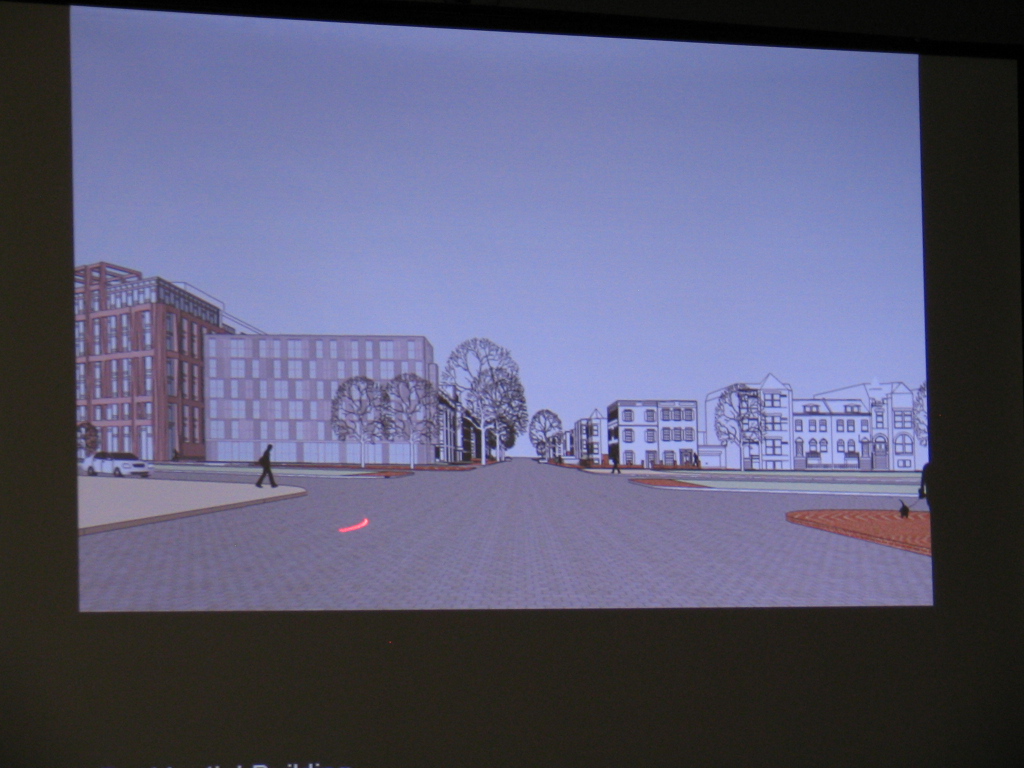
8th Street Looking South
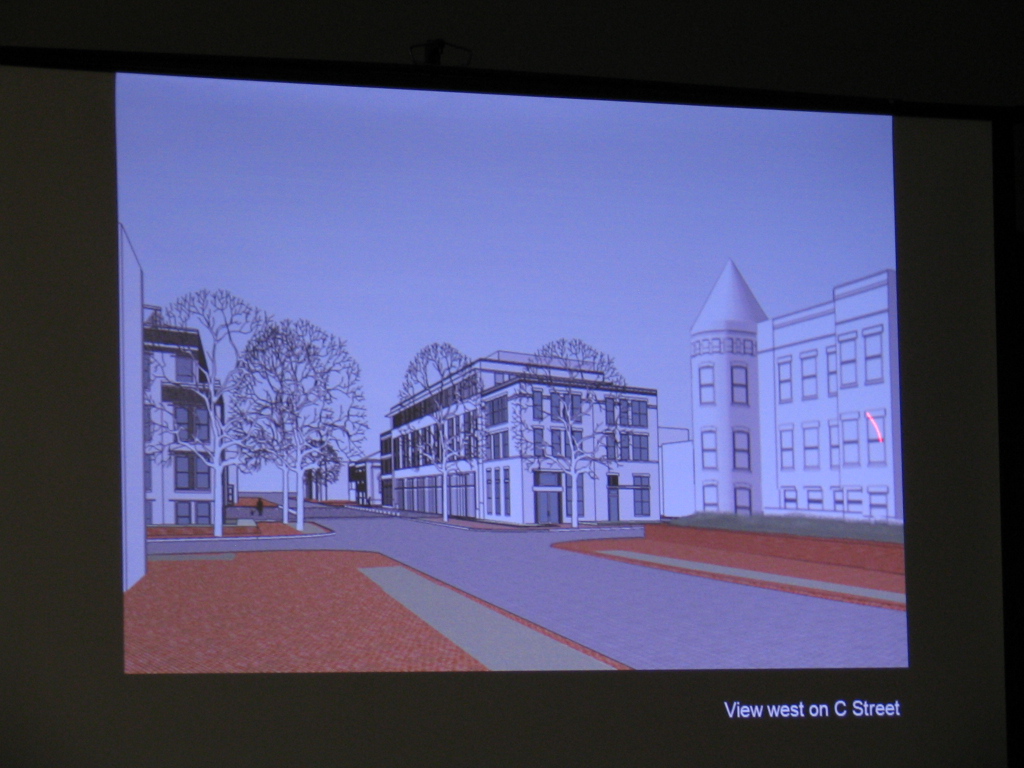
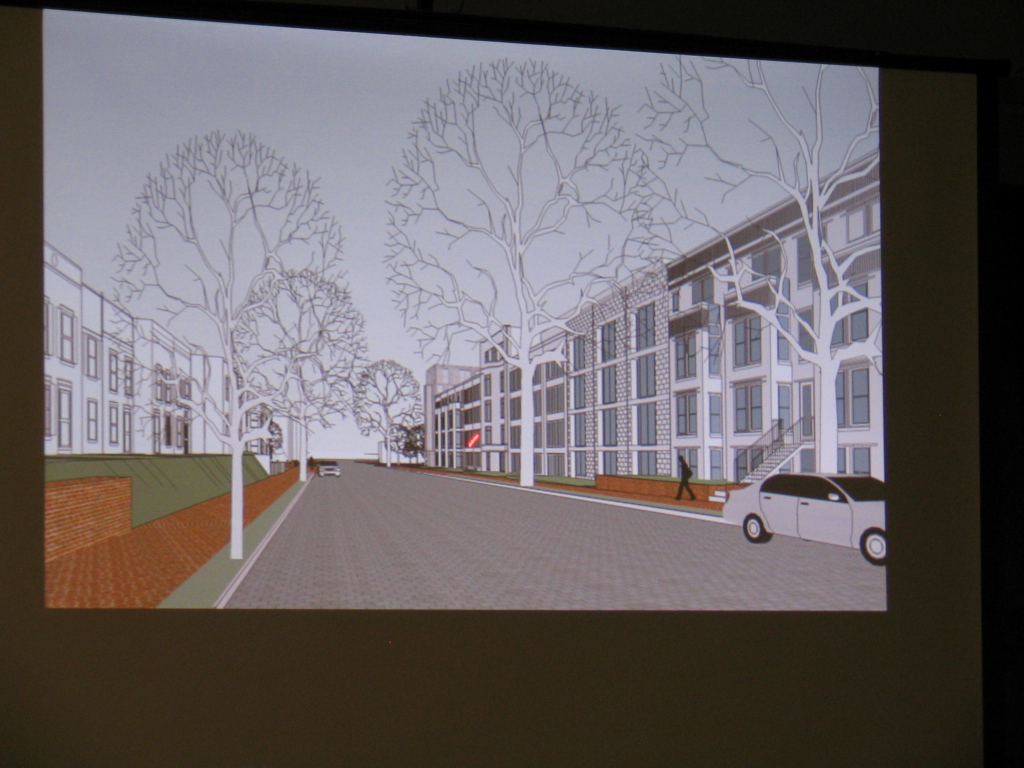
North Residential Building on C Street, Looking West from 8th Street

North Residential Building - C Street View

North Residential Building on C Street from 7th Street
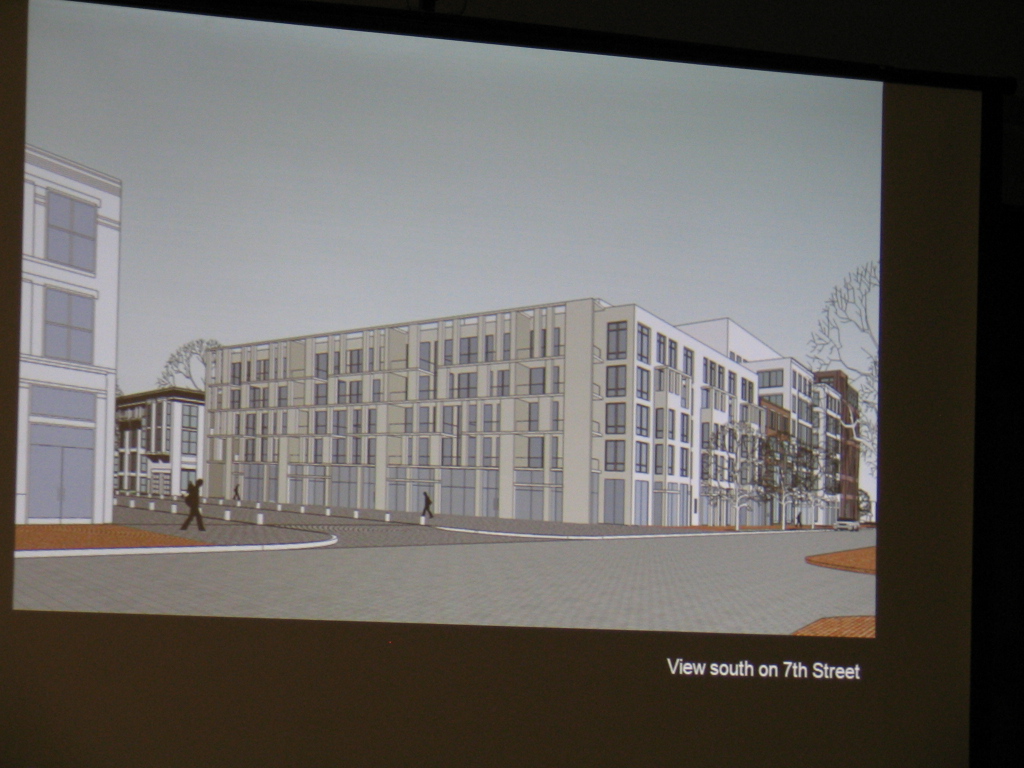
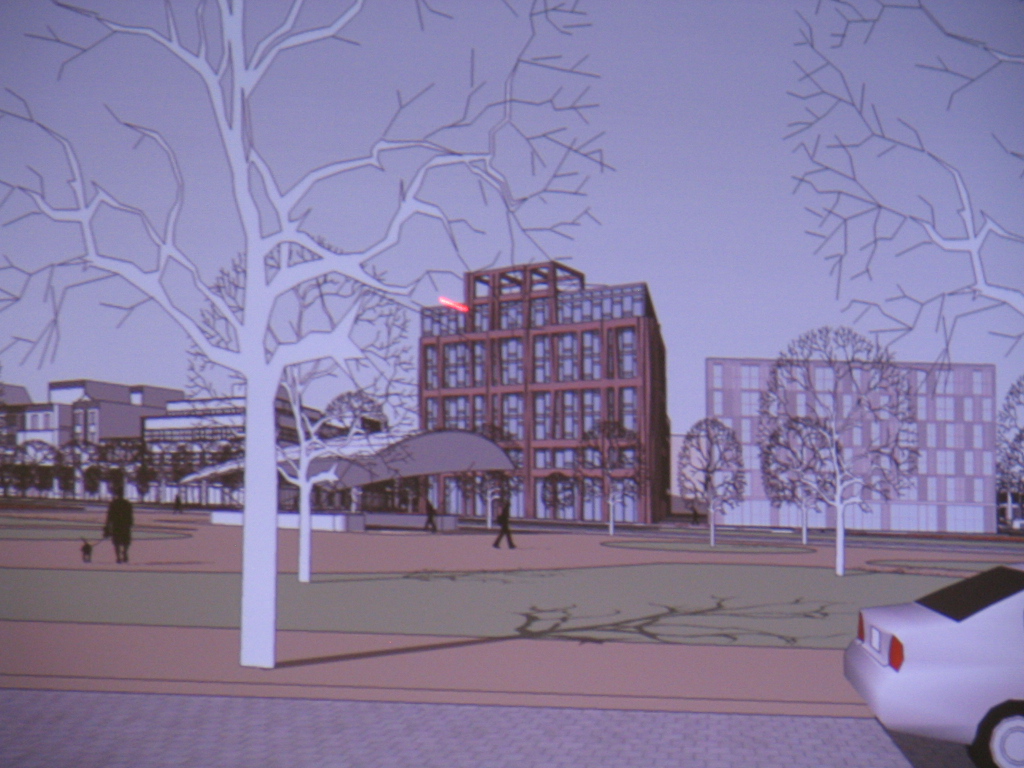
Residential Building or Hotel on 7th Street, from Eastern Market Looking SE
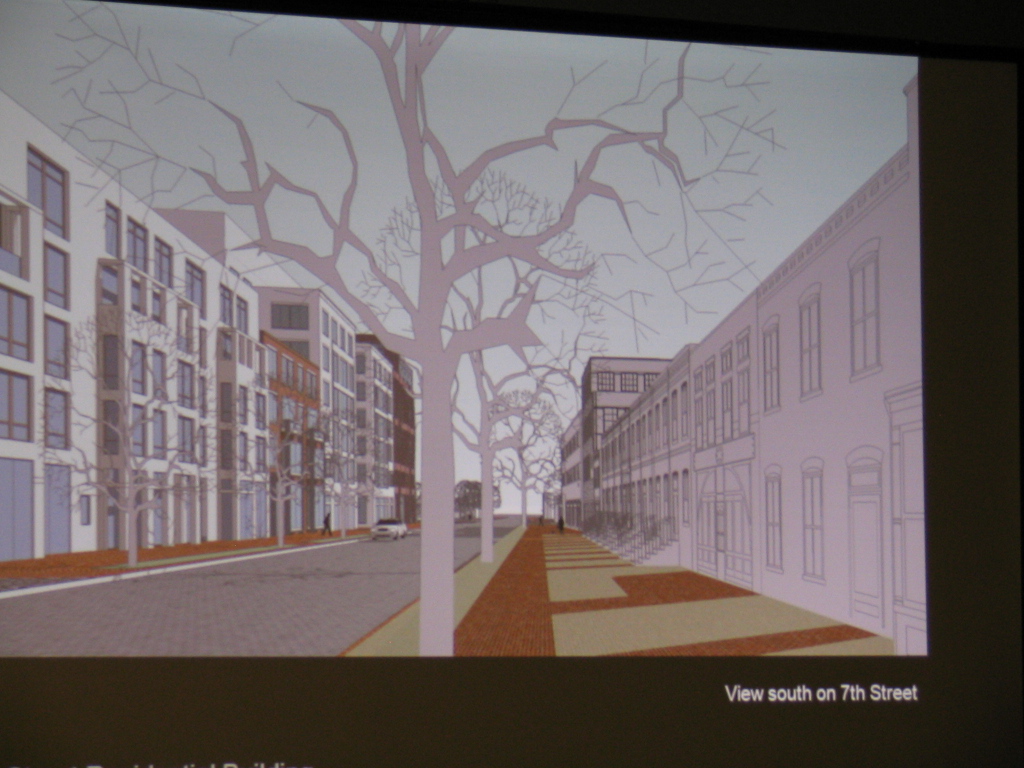
7th Street Looking South
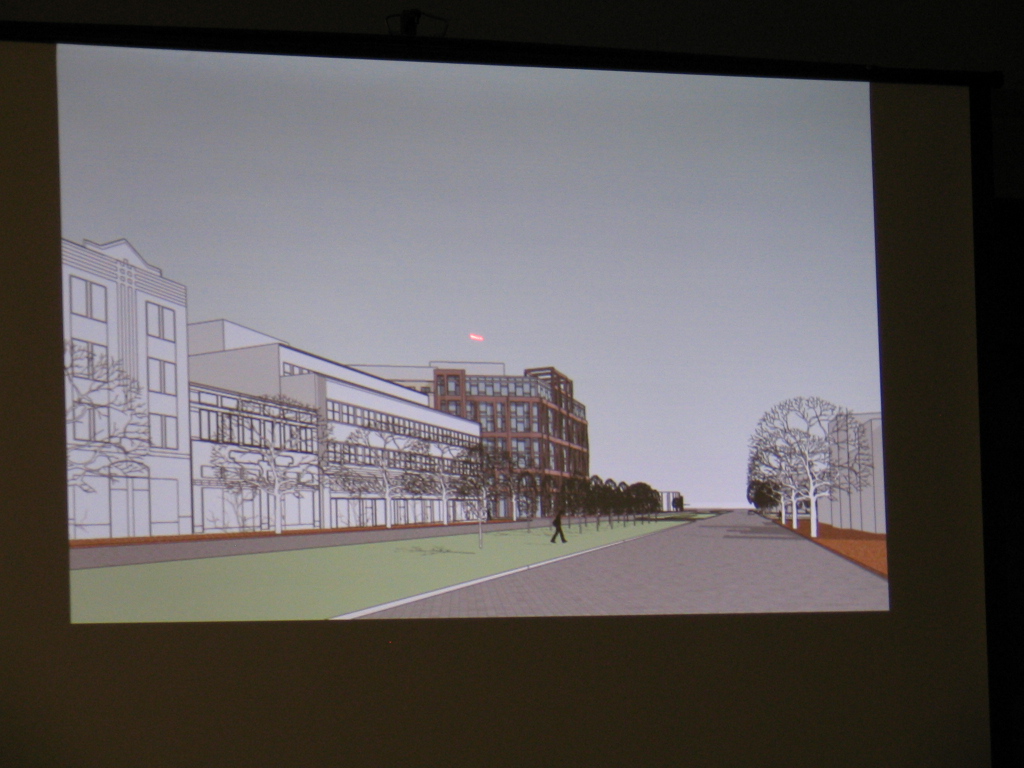
Pennsylvania Avenue Looking East
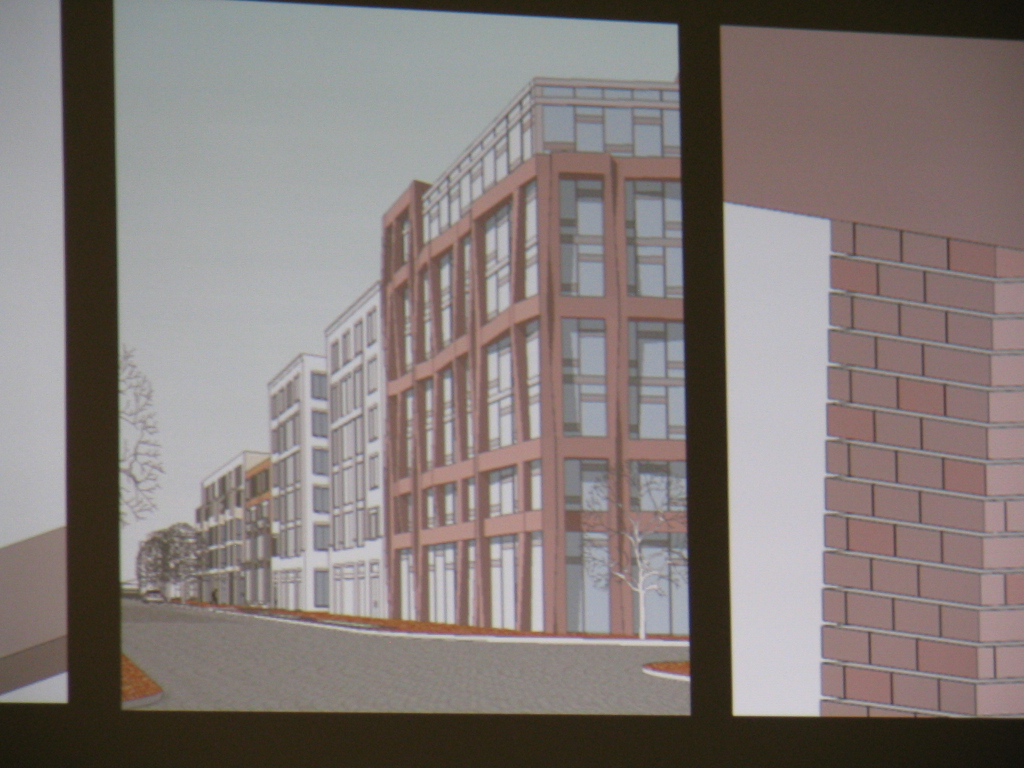
7th Street Looking North
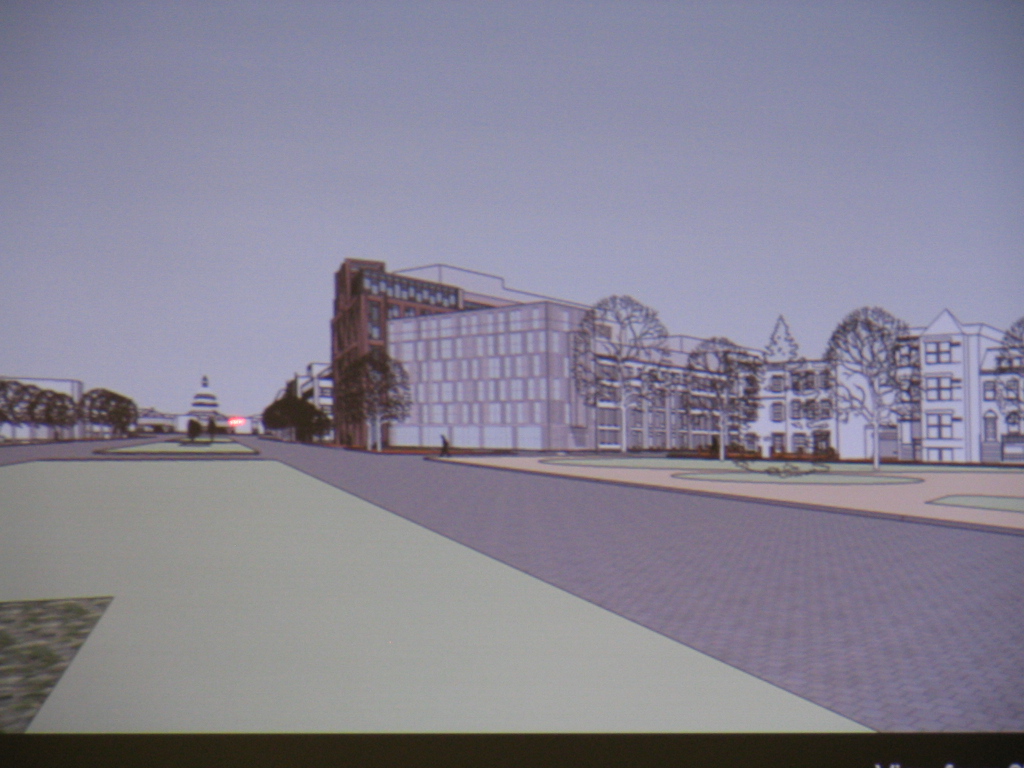
Pennsylvania Avenue Looking West
New Conceptual Drawings of Hine Redevelopment Project Unveiled
Time Issues Force ANC to Alter Schedule for Consideration
by Larry Janezich
Tuesday night, Stanton-Eastbanc unveiled their latest concept drawings for the Hine project to the ANC6b Planning and Zoning Committee, Chaired by Commissioner Francis Campbell. This is the first step toward consideration of their Historic Preservation Application (HPA) for massing and height by the Historic Preservation Review Board (HPRB) on March 24th. As additional details are finalized, the plans will go back to HPRB for additional review in late spring or early summer.
It’s unlikely that the 20 or so near-by residents who turned out for the meeting liked what they saw and several the ANC6b Commissioners appeared skeptical of the proposal and the amount of information they were given. One was overheard to say, “This building is too damn big,” and that sentiment seemed to express the feelings of several commissioners.
Because of logistical time constraints on the meeting, Stanton’s architect, Amy Weinstein, rushed through a 20-plus minute power point presentation which was long on images and necessarily short on details.
The major changes in the design since Stanton’s last public presentation February 3 include elimination of the bridge between the commercial and residential buildings on the Pennsylvania Avenue face, thus effectively separating the two buildings; elimination of some ground floor residential space on 8th Street in favor of “quiet retail,” and the addition of a sixth floor to the residential building on the Pennsylvania Avenue side to accommodate larger residential units. Ms. Weinstein said Stanton was still unsure whether a boutique hotel would become part of the plan.
In architectural design terms, the concept for the office building on 7th Street and fronting on Pennsylvania Avenue will be a contemporary combination of red brick and pier and glass construction. The façade of the residential building will feature corbelled brick, similar to the concept employed in the façade of the Hospice Association Building on 7th Street, across from Eastern Market, also designed by Weinstein. Clay tile or slate will be employed in the façade of the north residential building facing a newly-reopened C Street.
The full ANC6b had been scheduled to hear a Stanton Eastbanc presentation and take final action on their Historical Preservation Application on March 8th. Since there was no time for questions from the commissioners or statements and questions from the community on Tuesday night, the Commission decided to hear those statements and questions at the full ANC6b meeting on March 8. A Special Call Meeting has been announced for Tuesday, March 15, at a place and time to be determined, at which Stanton Eastbanc will make another presentation for the community at large and answer questions and concerns raised by commissioners and members of the community. The Commission will then decide what recommendation to make to the Historic Preservation Office for consideration by the HPRB on March 24.
For now, the position of ANC6b Planning and Zoning on the HPA is to “take no position,” and to request additional information from Stanton. ANC6b Chair Glick specifically requested the “HPRB package” and Commissioner Pate insisted on clearly outlined details on the dimensions of the project, particularly regarding height and setbacks.
Stanton will make a separate presentation to the near-by neighbors Wednesday night and post the presentation on their website soon after that. That site can be found at: http://hineschool.com/
 CAPITOL HILL CORNER
Pingback: Morning Links: Offsets - Housing Complex - Washington City Paper
Seriously, this is what they think the Historical folks are going to approve? It looks horrible! I can’t imagine that anyone would be happy with this design. It looks like the awful concrete buildings they built on the SW waterfront in the 1970’s. YUCK! I’m horrified!
Christine McCoy
I can’t imagine the developer is expecting people to like it. To be honest, anyone familiar with the people of this neighborhood knows they won’t like anything except rowhouses. I’m not even sure if they would like that. And yes, I do live in the neighborhood and am familiar with the NIMBY attitudes that dominate.
Eh, it’s fine. I could nitpick some of the architectural details, but that’s hard to do from the low resolution of these photographs.
Most importantly, I think the density is fine. If anything, this could stand to be bigger. More people in the neighborhood is a good thing.
To put it somewhat crudely, I am gobsmacked – not by delight, but horror. If Stanton had gone out of its way to come up with something that would set off the “awful” bells they could not have done a better job! Cookie-cutter, no originality, no style, bland, are terms that can be slapped on this development package. This far too high, far too dense, far too ugly, far too dominant “thing” is to be in the heart of a community that is sought after – by residents, business people and visitors – because of its unique feel, look and charm? This gets built and the erosion starts.
It would be a tragedy to place this uninviting harsh facade at the heart of a unique and rich neighborhood. I don’t have issue with the amount of mass but it should be well integrated with the pedestrian atmosphere and not slam down a square block of bricks and glass. What happened to the rear courtyard/amphitheater on the new through C St? A key element that helped to soften the space and make it more community friendly with many possible uses. Frankly this looks like it was rushed and the initial goals have been lost- or the money is tight and they feel like an inexpensive cookie cutter office building is just fine. Clearly that’s not what would benefit the community.
Just returned from a weekend in NYC, and noticed such great new buildings while walking the High Line. New development in historic cities can be an incredible opportunity to encourage great design. Watching the setting sun reflect on the facade of the new Arena Stage building in SW last week made me hopeful that DC had caught on…
This is pretty awful.
It is time now to totally reconsider. In fact, for many of us, the original choice the city made seemed to be guided more by politics than by the best architectural and urban design.
The original plans Stanton presented have now been completely abandoned and all of their loudly proclaimed occupants have disappeared , so it now appears that they will not implement the original concept.
Other concepts were presented originally that were much better than what is now being touted by Stanton.
SO IT IS TIME TO CALL A HALT TO THIS AND BEGIN AGAIN IN ORDER TO FIND THE RIGHT SOLUTION FOR THIS VALUABLE LAND.
Yes, that will delay implementation, but delayed implementation is MUCH better than FLAWED implementation.
Larry, thanks for the photos and the report. While I live on the 1800 block of Mass. Ave. SE and not next to Hine, after looking at the galleries and reading the article, I quickly checked my calendar to be sure this was not April 1st and this was not a practical joke. With luck, these plans will be rejected and maybe its time for Ms Weinstein to retire or be replaced.
I live in the immediate neighborhood and wholeheartedly support this plan. Much of the opposition strikes me as appallingly selfish.
Buildings near Metro stations should be large. We live in a growing region, and there is no better place for people to live than in the immediate vicinity of a Metro station. Increased density is the single most important step that we can take to protect the environment.
Moreover, this site is not part of the existing neighborhood fabric. It is an eyesore. We are talking about how to improve it.
I also think the opposition of some neighbors, while it springs from selfish motives, is misguided. Increased density will benefit our neighborhood, increasing the vibrancy of our common spaces and providing new customers for our local merchants. And there is good reason to believe that it will increase the value of our townhomes.
Finally, I do not understand the principle that people who live across the street from a given property should be able to control the terms of its development. This decision equally concerns a set of larger communities — the neighborhood, the city, the region.
I sincerely hope that the its moves forward.
I don’t have a problem with density as much as I do with design. I don’t live across the street, but have been very active in the 8th Street revitilzaton for the past 15-years. What they are proposing is UGLY…no getting past it. It’s unwelcoming and quite frankly looks a lot like the UGLY buiding that’s standing in that space right now! Since when is retro 70’s building style something that we would deign to accept in the Historic District?! Really, come on…they can do better than this!
The building should be bigger not smaller. It is basically on top of the metro. You want retail to survive on Barracks Row? You need more density not less. The design issues are fixable, but it is imperative that this project get moving.
These concepts look good to me. More refined architecture and realistic renderings would be the next step.
I’m not going to pontificate in this posting (never a shortage of that around here), but as a nearby neighbor I’ll add my voice to the thread. Based on these graphics, the proposed residential buildings are both ugly and featureless–surprisingly so. I harbored no illusions, but I had at least expected a technically better looking plan than this one. They do remind one of the sort of Soviet-style 1970’s era buildings in near-Southwest that are at this moment being bulldozed.
Architecturally, it all seems very modern “walkable” a la Ballston and Clarendon. This has the look/feel of what suburbanites think urban is.
I guess there are too schools of thought – make the buildings blend in as much as possible stylistically but with the modern sensibilities so as to possibly mitigate resistance based on design sensibilities or just go off the reservation totally trying to make an architectural statement. With the first option you get this with the second option you get something that is likely to date itself (like the Hine building) and stir up the locals. Either leaves you wondering about the credentials behind the designer and most unhappy with the result no matter the result.
Based on these drawings, I do think the office building in particular, looms over the landscape just a bit too much. The rest just seems so very pedestrian in the adjectival sense.
Even though Jamal’s Chinatown is Disneyfied, at least it’s trying to keep a historical character, unlike Ballston and Clarendon which are ugly and superficially walkable as ET says.
I’d prefer the architecture of Chinatown, especially parts of 6th where the old brick rowhouse facades remain on the street level with the towering more modern apartments/offices above.
There are design critiques and there are planning critiques.
There’s no accounting for taste. People will have different thoughts on style, aesthetics, etc.
On planning issues, however, the massing of the buildings and the amount of stuff (i.e. density) is not only perfectly appropriate for a close-in urban neighborhood directly on top of a Metro station, it could probably stand to be even more dense.
Nothing is looming over the landscape here. The tallest building facades front on a public square that’s hundreds of feet across. The building heights along the ‘residential’ streets are absurdly reasonable – there is very little merit to any of the opposition of a ~50′ tall building fronting on an 8th Street right of way that’s ~100′ wide. If anything, those proportions could stand to be reversed to get something more urban.
It’s time that the neighborhood let the city be a city. Embrace the density – it is what gives the neighborhood its life and vitality.
This is an architectural disaster. It may fit in with the other Stanton developments nearby (666 Pennsylvania Ave and that monstrosity across from Eastern Market on 7th Street), but it makes NO ATTEMPT to fit in with the 19th century buildings of the neighborhood.
If the Restoration Society goes along with this, then they have become worthless.
@David The Restoration Society has been worthless for a long time.
Alex B. is completely right about the scope of the buildings considering they are practically on top of a metro station. Increased density will do nothing but create more vitality and opportunity for businesses. The reason so many new buildings look like they belong in Clarendon is because it’s a neutered architectural style that raises the fewest objections from the masses. Some people hate these designs, but imagine the reaction if they proposed something architecturally creative or radical. It would be “designed” by committee and end up looking just like this. Not everything can be a 19th-century rowhouse.
@Eric
I think the density is fine but let’s not just give in on the design because we don’t want to try- or it’s too hard. Frankly to me it could be modern, traditional, or anything else as long as it’s well considered. Fitting into the neighborhood doesn’t mean “old looking”, rather being inviting and interesting with the potential to include the community and events within the structure. The amphitheatre idea was a wodnerful way to do this- with a multiple use space that added to the area not just closed off the public. I think we have an opportunity here – all of us – and it would be great to turn this conversation into what we want (realistically) and join together to reach those goals.
Can any one get their hands on the concept drawings Stanton produced in order to become the winning proposal for the Hine Redevelopment? It would be most interesting to compare the concepts.
I never thought I would be able to say this but this design is actually uglier than 600 Penn SE. It appears to be the Capitol Hill version of a McMansion, the largest structure you can fit within property boundaries.
@Eric G
Part of my point is that design is subjective so when you get input from the community, we don’t necessarily “improve” the design. I’m not a fan of these rendering either, but my understanding is that they’re less detailed renderings for use in understanding massings, not for adding aesthetic elements. Additionally, who am I to say that my opinion on the design is right for this building.
Regarding them taking up the entire property, I think they should. It is right on top of the metro and there is already lots of underused open and green space right across the street. Advocating for leaving open space on the lot is a suburban mentality that has no place on the hill. We should be focusing our open space efforts on making the ones that already exist more usable.
A McMansion? What?
You mean this is somehow like large, generic, suburban tract homes on large lots that surround culs-de-sac?
How does that have any connection to a dense, urban development that uses a great deal of the lot?