The Week Ahead…& Some Photos from the Past Week
by Larry Janezich
Posted October 25, 2026
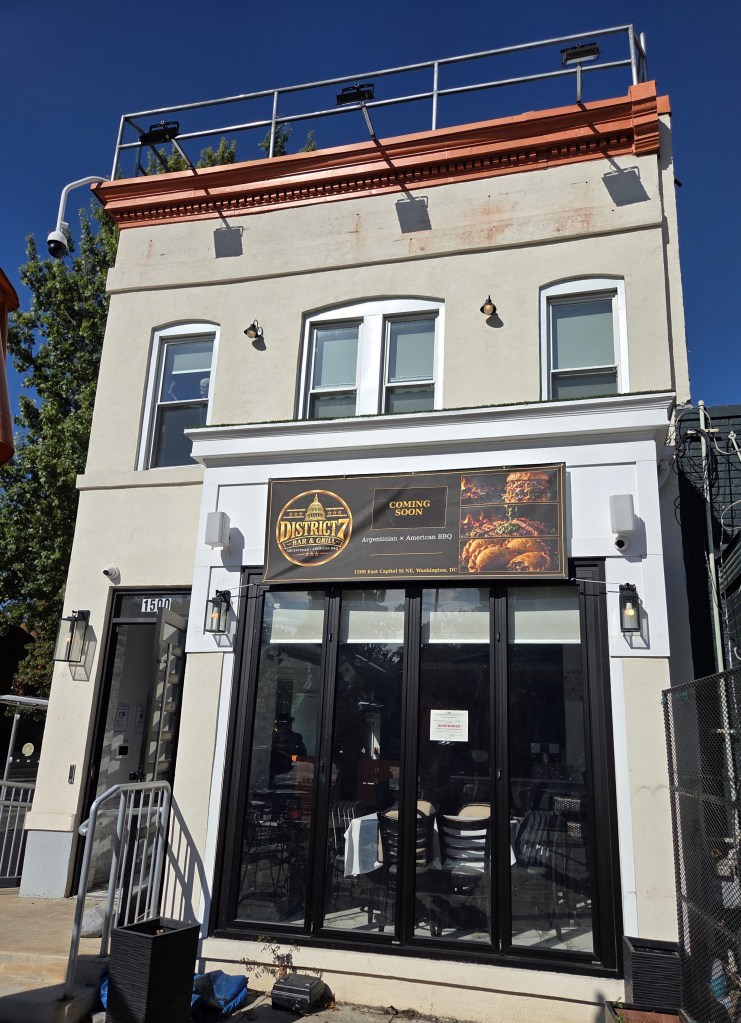
District 7 Bar & Grill, an Argentinian-American BBQ fusion coming to 1500 East Capitol. The restaurant will be open for: Breakfast-Lunch-Brunch-Dinner. One of the owners told CHC they hope to open on November 7. We’ll see. Want to help them open? Here’s their kickstarter link: https://bit.ly/4z2rqJU
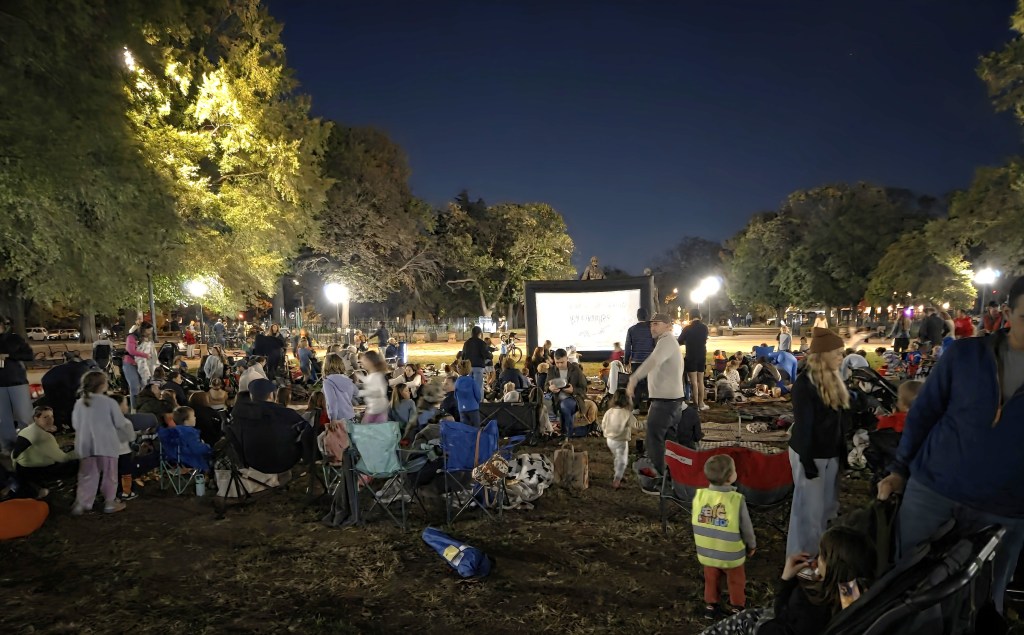
Friday night, 1st District MPD and Friends of Lincoln Park hosted Movie Night, featuring a seasonally timely moving, Monsters. Inc. There was a pretty good turnout. Here’s a photo from the rear of the crowd.
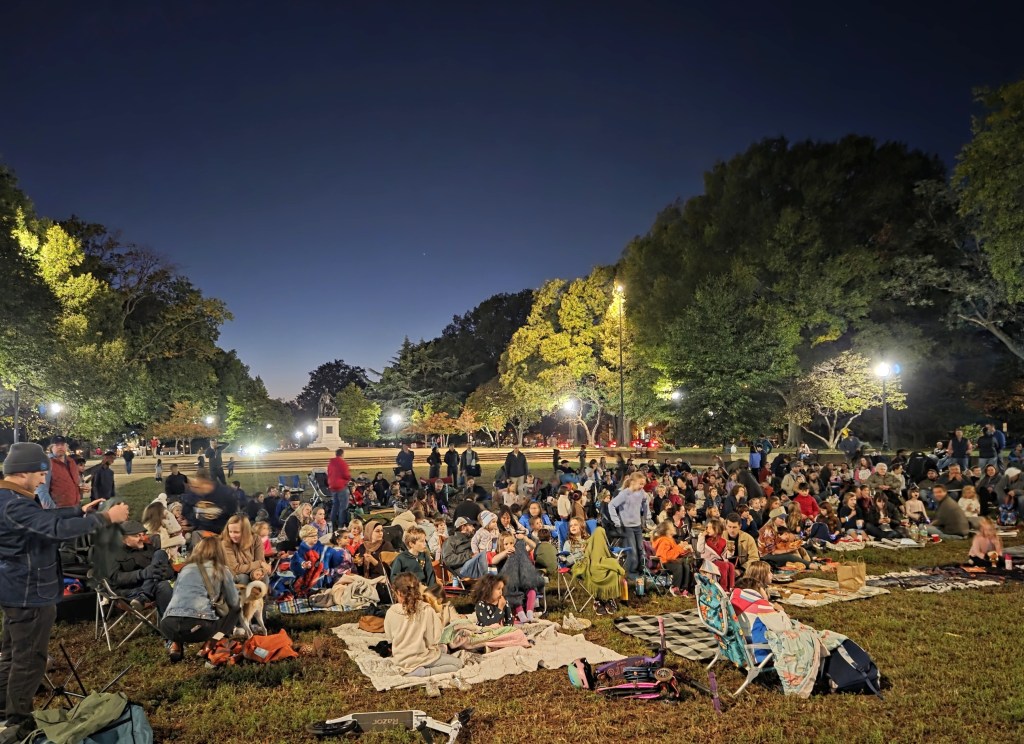
And here’s the reverse shot.
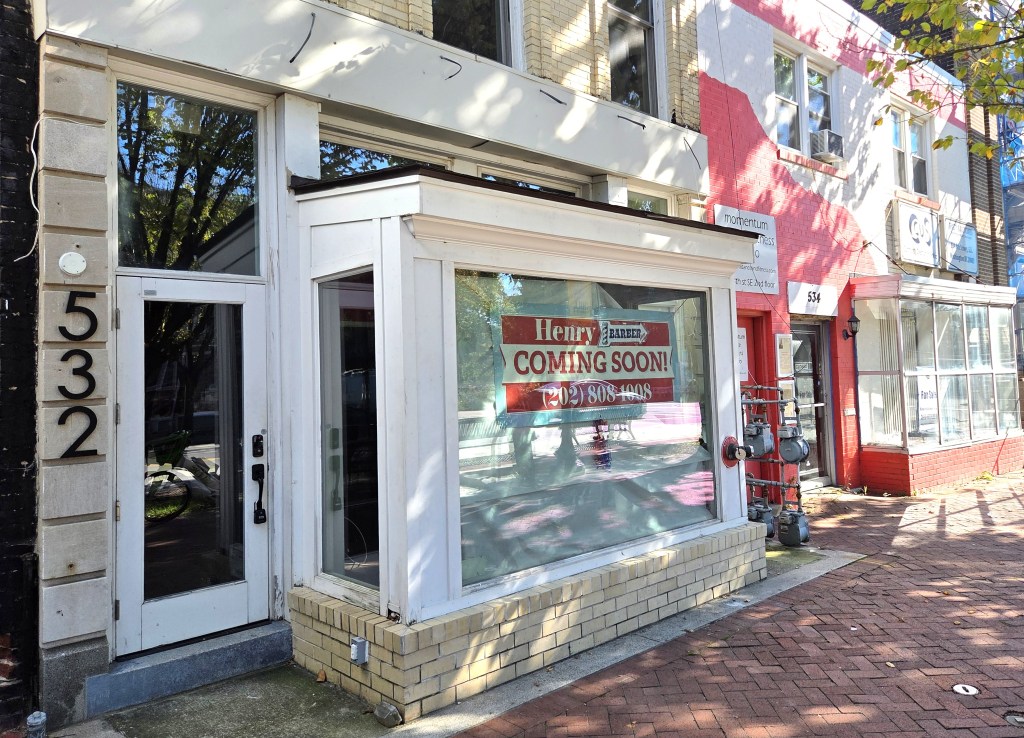
There’s some new service oriented retail coming to 532 Barracks Row.
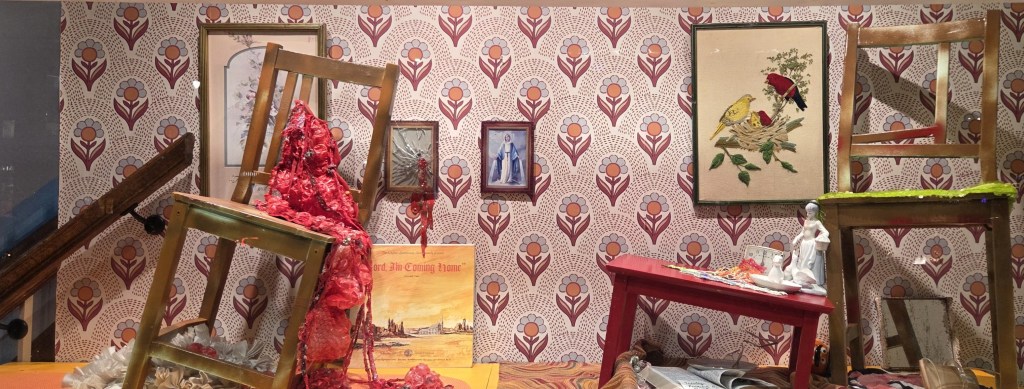
Worth checking out: Triple Candies latest installation depicts a state of precariousness.
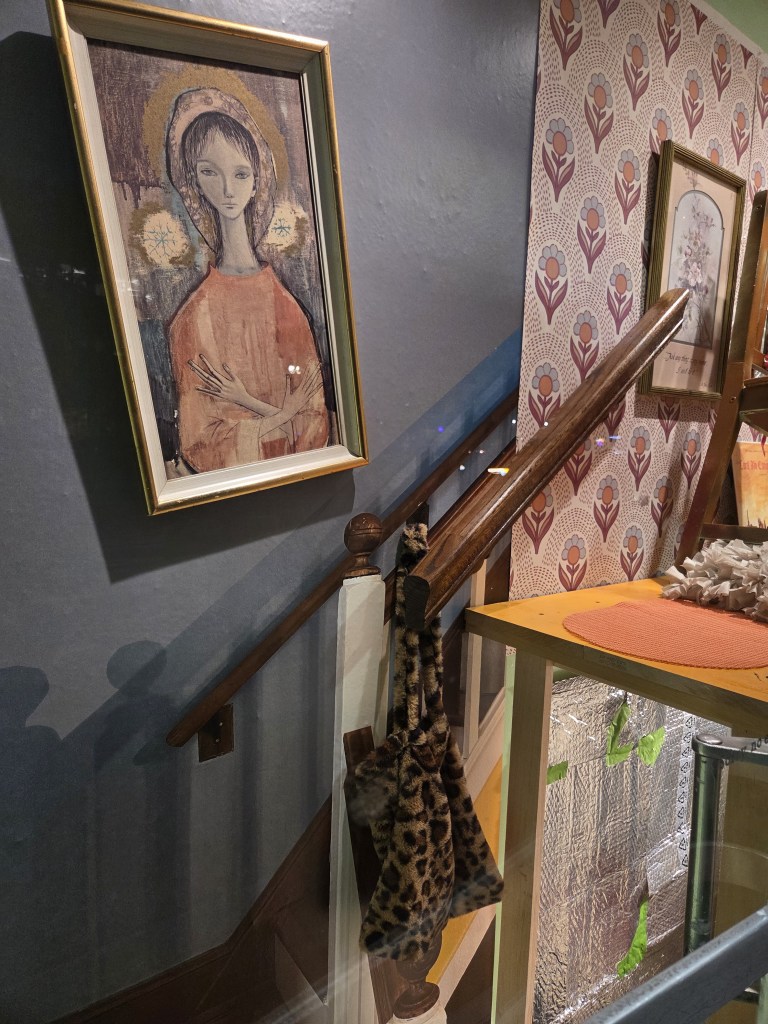
The left side of the installation – best viewed through the glass doorway of the space containing it –is a political trompe-l’œil (pronounced trump loy) – presenting an illusion of normalcy but referencing the instability depicted in the rest of the installation.
Triple Candies’ monthly installations are displayed in the former Li’l Pub at 655 Pennsylvania Avenue, SE. Triple Candies is a research-oriented curatorial agency run by art historian co-founders Shelly Bancroft and Peter Nesbett.
The Week Ahead…
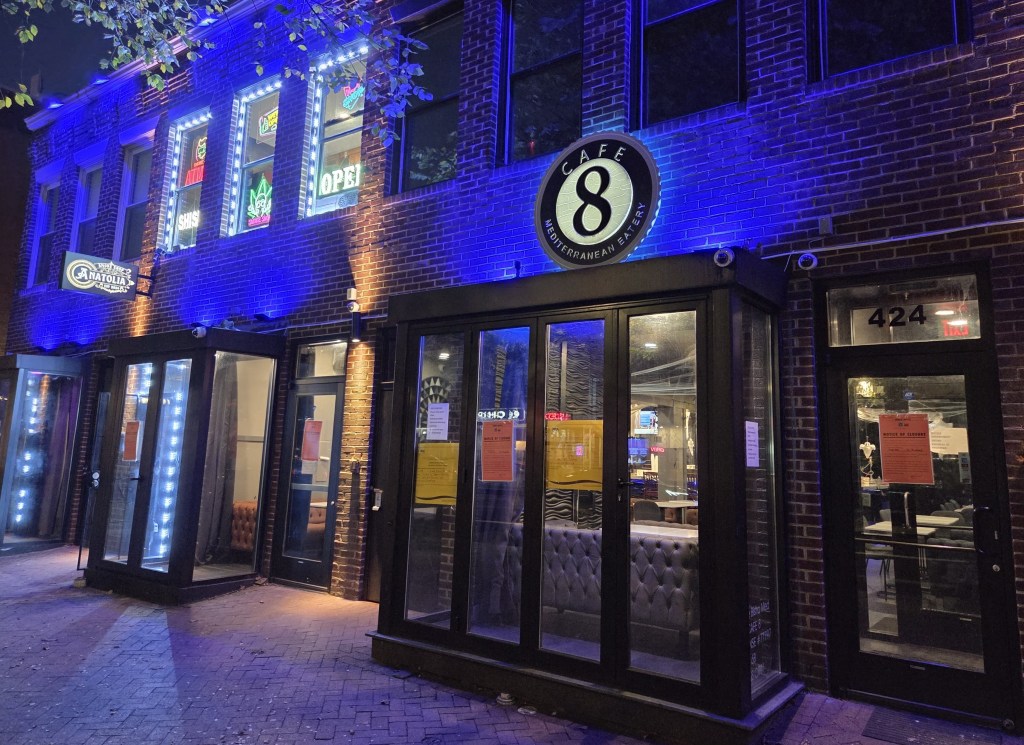
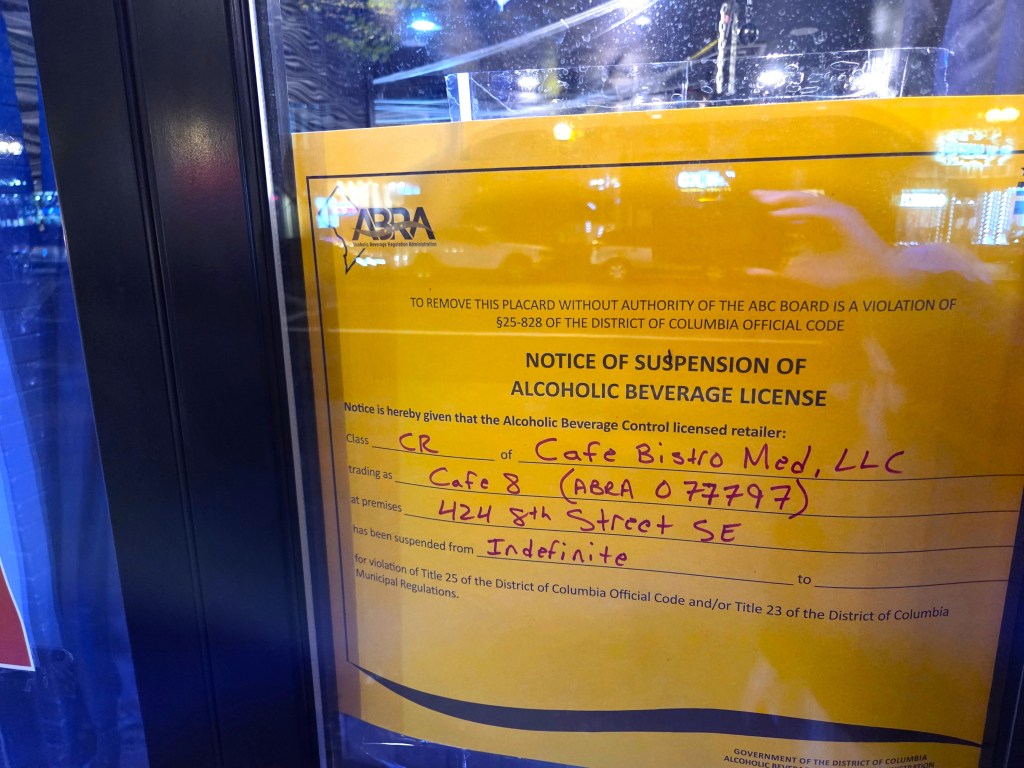
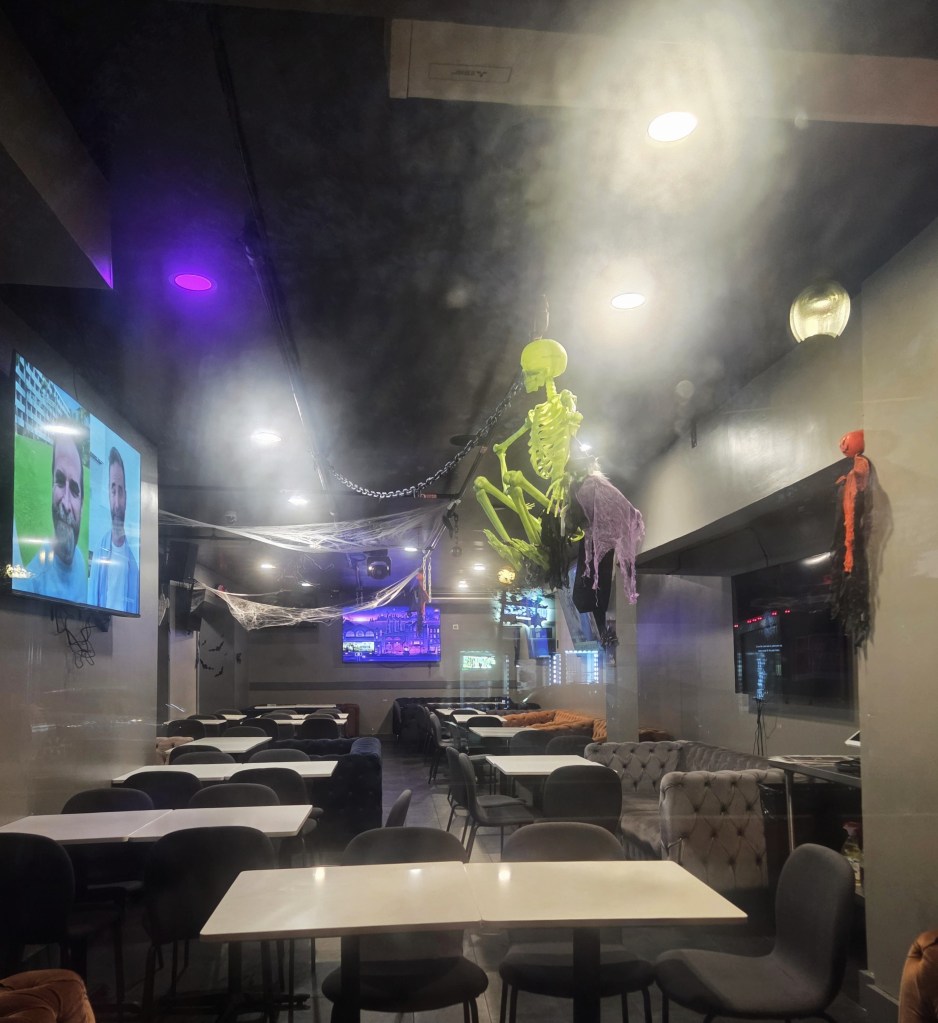
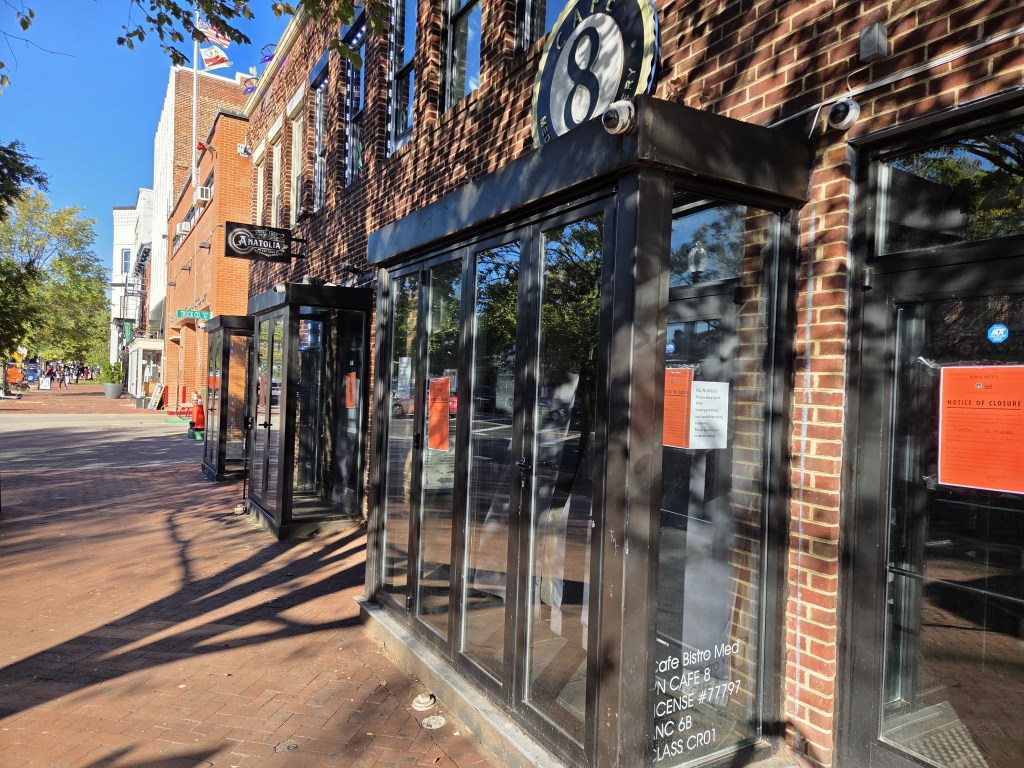
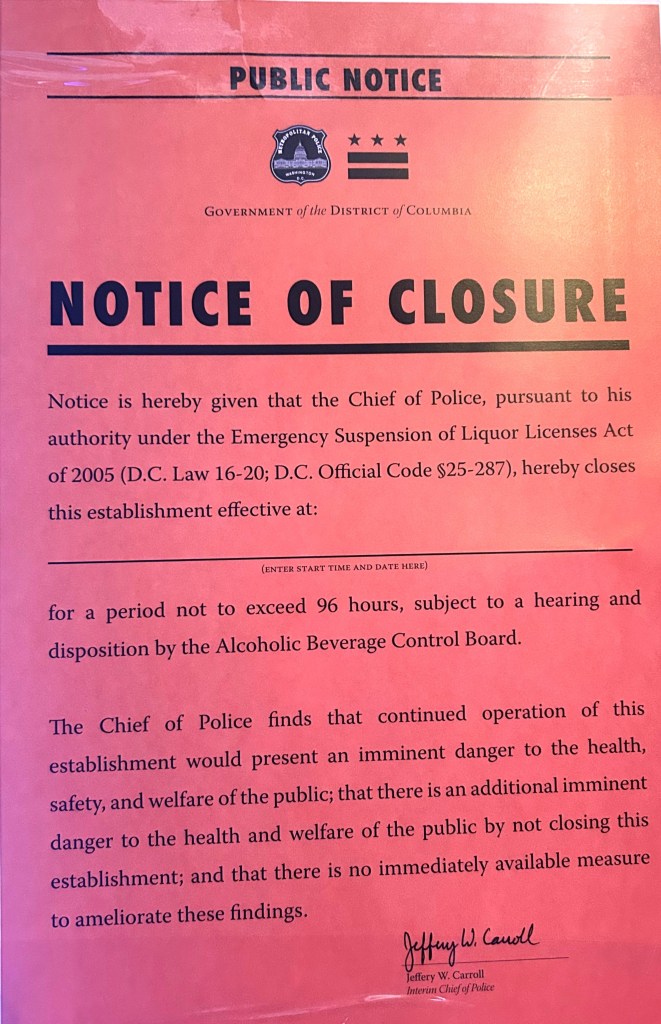
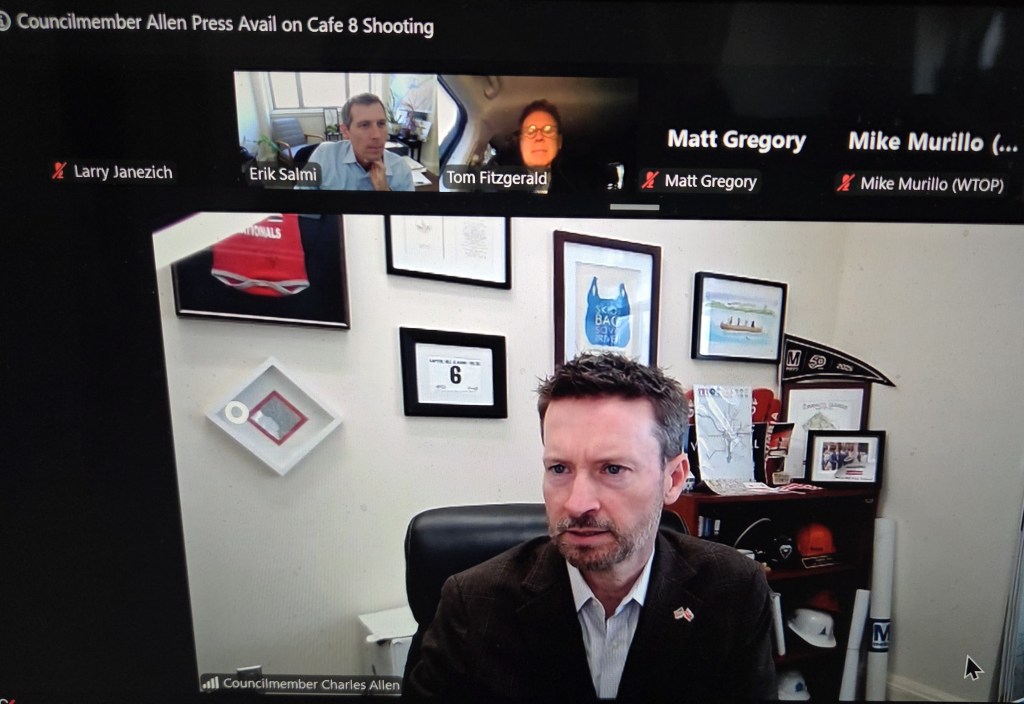
Highlight: Café 8 is on the agenda of ANC6B’s Public Safety Committee meeting on Monday. A Café 8 representative is scheduled to attend.
Monday, October 26
ANC6B Public Safety Committee will hold a meeting at 6:30pm.
- For info on how to join the virtual meeting, go here: https://bit.ly/4BJ0dOn
Agenda:
- 1st District Safety Update with MPD Captain Adam Crist.
- Discussion of recent events at Café 8 with Elif Sam from Cafe 8.
- Possible discussion of past events at Ginza Karaoke and BBQ Lounge (late invitation to Ginza to send a representative).
ANC6A Community Outreach Committee will hold a virtual meeting at 7:00pm.
- For info on how to join the meeting, go here: https://anc6a.org/community-calendar /
Among items on the draft agenda:
- Community Resource Round Robin
- Community Presentation: DC Coalition Against Domestic Violence – Janelle Peoples
- Community Discussion: Friends of Lincoln Park Grant Request – Jeni Shoemaker
- Wrap Up
ANC7D Community Outreach and Grants Committee will hold a virtual meeting at 7:00pm.
- For info on how to join the meeting, go here: https://bit.ly/48daOTQ Pass word: anc7d
Agenda: TBA
Tuesday, October 27
ANC6B Alcohol Beverage & Cannabis Committee has scheduled a virtual meeting at 7:00pm
- For info on how to join the meeting, go here: https://anc6a.org/community-calendar/
Agenda: TBA
ANC6B will hold a virtual Executive Committee meeting at 7:00pm.
- For info on how to join the virtual meeting go here: https://anc6b.org/
Agenda:
The standard business of the Executive Committee is adoption of upcoming meeting agendas.
Wednesday, October 28
Eastern Market Community Advisory Committee will hold an in person and virtual meeting at 7:00pm.
- For info on how to join the meeting, go here: TBA
Agenda: TBA
ANC7D Community Outreach and Grants Committee will hold a virtual meeting at 7:00pm.
- For info on how to join the meeting, go here: https://bit.ly/4kcsrdJ Password: ANC7D
Agenda: TBA
Thursday, October 29
ANC6C Grants Committee will hold a virtual meeting at 7:30pm.
For info on how to join the meeting, go here: https://anc6c.org/hot-topics/
Agenda: TBA
Capitol Hill Corner Would Also Like You to Know About:
Friday, October 30
Eastern Market/7th Street
4:00pm – 6:00pm
Hilloween at Eastern Market
Go here for details: https://www.hilloweendc.com/
Saturday, October 31
North Hall Eastern Market
The Capitol Hill Restoration Society’s annual House Expo aims to connect homeowners with service providers and contractors who can help. This year’s Expo is set for Saturday, Oct. 31, from 9am to 3pm, in the North Hall of historic Eastern Market. The event is free and open to the public.
Saturday, October 31
National Museum of the American Indian
10am – 5pm
Día de los Muertos (Day of the Dead)
Día de los Muertos (Day of the Dead) is a time for commemorating our ancestors. Rather than a period of mourning, it is an occasion for celebrating with family—both living and dead—and honoring the cycle of life. Visit the National Museum of the American Indian and enjoy family-friendly activities throughout the day, including dance performances by Grupo los Tecuanes, making paper marigolds to be placed on a Catrina statue, and making papel picado (perforated paper decorations) with David Amorozo. Learn how pan de muerto (bread of the dead) is made with Neil Vargas, Jr. Learn about La Catrina and her joyful view of life and mortality by interacting with live Catrinas roaming the festival . Visitors are invited to leave photos and mementos of their loved ones on the ofrenda (altar) or commemorate them by writing their names on a butterfly to attach to the memorial arch.
Go here for more info: https://bit.ly/3UlZfXk
Sunday, November 1
Congressional Cemetery
11am – 3pm
Día de los Muertos
Join us for an extraordinary celebration of Día de los Muertos at Historic Congressional Cemetery. In collaboration with special guest and Capitol Hill resident, Rosa Moreno, and Death Doula-in-Residence, Laura Lyster-Mensh, we will transform the chapel in the center of our grounds into a place of learning, remembrance, community gathering, and celebration of the “Day of the Dead.”
Día de los Muertos is a tradition that honors loved ones who have passed, celebrating the ongoing bond between the living and the dead. Millions in Mexico, Latin America, and beyond celebrate by creating colorful ofrendas (altars) with photos, flowers, food, and mementos to welcome spirits back to the earthly world. Many also gather in cemeteries or at festivals to share music, meals, and remembrance in a joyful celebration of life.
Now in its second year, Congressional Cemetery’s Día de los Muertos celebration invites the public to join us on Sunday, November 1st from 11:00 am to 3:00 pm at the historic chapel to collectively build a large-scale ofrenda honoring our departed loved ones.