The Week Ahead… & Day of the Dead at the National Museum of the American Indian
by Larry Janezich
Posted October 29, 2023
This past weekend, the National Museum of the American Indian was given over to the Day of the Dead.
Día de los Muertos originated in ancient Mexico and northern Central America where the Aztec, Maya and Toltec had specific times when they honored the dead. The commemorations were later incorporated into Spanish holidays, All Saints Day on November 1 and All Soul’s Day, November 2. Despite its name, the holiday is a joyful remembering and celebration of life of those who have departed. Día de los Muertos is celebrated on Nov. 2.
The exhibits included dances traditionally associated with Día de los Muertos, including Danza de los Viejitos—the dance of the little old men and La Danza de los Tecuanes—the dance of the jaguars.
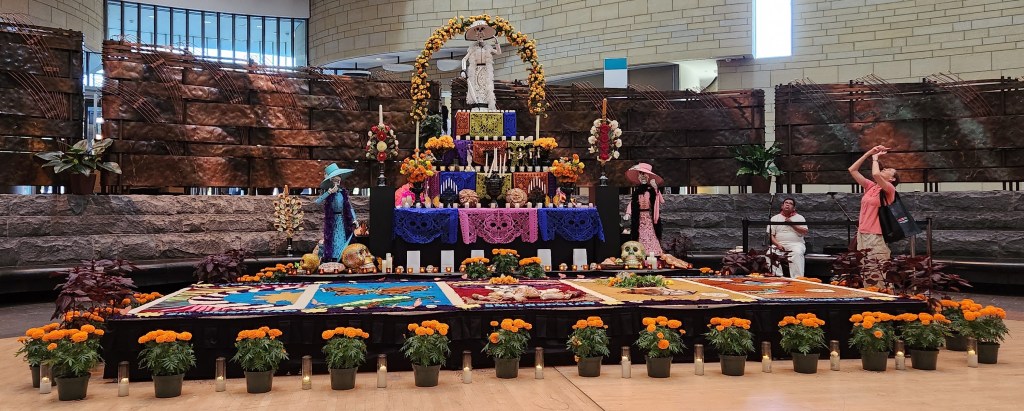
The ofrenda is the altar which is at the center of the holiday. This ofrenda is topped by a calvera (skull in Spanish) which has come to mean the whole skeleton.
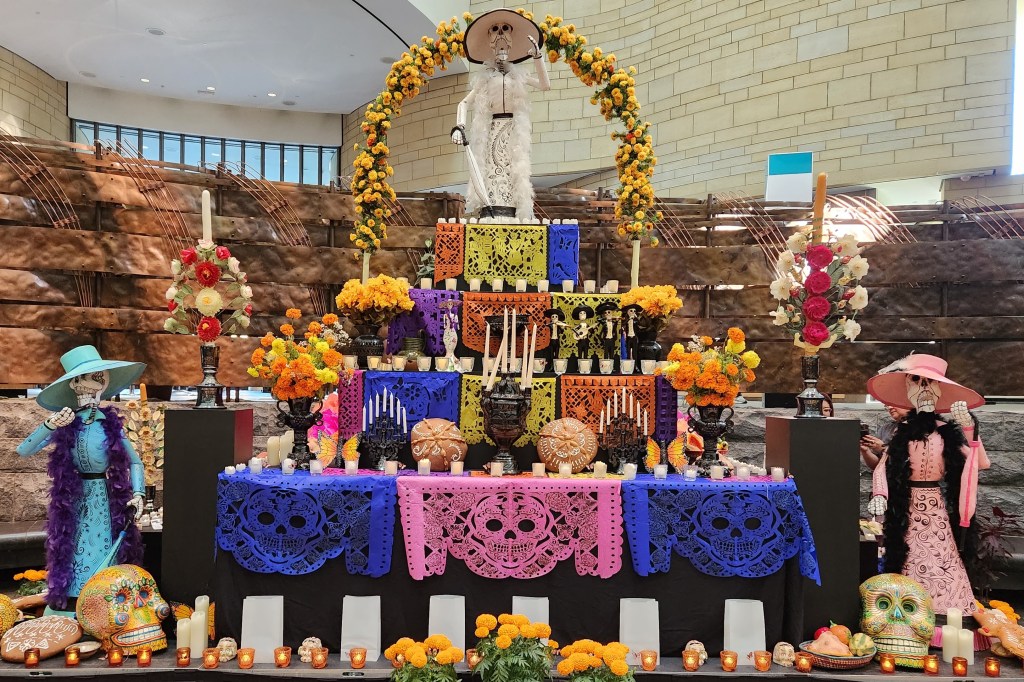
The ofrenda features skulls, skeletons, mementos and photographs of those who have died. In addition, loaves of bread and sugar skulls, jugs of water, candles, and lacey paper cutouts called Papel picado, represent the four elements of earth, water, fire and wind. The marigolds guide the spirits home and Monarch butterflies – which arrive in Mexico for the winter on November 1 – are believed to hold the spirits of the departed.
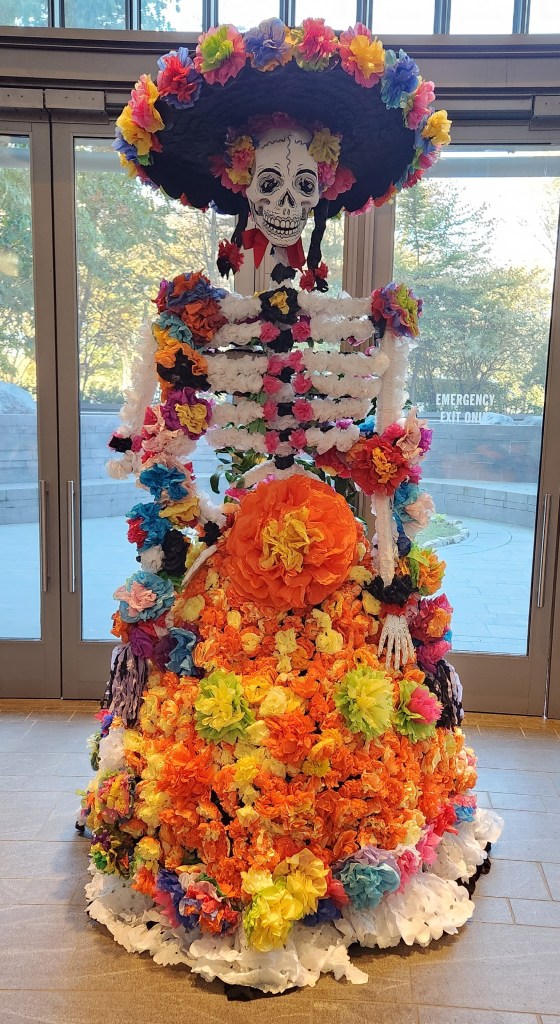
This calvera is Catrina – a female skeleton – the most recognizable female figure for the Day of the Dead. This one made from paper flowers.
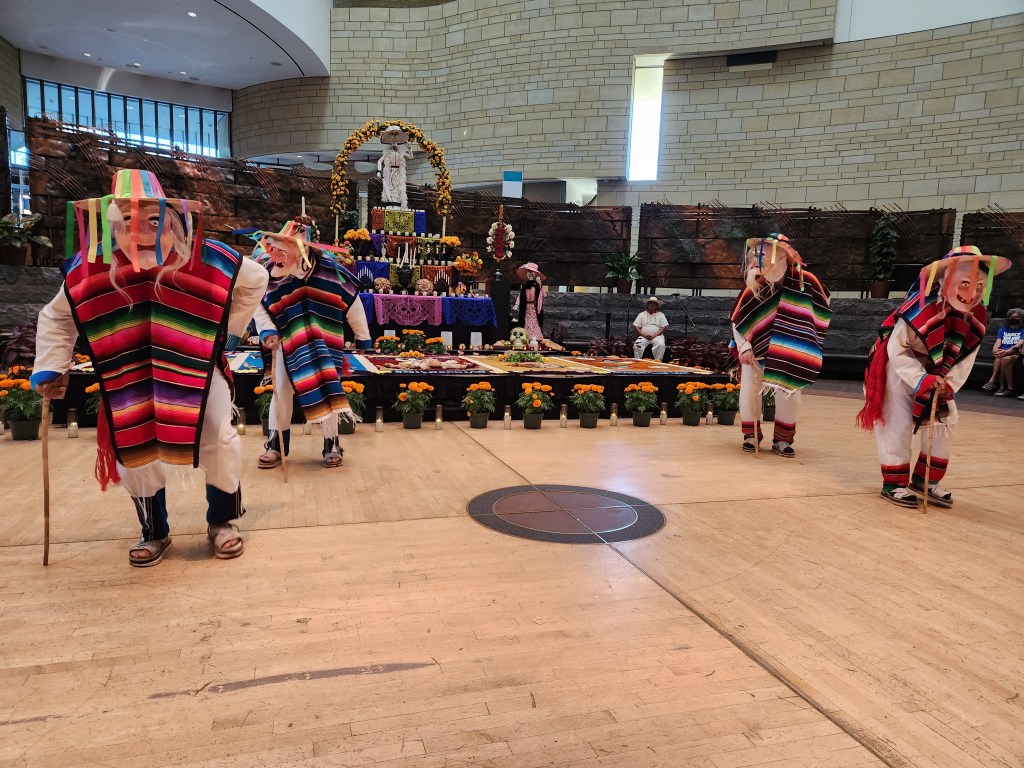
The humorous and joyful Dance of the Old Men has its origins in pre-Hispanic times and some sources say it honors the Aztec Sun God to ensure good harvests. The four old men represent the four elements: earth, air, fire and water. The dancers wear wooden soled shoes which provide a staccato percussion to the dance steps.
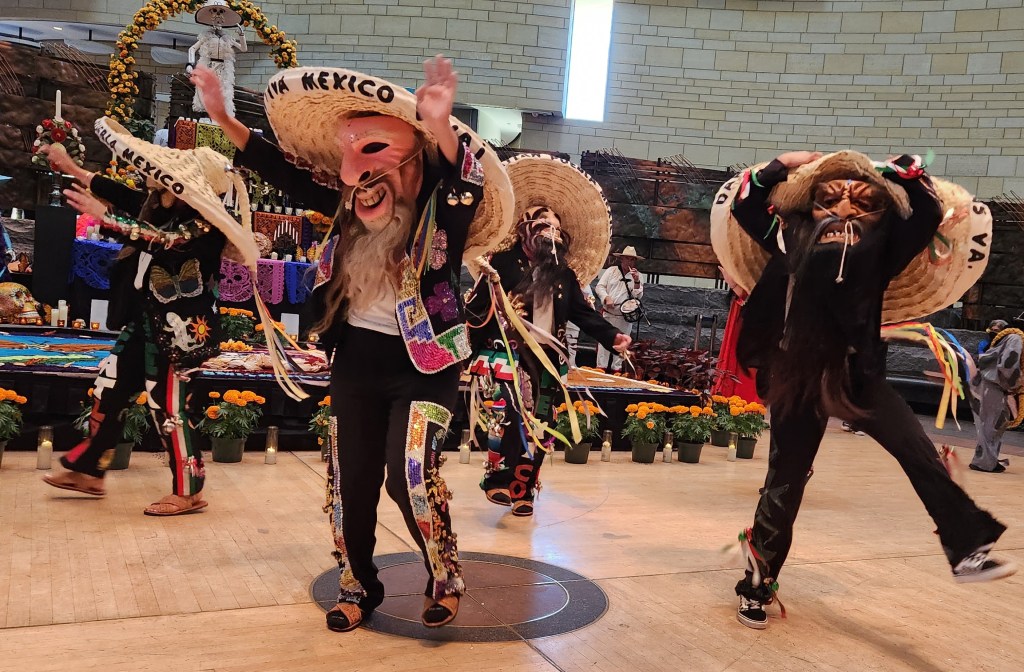

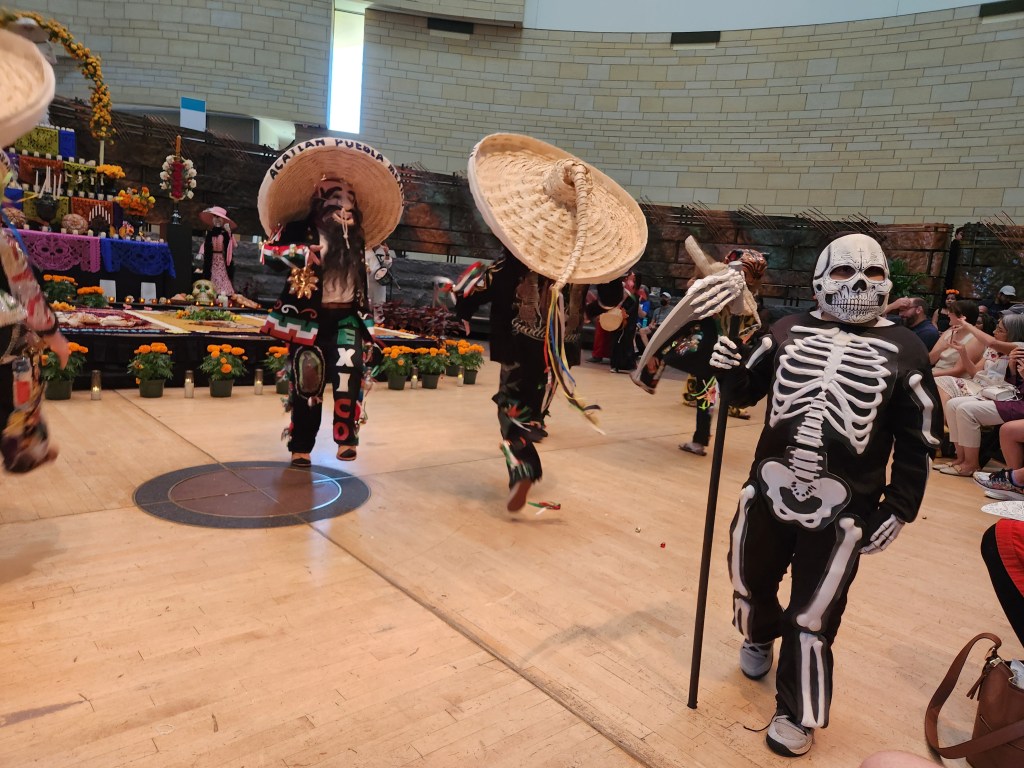
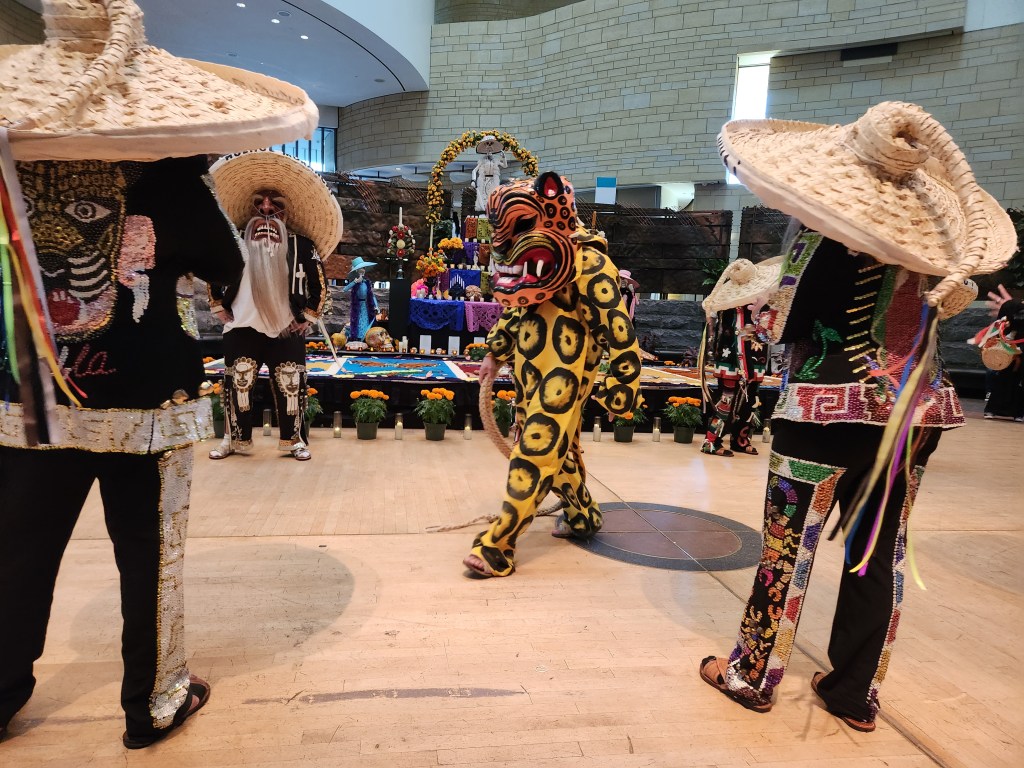
The Dance of the Jaguars features characters, including impersonators of villagers, the devil, death and the jaguar who move the narrative forward.
The jaguar – “one who eats” – represents the greatest danger to the village and the dance begins with villagers seeking strength and guidance to hunt and kill the jaguar before the ofrenda. The jaguar impersonator instills fear with a whip which he cracks – sounding like a firecracker – while striding between and among the villagers, pausing occasionally to maul one. The jaugar’s demise eventually comes at the hands of the characters who then celebrate. The dance, both primitive and elemental, is presented by the local Grupo las Tecuanes, and accompanied by a single musician who simultaneously plays a drum and a flute.
(See below for Día de los Muertos celebration at the National Portrait Gallery on Thursday, November 2)
The Week Ahead….
Monday, October 30
ANC6B will hold a virtual Executive Committee meeting at 7:00pm, to set the agenda for the November meeting of the full ANC.
For info on how to join the meeting, go here: https://anc6b.org/
Wednesday, November 1
ANC6B Special Committee On Public Safety will hold a hybrid meeting at 6:30pm. (Physical Location: Meeting will be held at 700 Pennsylvania Ave SE; (entry adjacent to Trader Joe’s).
To join the virtual meeting, see here: https://anc6b.org/
Agenda: TBA
Thursday, November 2
National Portrait Gallery Día de los Muertos celebration includes music and dance performances and a projection of “La Común Unidad: Caminando con los Ancestros,” a video work by artists MasPaz and Guache. 5 to 8:30pm – Free.
 CAPITOL HILL CORNER
Thank you for a beautiful rendering of this ancient custom.
You will remember perhaps how It was also an unforgettable background and theme in Malcolm Lowry’s famous novel “Under the Volcano”. Your description is more cheerful. His novel tells the story of Geoffrey Firmin, an alcoholic British consul in the Mexican city of Quauhnahuac, on the Day of the Dead in November 1938.