
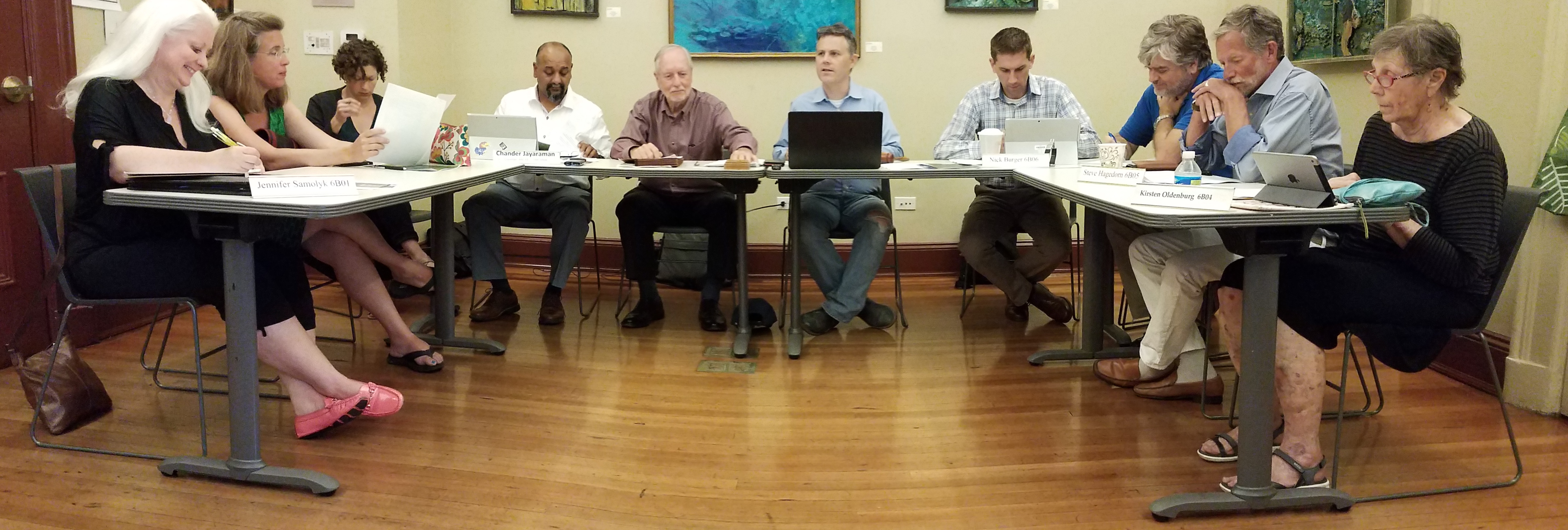
Capitol Hill residents and stakeholders met Monday night to discuss Barracks Row “pain points.” Click to enlarge.
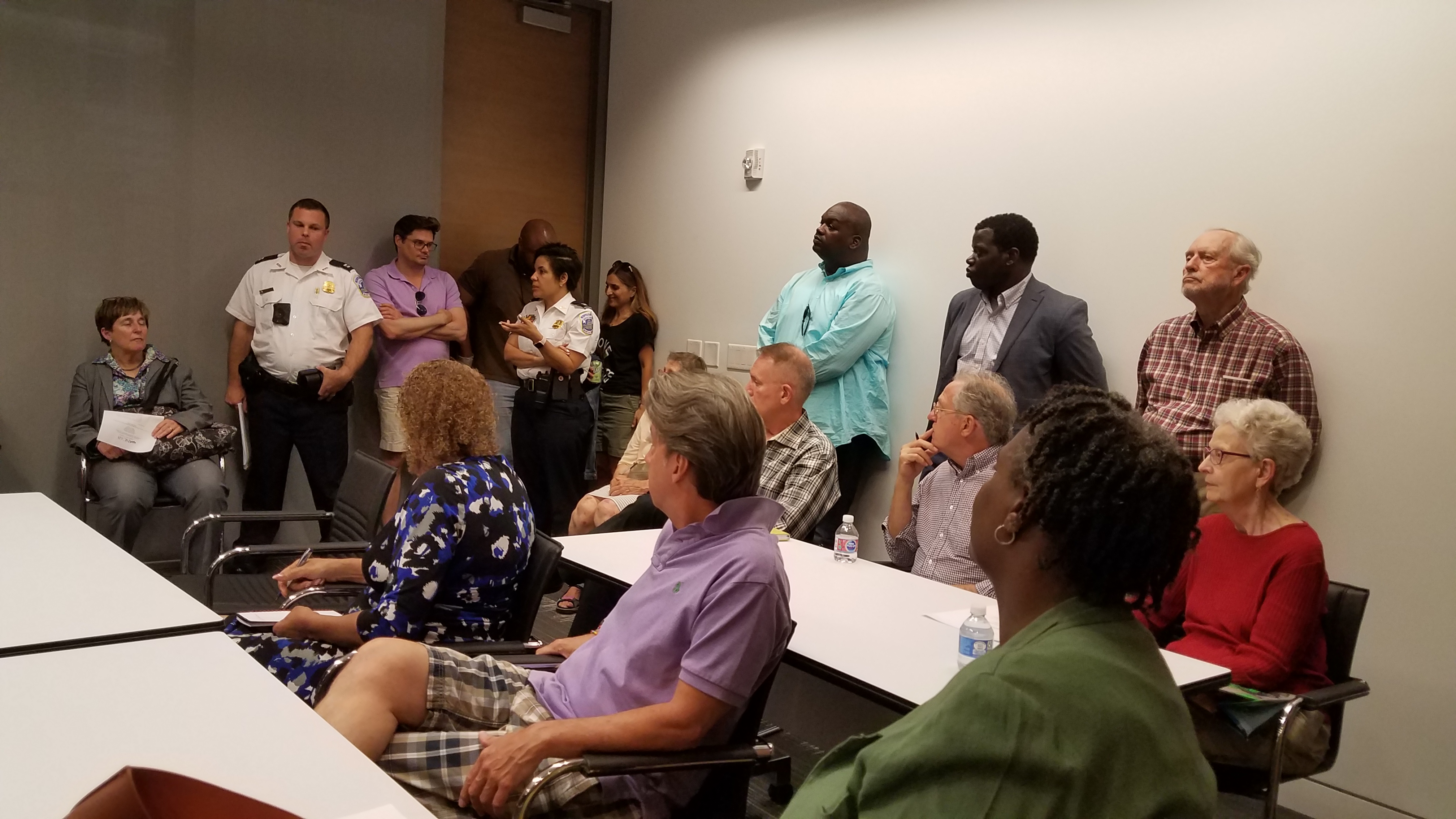
MPD First District Commander Kane (center said police presence on the block would be increased. Also pictured at left is First District Captain Knutson.
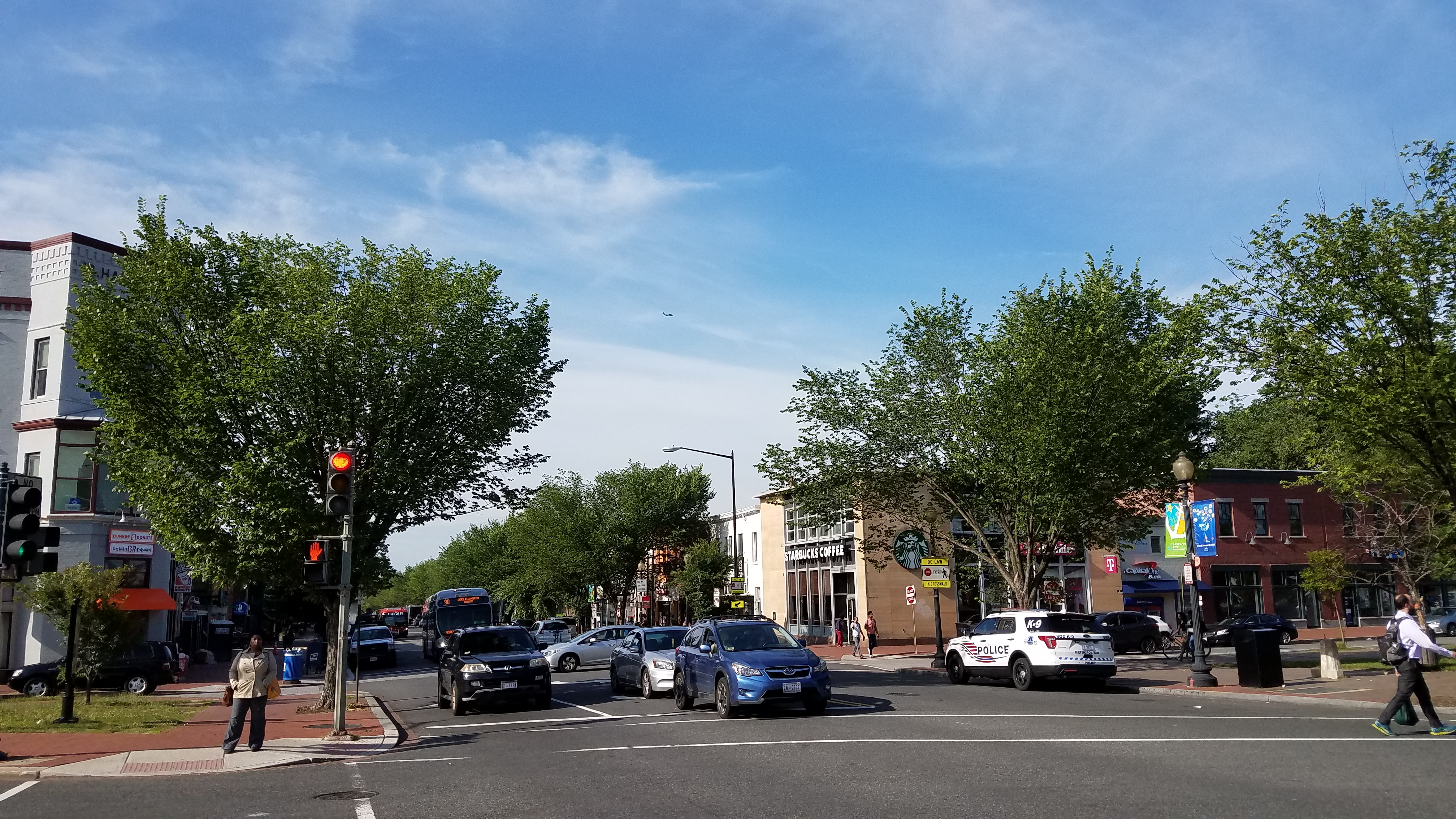
Police presence on Barracks Row, circa 8:30am, Tuesday.
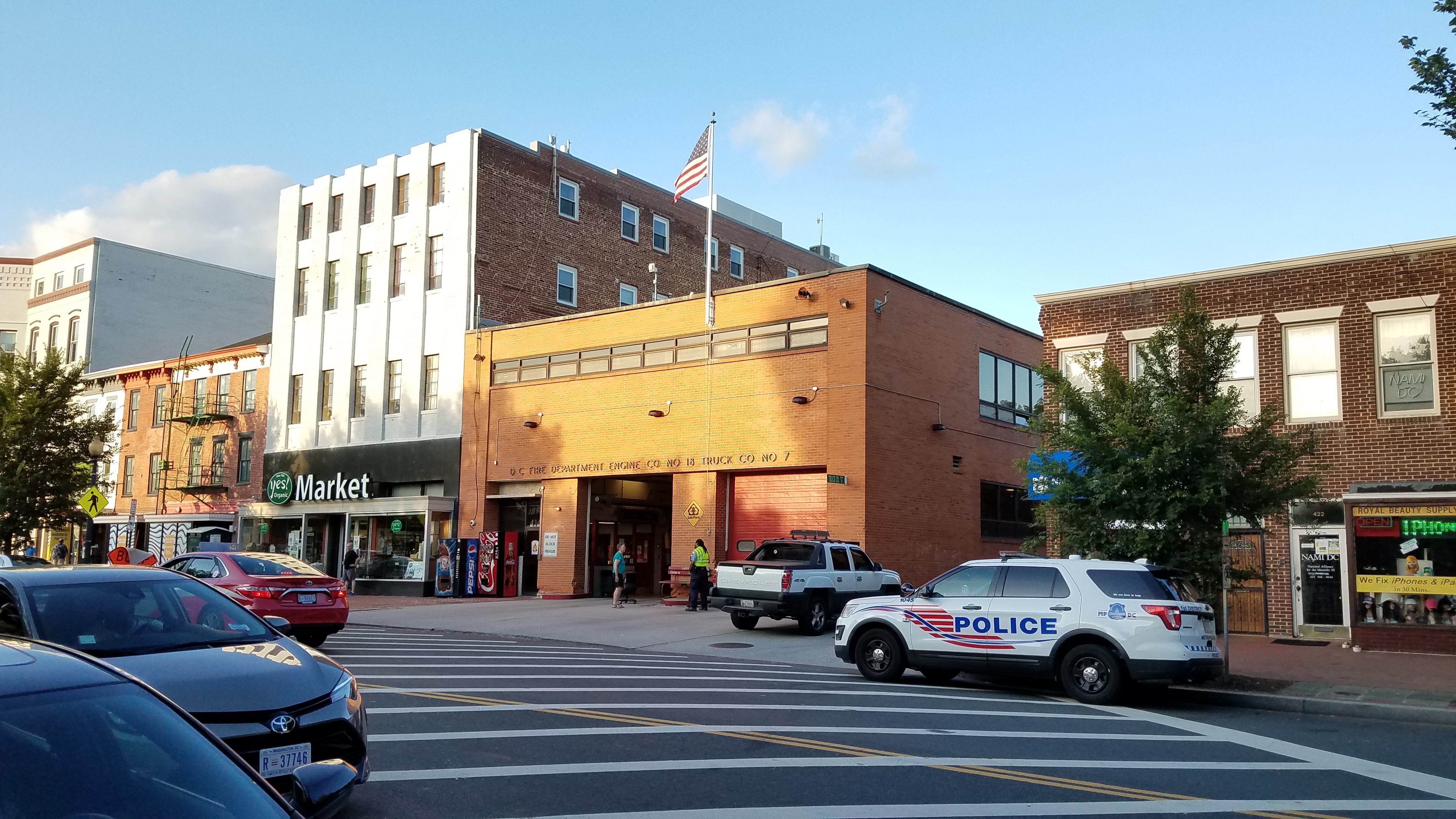
Police presence, Barracks Row, circa 7:45pm Tuesday.
Barracks Row’s Most Troubled Block – ANC Task Force Takes a Close Look
by Larry Janezich
Monday night, Jennifer Samolyk’s ANC6B Outreach Task Force convened residents and stakeholders to take a hard look at Barrack Row’s most troubled block – the west side of the 400 block, opposite the Fire Station.
The businesses on that side from north to south include Starbucks, &Pizza, The Nail Spa, Popeyes, Be Here Now Yoga, Chipotle, Eat Bar, Bolis Pizza, Capitol Hill Tandoor and Grill, Chi Ko, Bank of America ATM, a for-lease retail space, and 7-11.
Attendees wanted to know why the west side of the block is a gathering place for panhandlers and people with mental or substance abuse problems. That environment fosters drug sales, bathroom issues, littering, and frequent encounters with unconscious substance abusers.
One resident said he does not walk his child down the block. Commissioner Samolyk said she doesn’t either. MPD First District Commander Kane, who was at the meeting, said she has a child and walks on Barracks Row, adding, “I see what you see…it’s gotten worse…it’s on our radar”. When asked why people hang out on the 400 block, she said,”I don’t know.” Kane acknowledged a need for stronger enforcement in order to send a message, but that strong enforcement is tempered by police having to distinguish criminal acts from mental or substance abuse issues …”We try to be understanding but when problems escalate, we have to take action”. She expressed concern about taking somebody who can’t take care of themselves and putting them into the criminal justice system. Kane pledged to double the police presence in the area, assigning a second MPD police officer to the block, providing a police presence from 6:00 or 7:00am until 9:00 or 10:00pm.
Martin Smith, Executive Director of Barracks Row Main Street, citing his background in urban planning, had some answers why the block is in trouble. His list included the number of empty stores (Tandoor Grill and the for-lease space), restaurants which are not open during the day (Chi-Ko and Eat Bar), the dead space in front of the Bank of America ATM, national chain outlets which are unresponsive to complaints and community concerns (7-11, Starbucks, Popeyes and Bank of America), and the lack of public occupation of public space (no sidewalk cafes). He said that the block provides food outlets with “more affordable dining options” which are more likely to be patronized by panhandlers operating on the block. He pointed to the wide sidewalk and large spaces where people can sit without obstructing the flow of pedestrian traffic. Finally, he cited his experience in engaging a panhandler who had been arrested “100 times”; when asked why he keeps doing it, replied, “because I make a lot of money and nothing ever happens (to me). “
A Barracks Row business owner from the 700 block asked Smith to pressure businesses on the 400 block to police their public space, saying, “…the block is incredibly dirty – filthy”. Smith said that “We try as much as we can – the 400 block is challenging…we urge businesses to engage with the public space, but they say it’s not a high priority”.
Community Connections, which provides behavioral and primary health care coordination for DC’s marginalized residents coping with mental illness and addiction, has a treatment center adjacent to Barracks Row. Representatives stressed their willingness to engage and cooperate and liaison, and said few of the habitués on Barracks Row are their clients. (An MPD officer familiar with the block, when told of Community Connection’s claim, disagreed, saying 9 out of 10 of people hanging out on the block are clients of Community Connections.)
ANC6B Chair Dan Ridge urged the Task Force to propound at least one recommendation to forward to the full ANC for action, suggesting advocating for a bill now in committee providing for public bathrooms. There are other recommendations which would be helpful, such as urging the owner of Tandoor Grill to erect a construction fence in front of the closed restaurant, urging Community Connections to take stronger measures to see that their clients do not remain in the area following treatment, and demanding that Bank of America take accountability for their trash strewn and problematic ATM (the card accessible door has been broken for days, allowing free entry into the space). In the end, however, the Task Force was satisfied with the airing of issues and the promise of increased police presence on the block.
The Task Force meeting revealed how difficult it is to address what Samolyk called the “pain points” on Barracks Row. MPD First District Captain Knutson emphasized that MPD can make arrests and increase enforcement – “…that’s an easy fix, but it doesn’t solve the problem”. It’s more difficult to address the underlying structural problems. This reporter’s take-away from the meeting?
Vague promises were made of greater liaison between stakeholders (MPD and Community Connections and Sasha Bruce Youthworks and Community Connections), but no concrete plan about how to coordinate efforts to resolve outstanding issues emerged.
MPD has limited ability to deal with individuals causing quality of life problems (anti-loitering laws have been ruled unconstitutional). In addition, the criminal justice system is overwhelmed which leads to failure to prosecute and quick release. Also, possession or sale of the synthetic drug K-2 which is largely responsible for the substance abuse issues on the block is not illegal.
Community Connections has limited capability to influence their clients to be good neighbors and is short funded to boot.
Sasha Bruce Youthworks doesn’t really deal with the Barracks Row demographic of those causing problems on the 400 block.
Sympathetic residents who support panhandlers are part of the problem.
Barracks Row Main Street doesn’t have the money to address the structural issues or help businesses on 400 block beautify their operations.
The difficult underlying structural problems on the block remain difficult problems.

 CAPITOL HILL CORNER