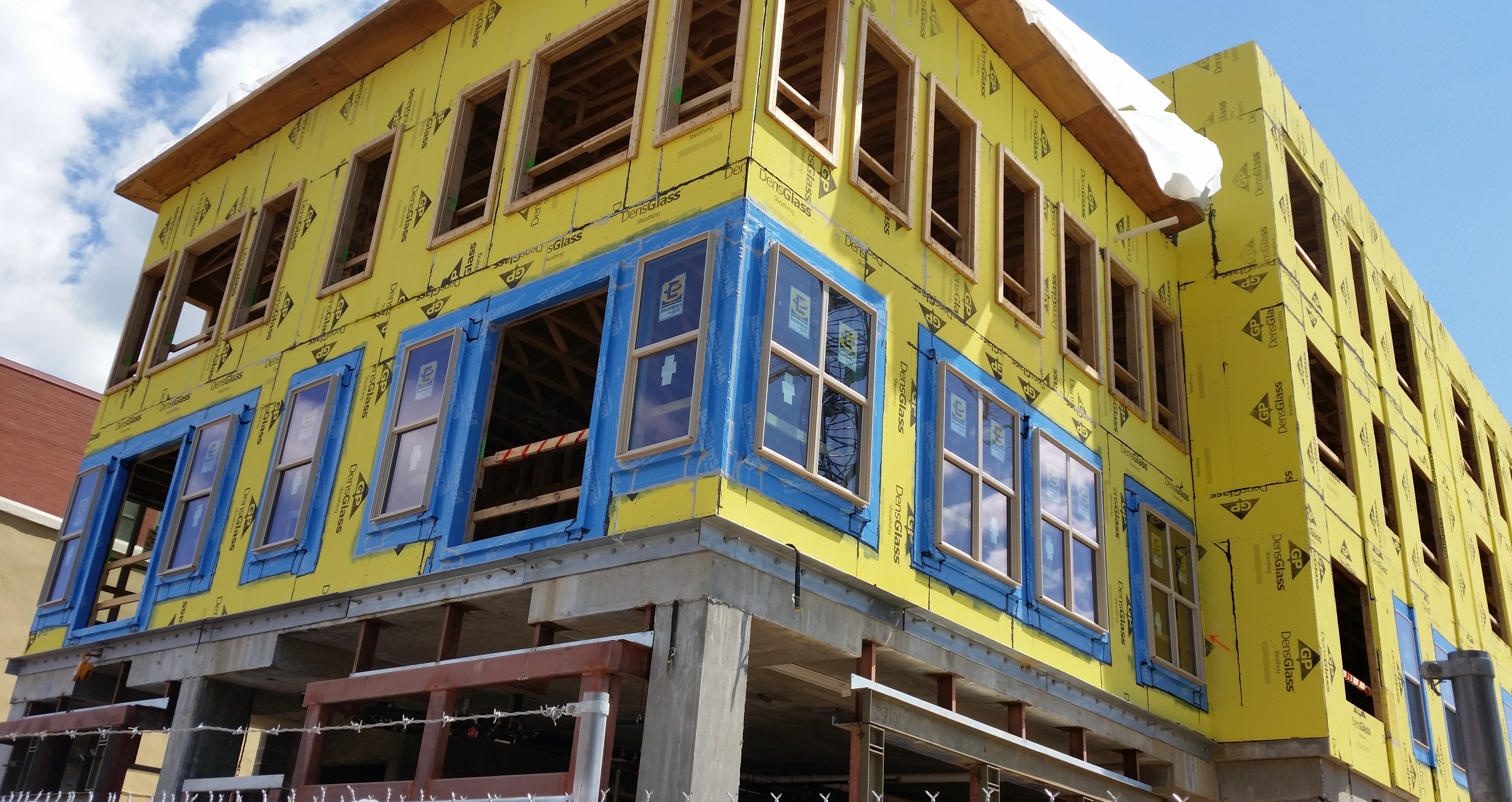
Residents in the Capitol Hill Historic District would violate historic preservation regulations if they put windows like these in their homes
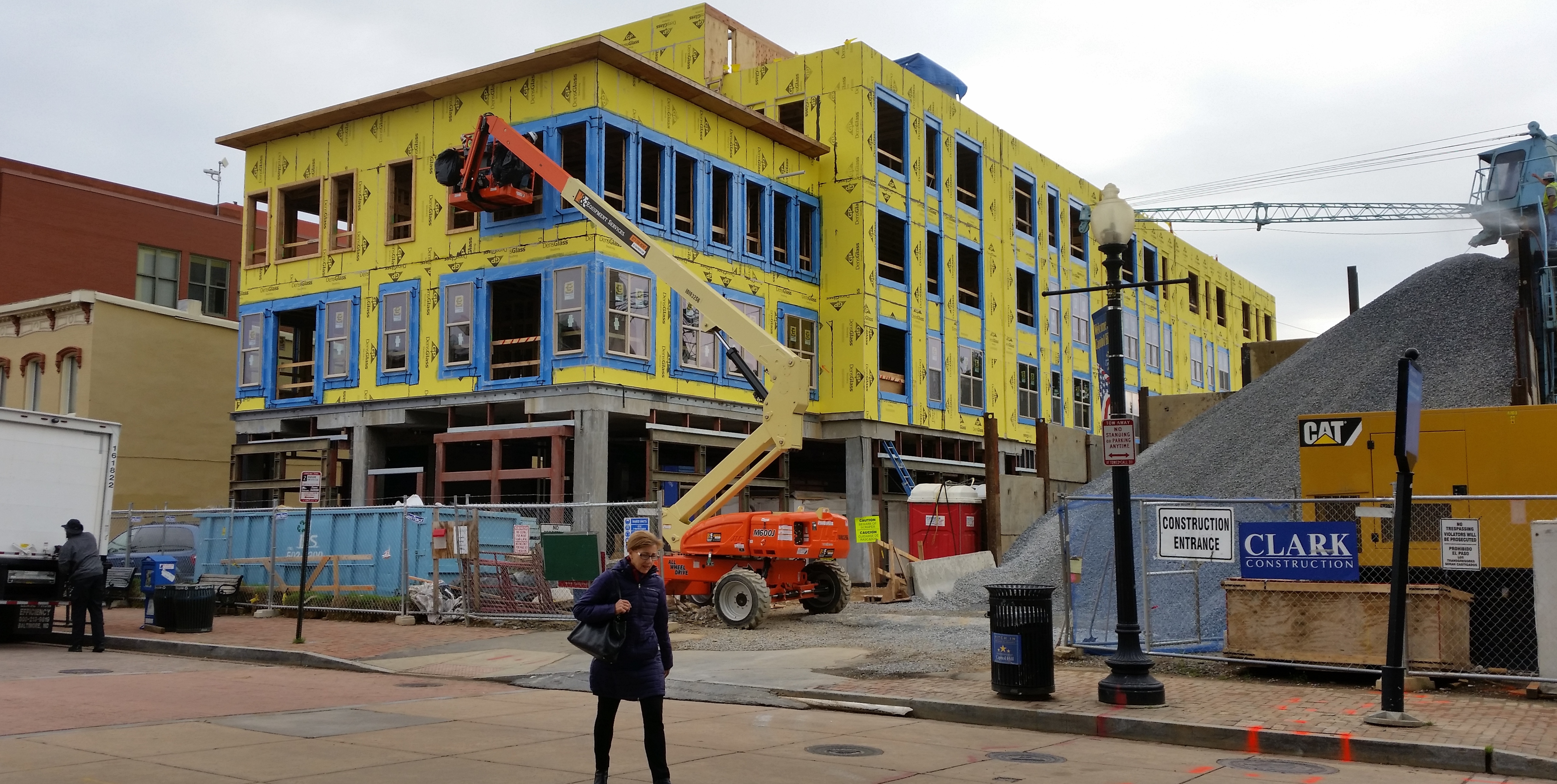
The North Building – with most of the affordable units – is scheduled for completion this fall
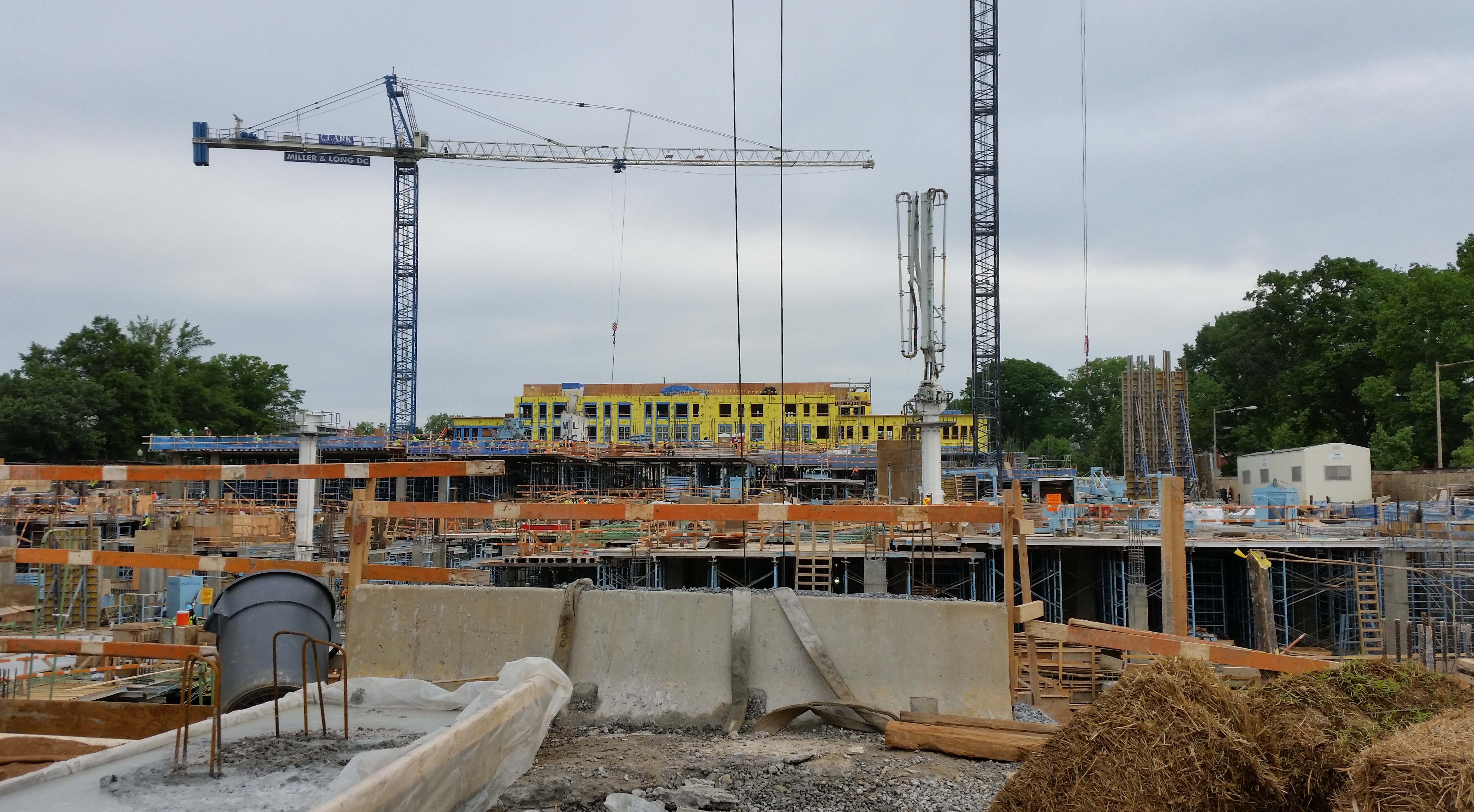
A long shot of the North Building seen from Pennsylvania Avenue
How Did Stanton/Eastbanc Get Away With Vinyl Windows In the Hine Project?
by Larry Janezich
At the end of an ANC6B meeting last week, ANC6B Chair Kirstin Oldenburg asked rhetorically, “How did they get away with putting vinyl windows in the Historic District?” – expressing surprise it had escaped the attention of “a certain member of the [Historic Preservation Review Board]”. Another commissioner replied ironically, “Nobody cares.”
Capitol Hill Corner asked Steve Callcott, Deputy Preservation Officer, DC Office of Planning, about the vinyl windows. Callcott replied: “the [Historic Preservation Review] Board’s window standards for new construction are somewhat more flexible than they are for historic buildings. Obviously a lot of design effort was put into all of the new buildings at the site, and I don’t think the compatibility of the proposal would necessarily hinge on the material of the windows.” Asked to react to his opinion, ANC6B Commissioner Diane Hoskins in whose district the project lies said: “That’s such BS. Residential neighbors are held to a higher standard, and it’s just not fair.”
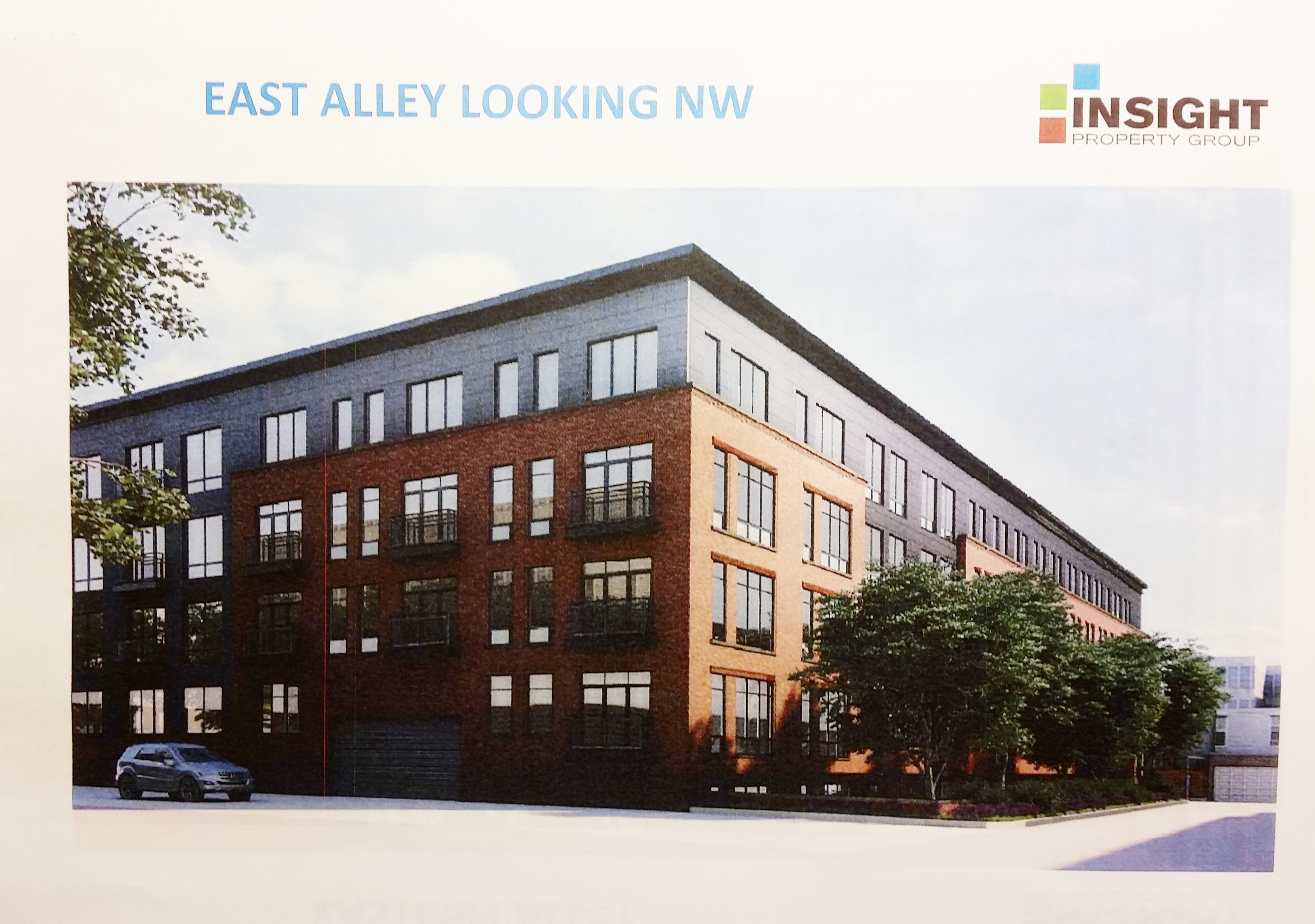
Vinyl windows are being installed in the Hine project’s North Building, which contains most of the project’s affordable/workforce housing (34 of 46 units). Mayor Muriel Bowser publicly expressed her disapproval of the segregation of these units in a separate building, but approved the project despite her reservations.
Buwa Binitie of Dantes Partners – who managed the Hine project’s affordable housing component – said that the reason for the segregation was that it was not feasible to combine low-income housing tax credit (LIHTC) financing with conventional lending, so a stand-alone component with separate LIHTC financing was created. One of the reasons Stanton Eastbanc was awarded the contract to develop the Hine site was that they proposed providing an amount of affordable housing far in excess of what was (then) required. (Under today’s regulations, Stanton Eastbanc would fall short of the requirement for affordable housing in a project developed on public land).
As previously reported here on CHC, the separation of all LIHTC units into a distinct building and legal property allowed the project to qualify for the tax credits; if considered as one project, the Hine development falls short of LIHTC requirements.
The North Building is being constructed more cheaply – primarily of wood according to Type III Construction standards. Hence the vinyl windows. You won’t find vinyl window in the South Building built with conventional financing and constructed of steel according to Type I Construction standards. According to the National Fire Protection Association, structures are divided into five construction types for the purposes of firefighting, and are listed from least combustible (Type I – high rises) to most combustible (Type V – most recent single-family homes). Most city rowhouses are Type III.
The lower-grade building materials used for the stand-alone LIHTC building underscores the objections raised by many residents to segregating the majority of units in the first place.
Regarding distribution of affordable housing throughout the project, as mentioned before, 34 affordable units will be in the North Building. Half (17) of the affordable units in the North Building will be reserved for seniors at least 55 years old; two of these units will be for seniors with incomes at or below 30% of the Area Median Income (AMI) and 15 will be reserved for seniors with incomes at or below 60% of the AMI. (DC uses an AMI of $107,500, a figure inflated by including surrounding wealthy counties in its calculation. Actual median income from just the District is closer to $60,000.)
Three of the 17 non-senior units will be reserved for households earning less than 30% of the AMI and 14 units are reserved for households earning less than 60% of the AMI.
With respect to layout, retail space for the North Building will be located on the first floor and in the basement. The building will be four stories, and step down to three stories on 7th and 8th Streets. Except for two units facing 8th Street, the residences will be located on the second, third and fourth floors. Entrances to the retail will be on 7th Street and on the newly re-opened C Street between 7th and 8th Streets. Entrances to the residential units and the main lobby will be on 8th Street and C Street. Developers expect to complete construction on the North Building this fall.
Eastbanc principal Anthony Lanier did not respond to a request for comment on this posting.
For more on affordable housing see CHC post here: Understanding “Affordable” Housing: the Cases of Hine and the Boys and Girls Club http://bit.ly/1Vb36is



 CAPITOL HILL CORNER