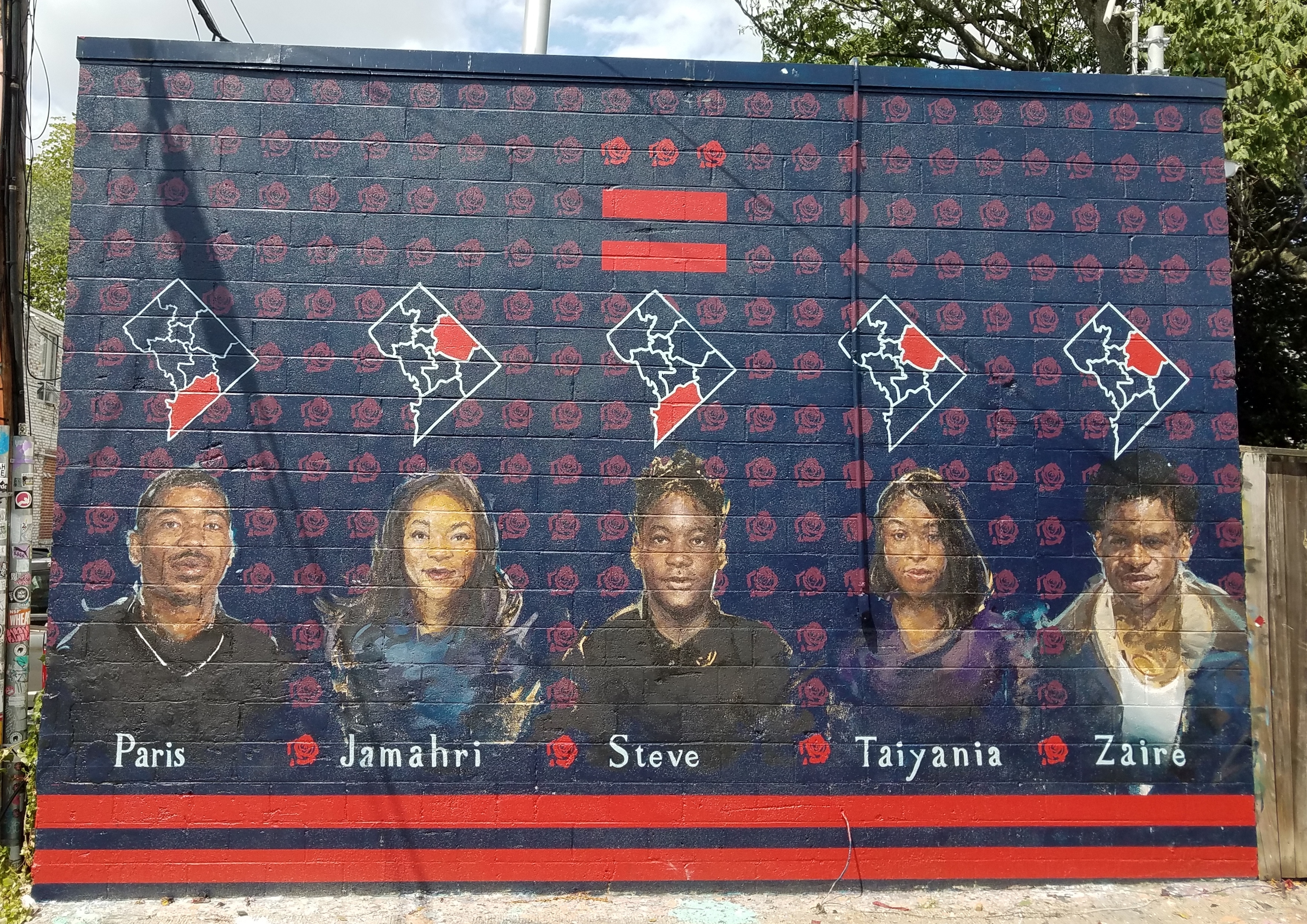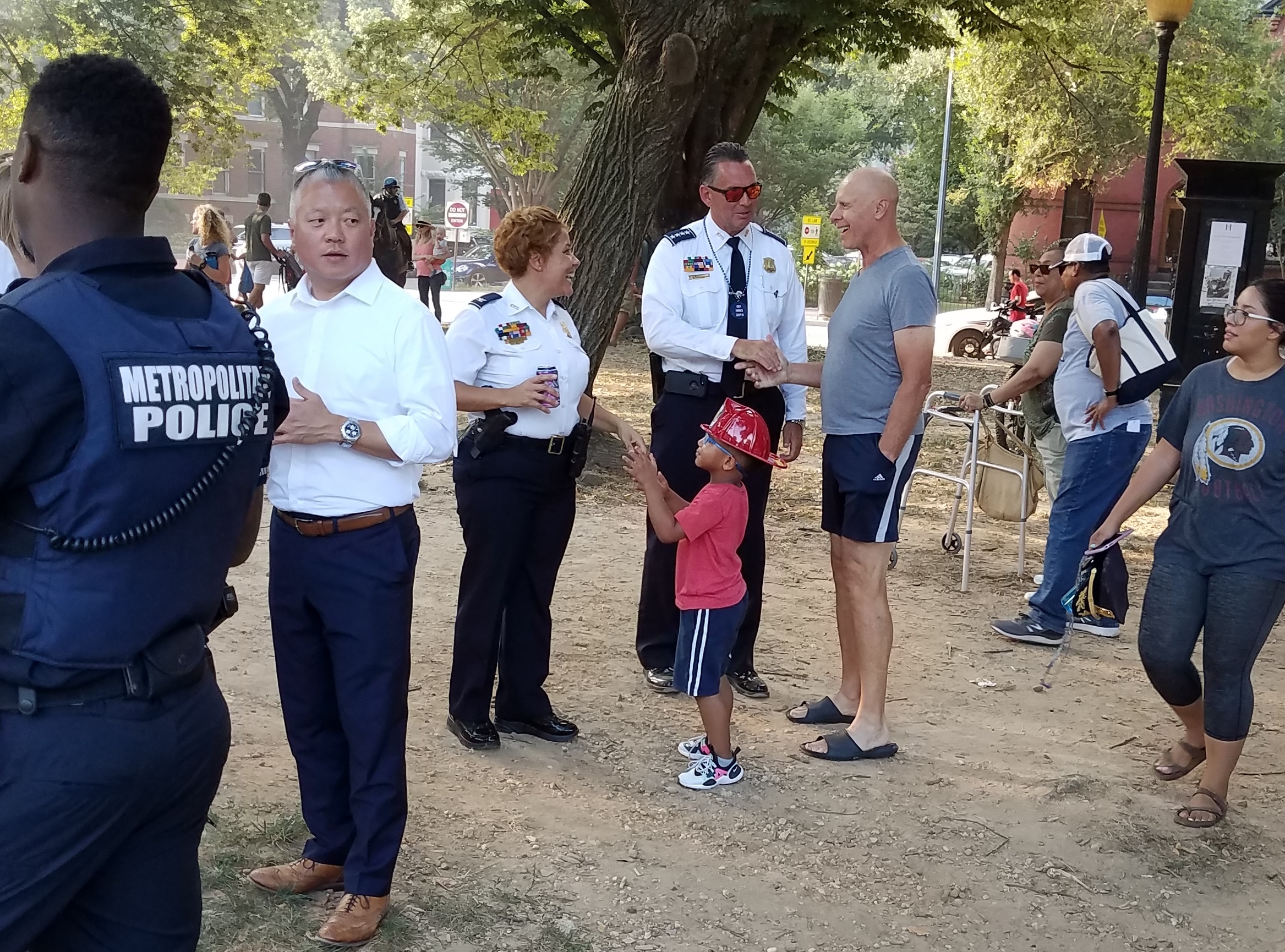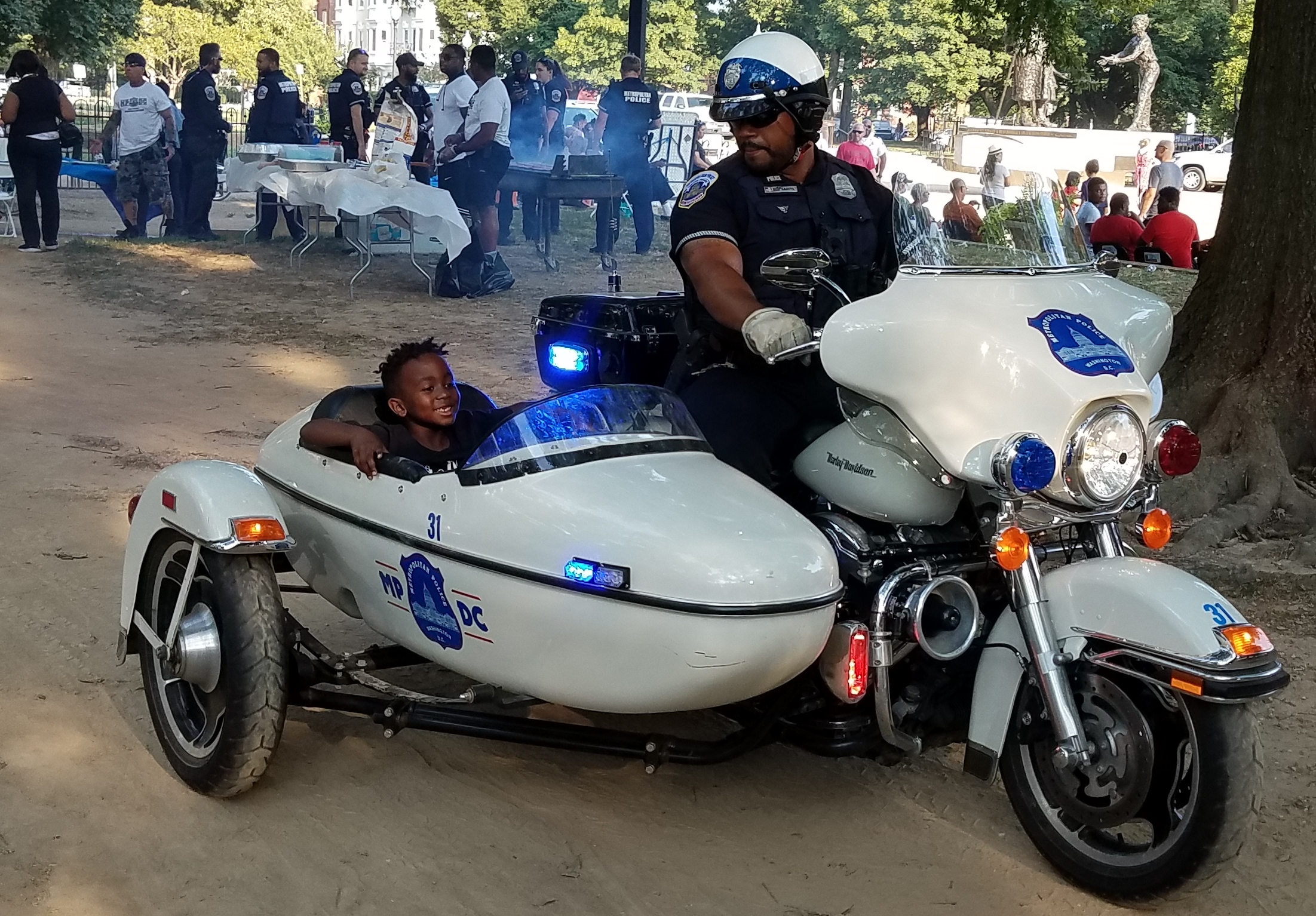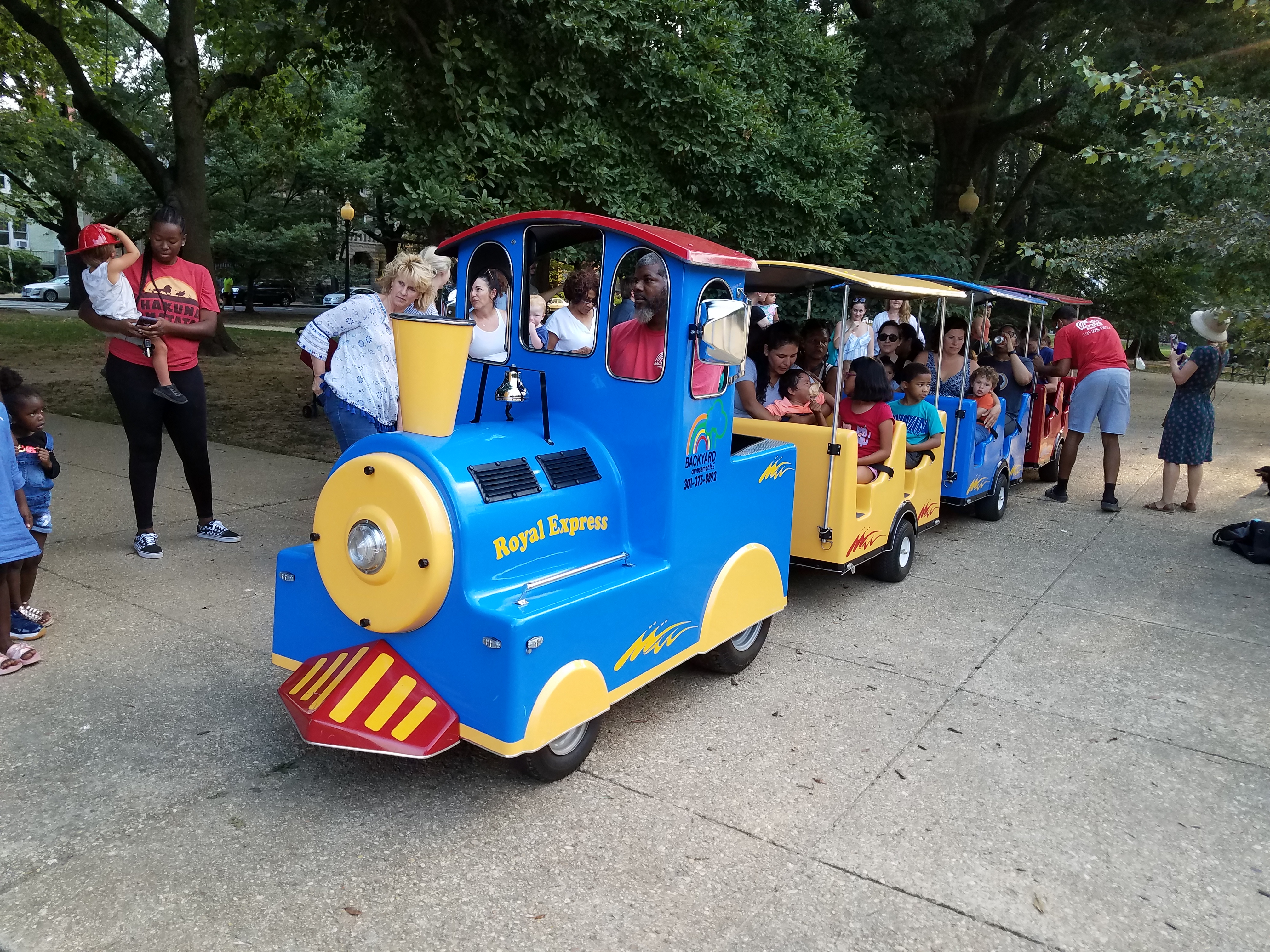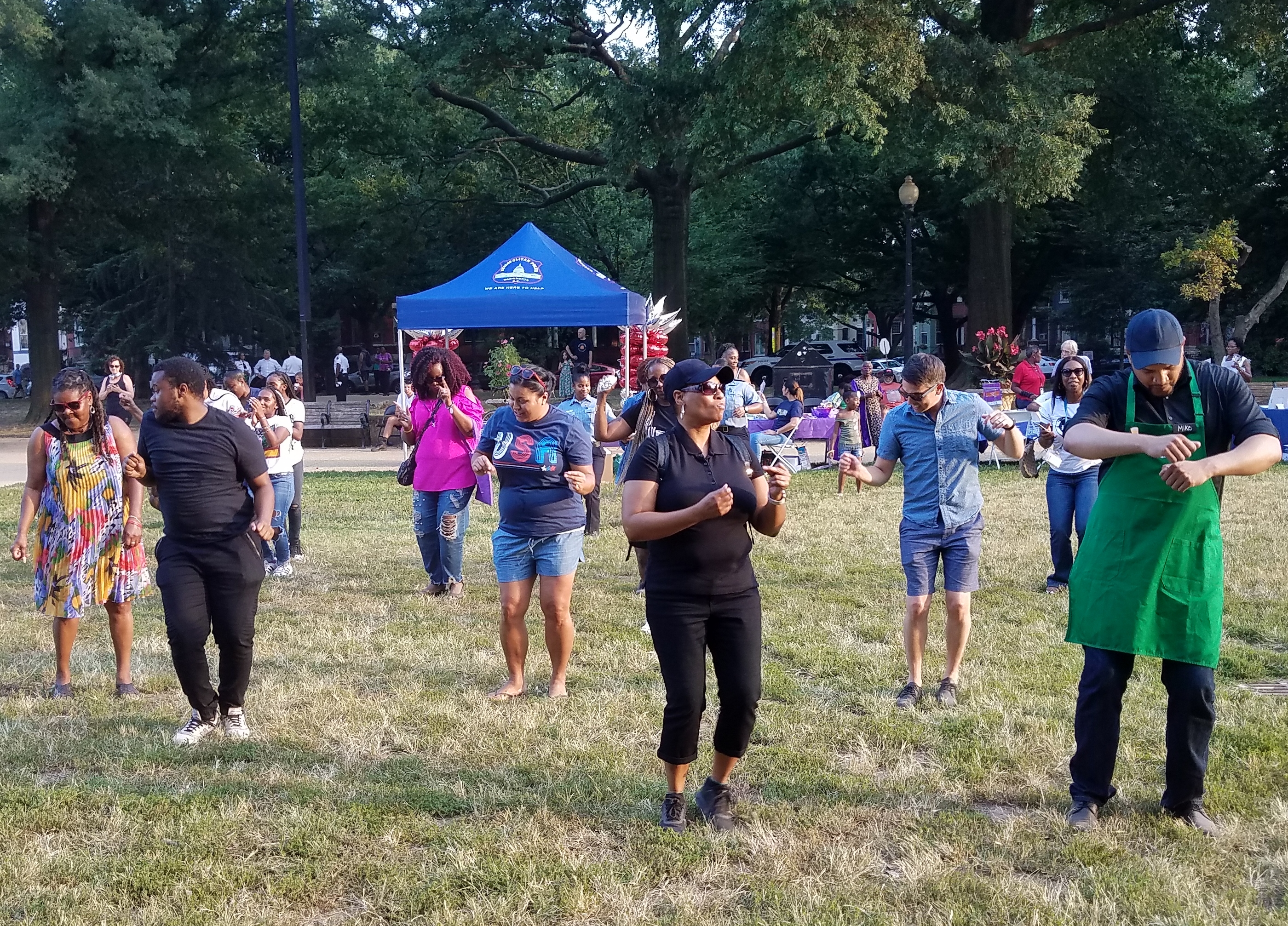
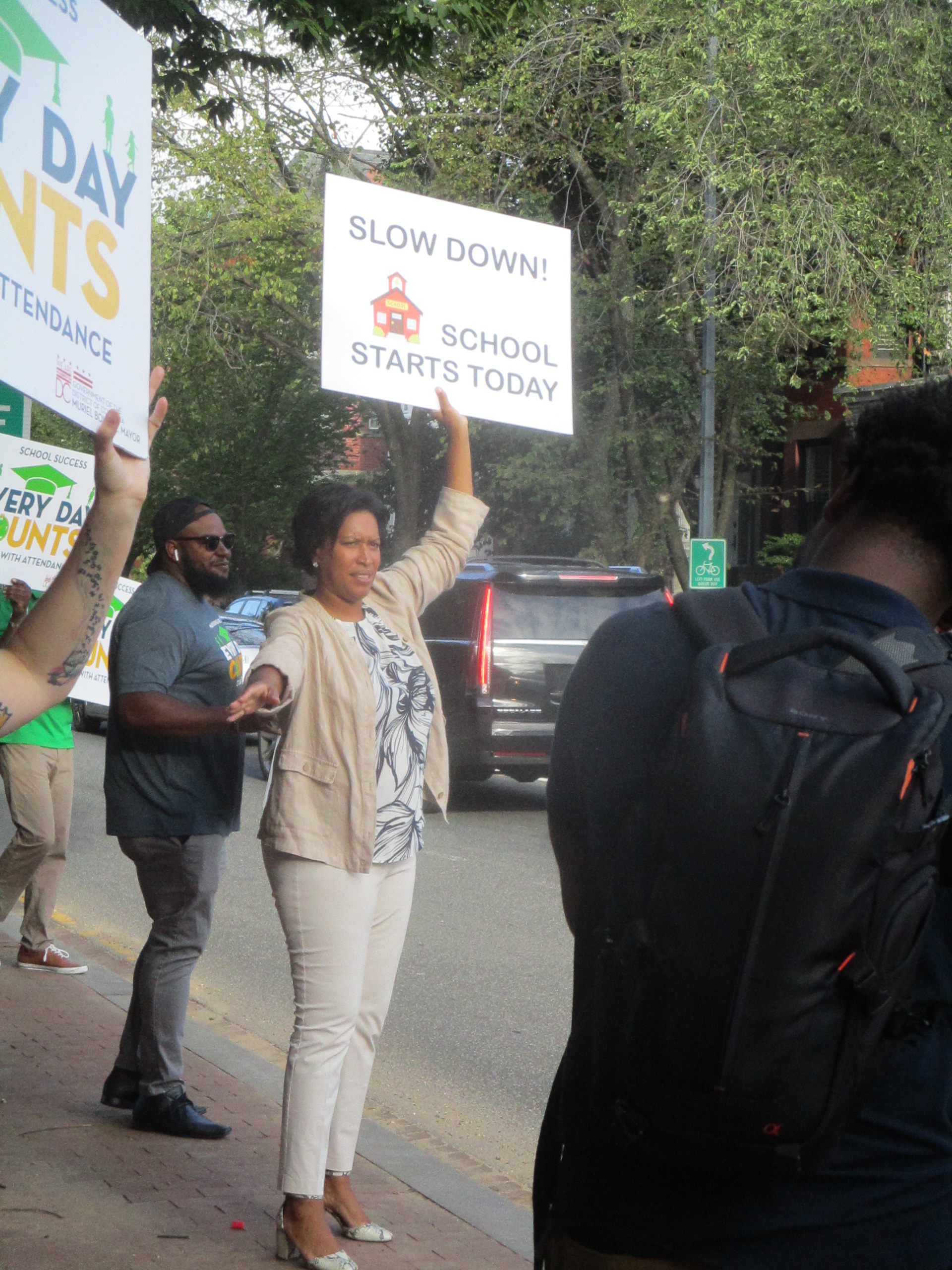
Mayor Bowser sends a message to oncoming traffic around Lincoln Park last Monday. Photo credit: Skip Strobel
The Week Ahead….ANC Transportation Committees Consider “Micromobility Corrals” on Wed/Thurs
By Larry Janezich
Monday, September 3
Labor Day. No trash or recycling pickup.
Tuesday, September 3
ANC6B Planning and Zoning Committee meets at 7:00pm at St. Coletta of Greater Washington, 1901 Independence Avenue, SE.
Draft agenda:
Payne School Public Art
Eastern Market Metro Plaza Parks, Public Space Permit application permanent improvements.
715 North Carolina Avenue, SE. Historic Preservation application to remove rear addition and construct new addition, convert from 2 units to single family dwelling.
Congressional Cemetery. 1801 E Street SE; Historic Preservation application for a one-side porch addition and associated paving.
715 8th Street, SE (Pineapple & Pearls). Public Space Permit application, to add Furniture/Equipment to Cafe Plans.
224 South Carolina Avenue, SE. Zoning Adjustment application for a variance to construct a second story rear addition.
328 Kentucky Avenue, SE. Zoning Adjustment application for a special exception to construct a two-story, principal dwelling unit addition on an existing retail use building.
1429 D Street, SE. Zoning Adjustment application for a special exception to permit a one-story existing accessory structure at the rear of an existing, attached principal dwelling unit.
Comments on HPRB Draft Sustainability Guidelines; Guidelines are written by OP and accepted by HPRB. The guidelines were delayed by two months to allow for extra comment from ANCs and DOEE. Link: https://planning.dc.gov/sites/default/files/dc/sites/op/publication/attachments/SustainabilityGuidelines_June28_2019_1.pdf
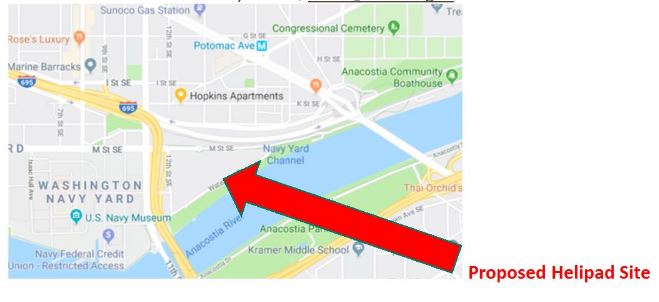
Potential Heliport Site: Consideration of a possible ANC 6B Map Amendment to rezone the triangle bounded by 11th Street, Southeast Freeway, and the Anacostia River from high intensity industrial uses to medium density mixed use zoning.
Wednesday, September 4
ANC6B Transportation Committee will meet at 7:00pm in the conference room, ground floor, at 700 Pennsylvania Avenue, SE.
Draft agenda:
Notice of intent regarding installation of curbside bike and scooter parking “corral.” (See also, ANC6C Transportation Committee meeting on “Micromobility Corrals,” Thursday, below.)
Discussion on 17th Street, SE, Bike Lanes.
Request to DDOT to Relieve Congestion at 3rd and Virginia Avenue, SE.
ANC 6C Planning, Zoning, and Economic Development Committee meets at 7:00pm, Northeast Library, 7th and D Streets, NE.
Draft agenda:
224 C Street, NE. Zoning Adjustment application for special exceptions to construct a one-story rear addition to an existing accessory structure.
667 F Street, NE. Historic Preservation application for concept approval for reconstructed garage, reconfigured rear door, and rear deck with steps to garage roof.
609 H Street, NE. Zoning Adjustment application for a special exception to operate a massage establishment in an existing mixed-use office building.
310 5th Street, NE. Zoning Adjustment application for a special exception to construct a two story rear addition to an existing semi-detached principal dwelling unit.
Logan School, 215 G Street, NE. Historic Preservation application – revised application of DC Public Schools for approval for modernization and addition.
Second proposed rule making to rewrite DCMR Title 12 (Construction Codes).
Community meeting on last week’s shooting incident at 15th and A Streets, SE. 7:00pm, at the CAG (Harold J. Gordon Building) 124 15th Street, SE.
ANC6B Chair Chander Jayaraman: “In my conversations with neighbors since Wednesday night, I believe that there is a shared resolve within the whole community that more needs to be done to improve safety on our blocks. Mobile bright lights can provide temporary respite from our immediate fears, but it cannot address the underlying problem that people from outside of our neighborhood are using it to conduct illegal activities. We need to take back our block and it can happen if we demand action from our city agencies but also do our part through community policing. I welcome all neighbors to attend this important meeting…. I have invited Councilmember Charles Allen, Attorney General Karl Racine’s Office, and MPD to attend and hope that we have a large showing of neighbors to demonstrate our resolve.”
Thursday, September 5
ANC6B Alcoholic Beverage Control Committee meets at 7:00pm at Hill Center, 921 Pennsylvania Avenue, SE.
Draft agenda:
Ambar, 523 8th Street, SE. Substantial Change application to expand to 3rd floor, adding 56 additional seats and increasing total occupancy from 140 to 196.
The Brig, 1007 8th Street, SE. Substantial Change application to add Sports Wagering to their operations. Establishment will have one teller, two self-service kiosks, and geo-fenced applications for phones while on the premises.
Wine and Butter, 1023 East Capitol Street, SE. Substantial Change application for a Class Change from Retailer “B” to Retailer’s Class “B” Full-Service Grocery store.
Hine Restaurants, 320 7th Street, SE. New Retailer’s Class C Restaurant with a seating capacity of 230 and Total Occupancy Load of 400 and Summer Garden with 150 seats. Hours Of Operation For Inside Premises And Outside In Summer Garden: Sunday through Thursday 7am – 12am, Friday and Saturday 7am – 2am; Hours Of Alcoholic Beverage Sales, Service, And Consumption For Inside Premises And Outside In Summer Garden: Sunday through Thursday 8am – 12am, Friday and Saturday 8am – 2am;
District Soul Food, 500 8th Street, SE. Class “CR” Restaurant License Renewal
ANC 6C Transportation and Public Space Committee meets at 7:00pm, Kaiser Permanente Capitol Hill Medical Center, 700 2nd St. NE, Room G3-G4
Draft agenda:
2nd & F Streets, NE – Micromobility Corral. As part of a new city-wide initiative, the District Department of Transportation would like to install a Micromobility Corral, a designated parking spot for bicycles and scooters, in the bollarded area on F Street at 2nd Street, NE. The intention behind installing designated parking for micromobility is to declutter sidewalks by providing bicycle and scooter parking. We are interested in your feedback on this proposal and encourage you to share this information with your constituents. The Capitol Hill BID helped select this location. Each corral will be able to accommodate six bicycles and approximately six scooters. DDOT anticipates this spot will provide a well-ordered parking area for dockless vehicles and increase access for pedestrians.
1st & K Street, NE – Proposed Capital Bikeshare Station
The District Department of Transportation is proposing to install a new 17-dock Capital Bikesharestation in your Advisory Neighborhood Commission on the southeast corner of 1st & K Streets, NE. This location was proposed and approved in 2014 but was not installed and DDOT wishes to pursue this station again. DDOT intends for this piece of public transportation infrastructure to bolster the existing network of stations in the NoMa neighborhood and believes this is a strong location.
Friends of Southeast Library meet at 5:30pm in Southeast Library, lower level.
Friday September 6
King Bullfrog At Southeast Library, 10 am and 11 am
Join us for a special performance from local children’s performers King Bullfrog. The musical duo will sing and play favorite and original songs for the whole family. All ages.
Saturday, September 7
Community Litter Cleanup
9:00am – Trusty’s and Atlas Vets have 10:00 am cleanup starts. Volunteer bag and glove pick-up locations include Fulcrum Properties – 1328 G Street, SE; Trusty’s – 1420 Pennsylvania Avenue, SE; 7-11 – 1501 Independence Avenue, SE; Atlas Vet – 1326 H Street, NE; Chik-fil-A – 1401 Maryland Avenue, SE (offering free breakfast sandwich to volunteers); and Wine & Butter Cafe, 1023 East Capitol Street. Volunteers return filled bags to any of these sponsors. At 10:00 am, Fulcrum Properties offers mimosas, coffee and donuts to volunteers. Info on rain cancellation will be available by emailing here: CleanCapHill@gmail.com