Tag Archives: cemetery

Building Community at Congressional Cemetery

Building Community at Congressional Cemetery

Building Community at Congressional Cemetery

by Larry Janezich

Posted:  Tuesday, September 2, 2025
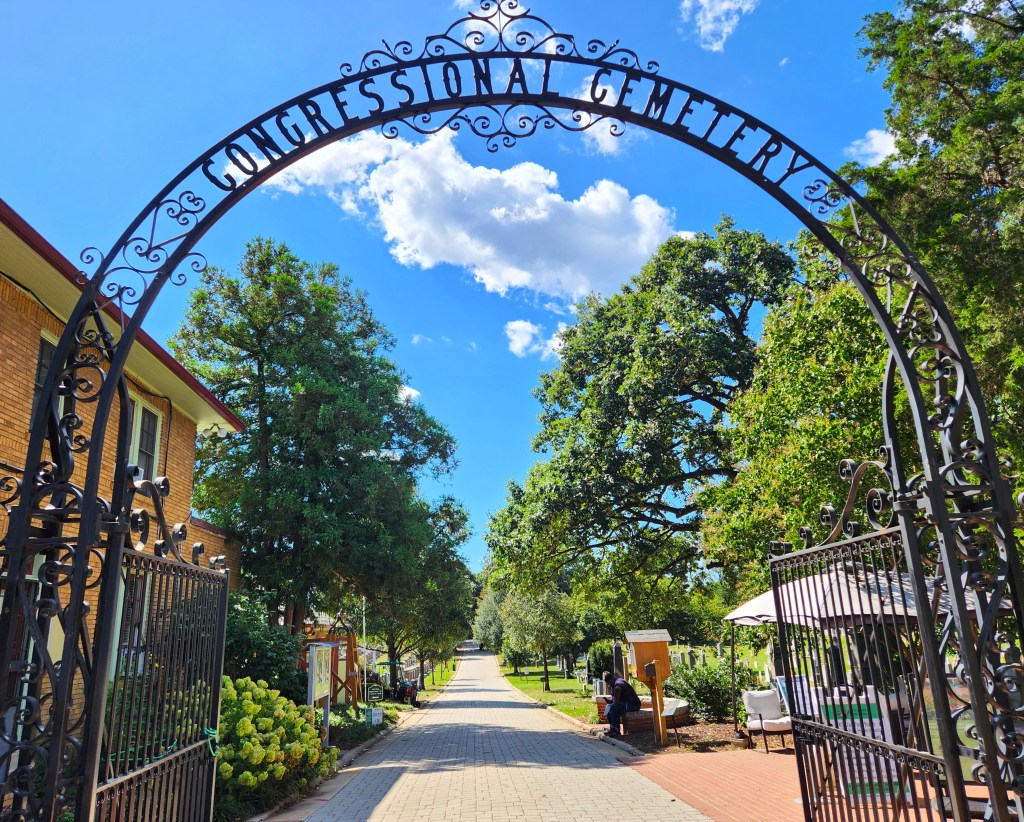
The wrought iron entrance to Congressional Cemetery, 1801 E Street, SE. The gate house is at left.
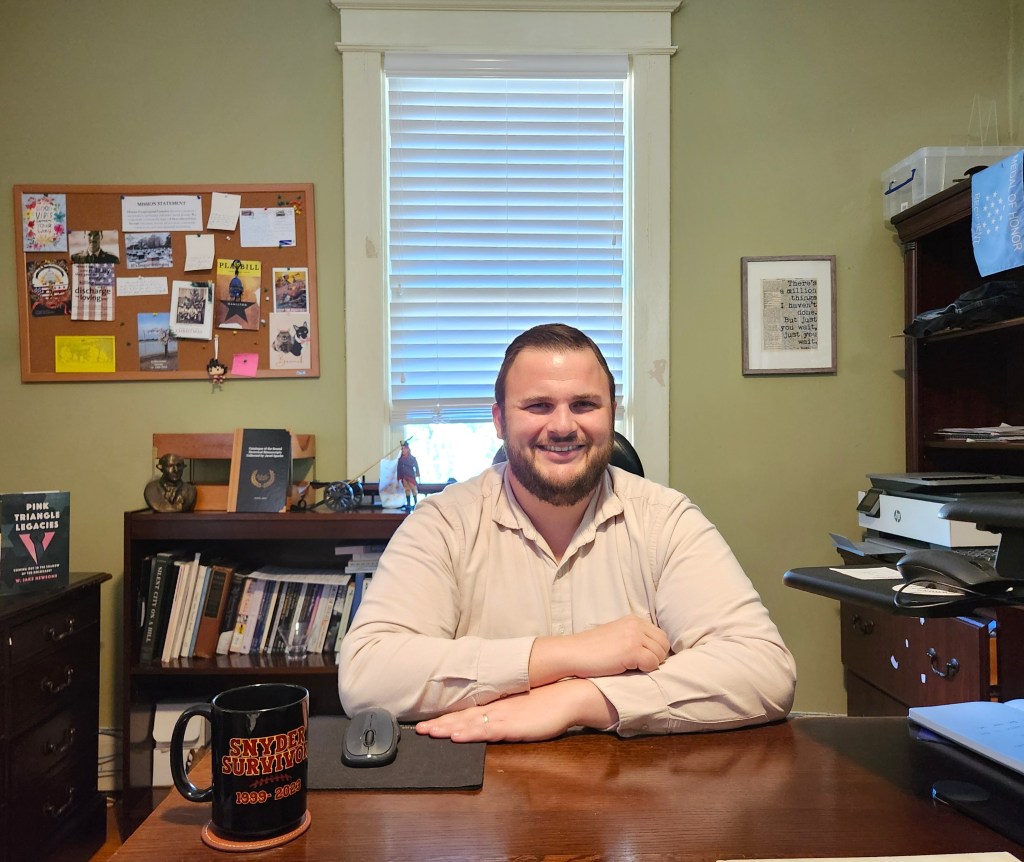
Anthony “A.J.” Orlikoff, Interim Director of the Association for the Preservation of Historic Congressional Cemetery

It’s easy to overlook the community building attributes of Congressional Cemetery.  In truth, the cemetery is powerful unifying force on Capitol Hill. 

CHC interviewed Anthony “A.J.” Orlikoff, Interim Director of the Association for the Preservation of Historic Congressional Cemetery:  “Cemeteries need to be places of solemn contemplation of grief or mourning – they need to be that space – but what we’re seeing now across North America is cemeteries more as places of community, engaging people in different ways.  There are a lot of reasons for that and it comes out of communities themselves organizing and using these places.”  

We take cemeteries for granted until they fill up and are taken for granted.  Their fortunes wax and wane, driven by demographics and other factors, and Congressional Cemetery’s history has been one of periods of prominence and affluence and then periods of decline. 

Orlikoff says, “Congressional cemetery was in decline in the 1980s and when you look at the cemetery as a community building organization it really starts with a group of neighbors who lived nearby in the late 1980s that began walking their dogs here and they realized, ‘Hey, this amazing historic place that I’m walking my dog in is really overgrown and it’s dangerous and there’s open-air crime.’”

Asserting that this was not something they wanted in the neighborhood, neighbors began organizing the first group of community dog walkers and started thinking about raising money to hire a landscaper and about alerting MPD on some of the criminal activity on the grounds.  As the conditions improved, the cemetery started filling with people who appreciated the green space and cared about the community.  Orlikoff said, “And so it really was from this kernel of community that you can chart the activity that led to calls to Congress to save the cemetery and the later appropriation of funds.”  Congress now provides matching funds for the Congressional Cemetery Endowment administered by the National Trust for Historic Preservation. 

And the dog walkers are now organized as the K-9 Corps.  They have a committee made up of K-9 members which oversees the dog walkers’ use of the cemetery by the Corp’s 700 families and 1,000 dogs.  Those families constitute the core of the Congressional Cemetery community, but equally important (though more loosely organized) are the component parts of the community within the larger community.  This includes the large number of residents and visitors who attend and participate in the cemetery’s programs.  Some of these programs are the Cinamatery (the outdoor summer movie screenings), 5k races (including the upcoming Dead Man’s Run), tours (including the upcoming historically theatrical outdoor Soul Stroll Tours), the Death Awareness program, the Bee Keeping program and the Book Club.  In addition to the attendees, there are hundreds of community volunteers ranging from tour guides to Adopt-A- Plot volunteers to Association Board members.

There’s considerable overlap with respect to the contributions of volunteers and Orlikoff says, “You need to have harmony – you need everybody in the symphony kind of playing together or it’s just going to be 21 notes.“
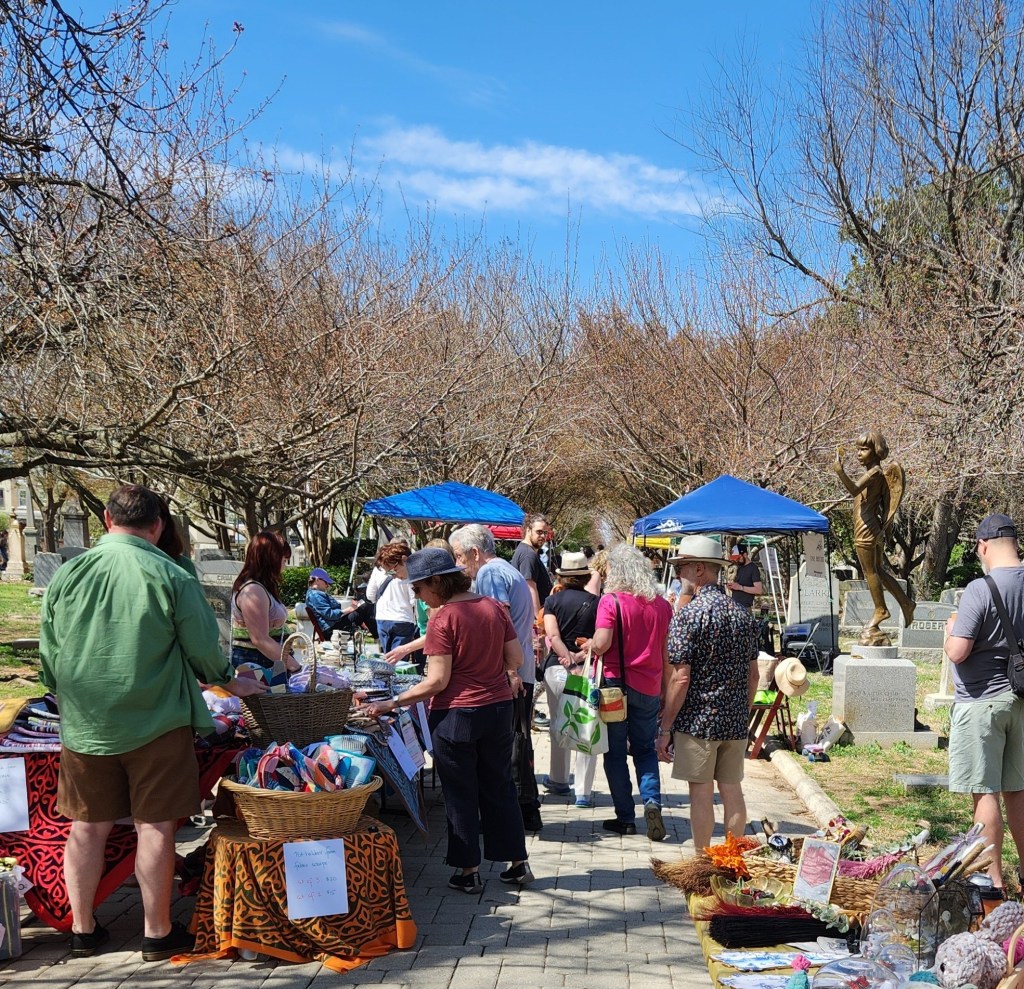
Congressional Cemetery held its Spring Fair on Sunday, March 30, featuring more than two dozen vendors, an Introduction to Green Burial in the Chapel, a tour of historical trees and grave sites, and a presentation on Equinox Gardening. 

Orlikoff is a historian by profession and came to Congressional Cemetery after working as a contractor for both the Navy and Army at several military museums.  He says, “I see myself as a history translator – someone who can help people find the meaning in those things that maybe otherwise could be inaccessible, and you do that through programming and education.  So when I heard about the opportunity here at Congressional Cemetery for a Director of Programming position it was a perfect fit for me.”  That was three years ago.  When the then-Director of the Association Jackie Spainhour left last January, Orlikoff was named Interim Director by the Association’s Board.  He says he is proud of his work since then, including supporting the team of professionals working at the cemetery even in areas outside of his expertise.  He also counts the collective effort of the team in the World Pride programming this year, and especially becoming part of and getting up to speed on the newly initiated Master Plan – an expansive project to chart the next two decades of the cemetery’s future which had just launched when he took the job of Interim Director.    

The Master Plan Initiative came about because one of the major issues facing Congressional Cemetery is the question of how to sustain the cemetery after running out of space – how to make it a place people will continue to want to support. 

Orlikoff says that many cemeteries have to figure out how to keep the cemetery going with a model that is ultimately unsustainable once capacity for full casket site burial is reached:   “How do you pivot – how do you change those revenues?   What we’re trying to do is pivot and become more of a nonprofit model.  And the strategy is to find ways to maximize what site space is left – because there’s not much (hundreds but not thousands of burial sites) – and then really adopt a nonprofit model that relies on programming and institutional giving and development.”   

There are three primary components addressed in the Master Plan:  storm water management (the cemetery has a drainage issue – never good in a cemetery), burial site expansion (including the development of columbariums for the interment of ashes), and enhancing the visitor experience (including things like gatehouse and chapel upgrade, signage, etc.).  

The Board will continue seeking community feedback on the Master Plan throughout the process; the next community meeting will be October 15 at Christ’s Church.  The Board is scheduled to receive a finalized Master Plan in February of 2026.  After that, Orlikoff says, the Board will be undertaking several fundraising initiatives to realize the plan.
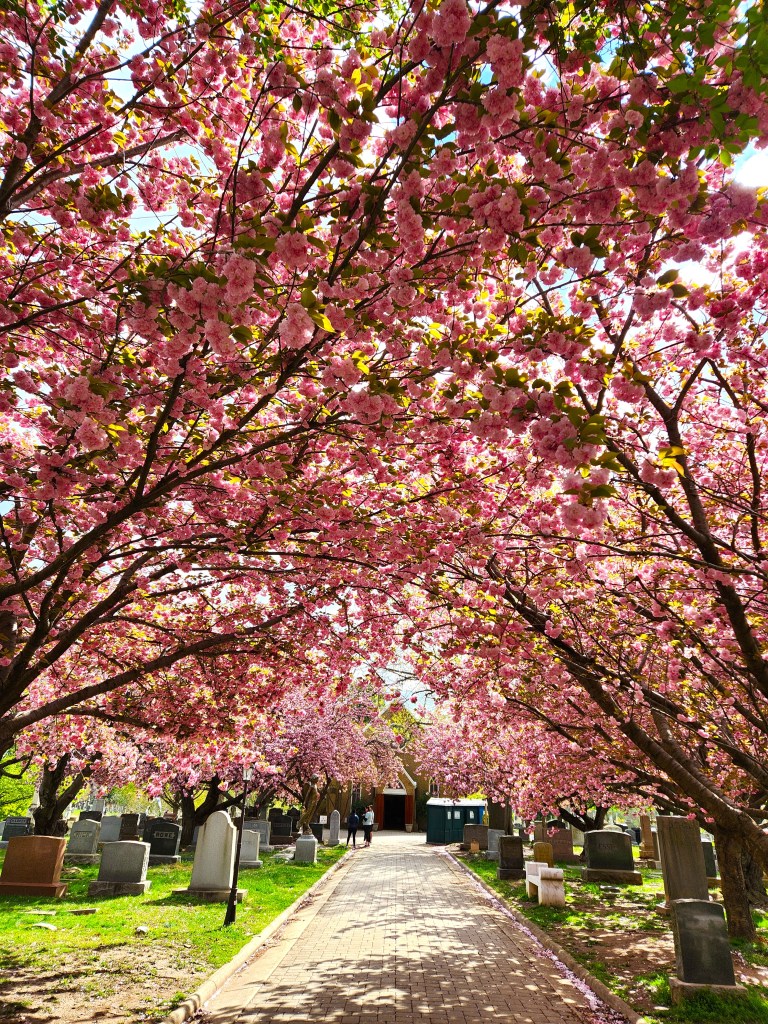
Orlikoff says of the cemetery, “It’s a place for people who love history – it’s a place for people who want to walk their dog.  It’s a people place for people who love nature – it’s a place for people who want to attend our programs.  But most of all it’s a place where living people want to come and gather.  And we’re always going to be taking care of our first mission as a place of grief and solemn contemplation in mourning.  We always have to remember that we still serve families.  It’s our original mission.  But cemeteries can be so much more than just that and I think that’s something that we’re really helping chart for North American cemeteries.”

The Association for the Preservation of Historic Congressional Cemetery is a registered 501(c)(3) non-profit who realizes its mission in large part through charitable donations from individuals, foundations, and corporations.  For more, including a calendar of events and programs and how to support, go here:  https://congressionalcemetery.org/
1 Comment

Filed under Uncategorized

Dealing with Death at Congressional Cemetery

Dealing with Death at Congressional Cemetery

By Larry Janezich

Posted March 5, 2025

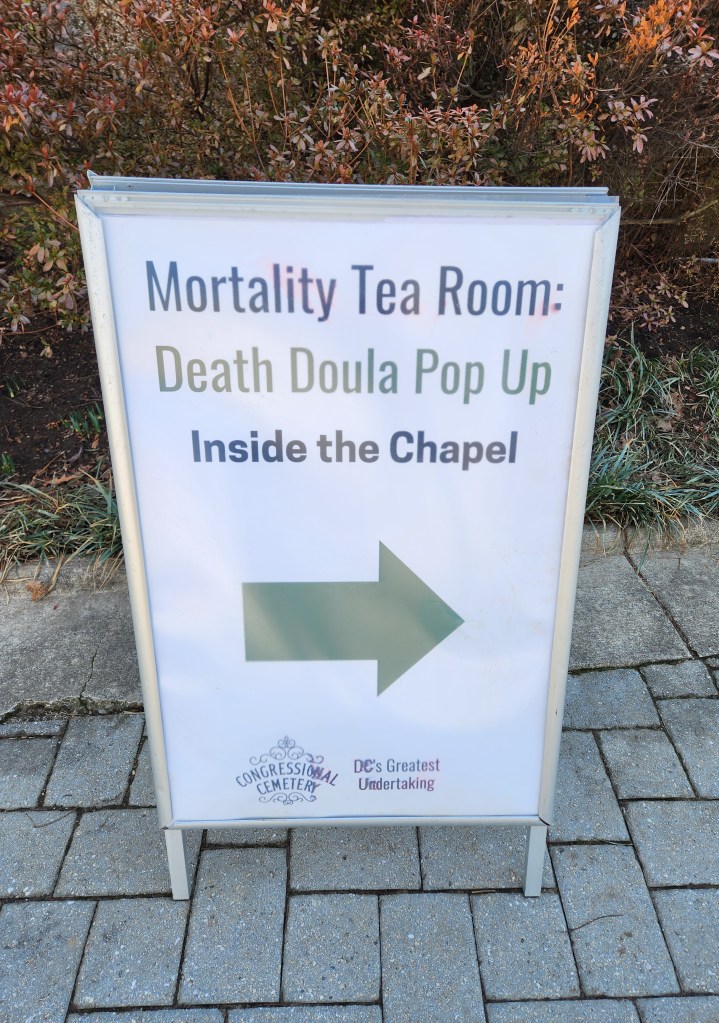
Last week, Congressional Cemetery wrapped up a month long series of Death Doula Pop Ups held inside the cemetery’s chapel.  These “Mortality Tea Rooms” were an extension of the “Death Café” program sponsored by the cemetery.  The “Death Café” is a loose knit international movement to facilitate regular discussions about death over food and drink with a dozen or so participants. 

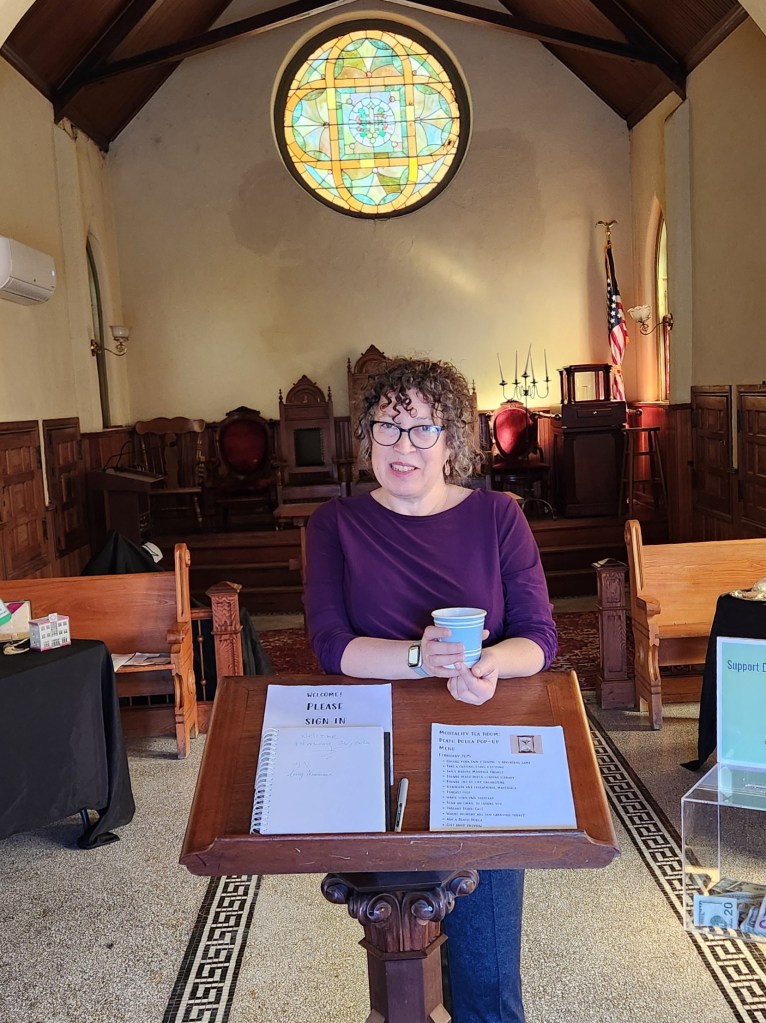
This series was coordinated and hosted by Congressional Cemetery’s Death Doula in Residence, Laura Lyster-Mensh. 

A visit to one on the events last week found Lyster-Mensh offering tea and information through a series of exhibits illustrating a death doula’s mission and her own approach to her practice.

And that’s what death doulas do – provide information about end of life choices both for families and individuals and support for terminally ill persons and their families. 

Lyster-Mensh conducts a tour of her Mortality Tea Room exhibits:  

Impermanence

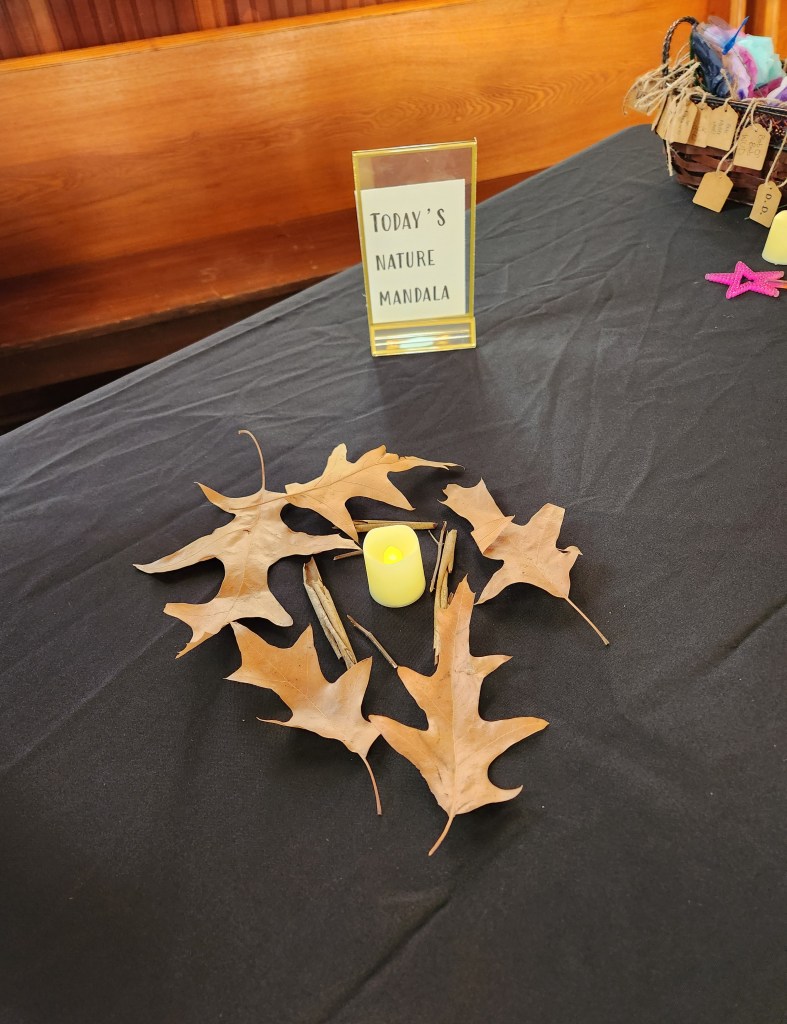
Every day, she starts a new nature mandala – a geometric shape made of things in nature picked up on the cemetery grounds by visitors to the chapel.  She says, “People are shy about things associated with bodies – so I’ve invited people to be part of building this geometric shape as a study of impermanence.  At the end of the day, I wash it away – and we start over the next day. 

Community Mourning

She references the Mexican tradition of Day of the Dead and said that that on the Day of the Dead last year an ofrenda was set up in the chapel.  (Ofrenda means “offering” in Spanish and refers to the colorful altars set up to honor deceased loved ones on the Dia de los Muertos Mexican holiday.)  She says that it displayed “hundreds of objects and photographs and flowers.  It was just splendid – a way of introducing ancestors and a way of talking about the past.” 

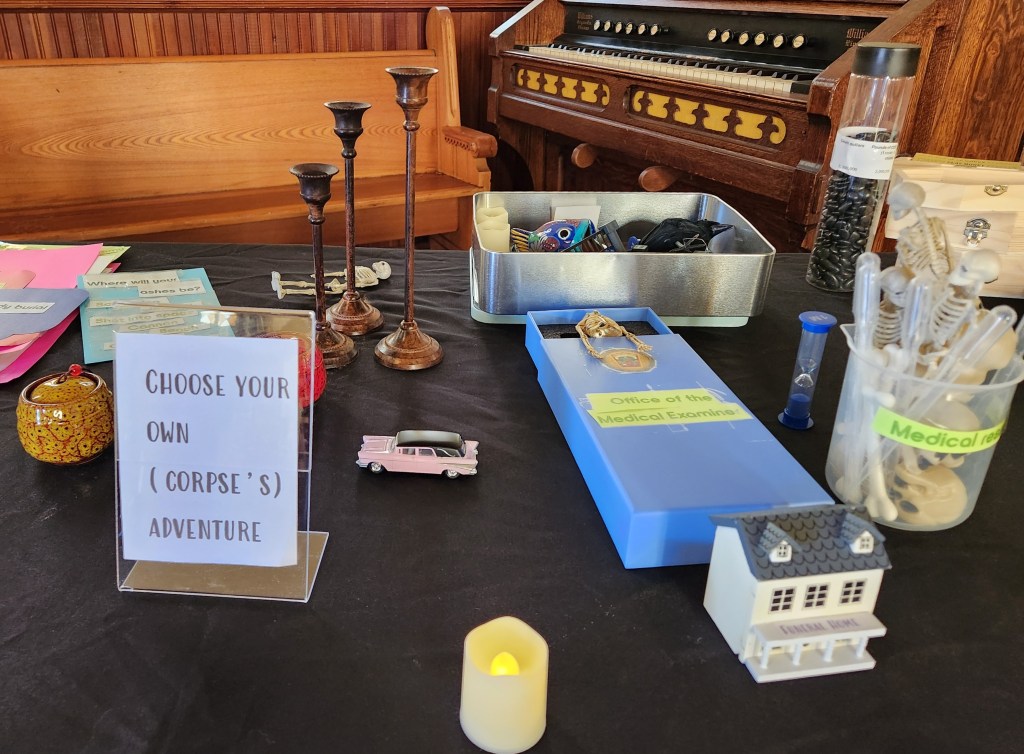
Choose Your Corpse’s Adventure

She moved on to what she called her pet project, a game called Choose Your Corpse’s Adventure.  She says, “Most people don’t think about what happens to their body after they pass – that causes expensive chaos.  So I set up toys to show people their options – how much money will it cost you to die and how much carbon will it take?   I get them to think – if you have as much money as you want and as much carbon as you want, how much do you need?  I ask them to think about that.  Given options such as water cremation, human composting, or fire cremation, what is the actual cost financially and environmentally? And the party – what about the party you might have after you’re gone?  By end of the game, people have gotten a better idea of death’s costs and impacts.  The real thing is the conversation, especially with couples.  That’s my goal – to get people talking and to think about their behavior in these terms.”

Library and Life Planner Area

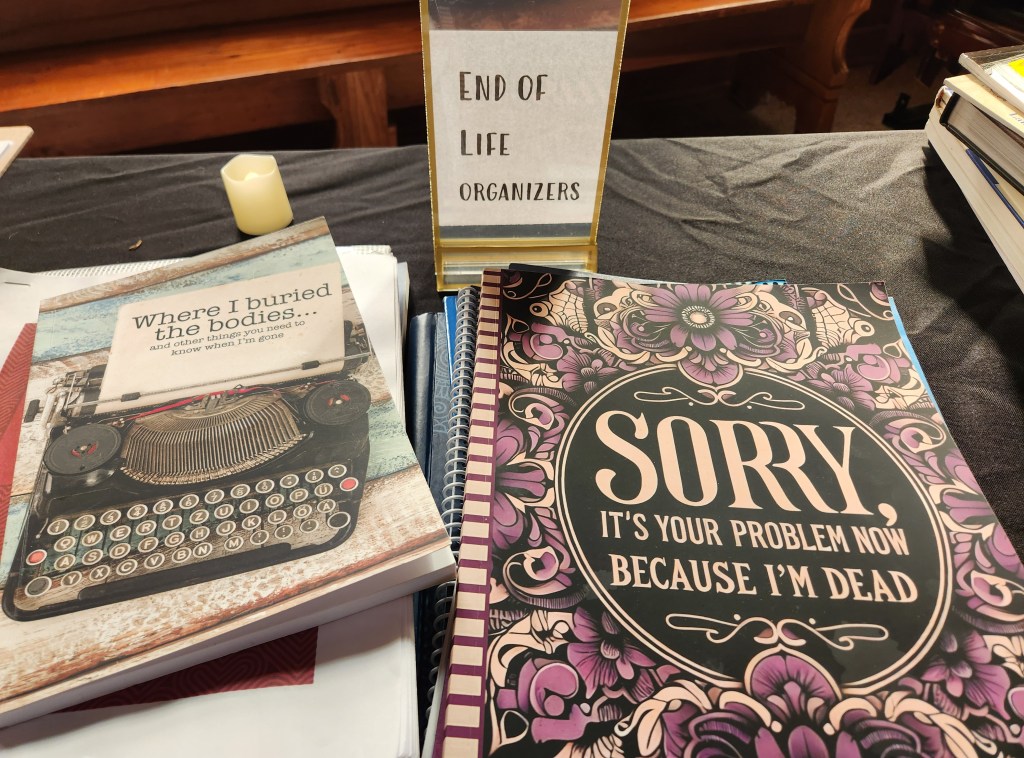
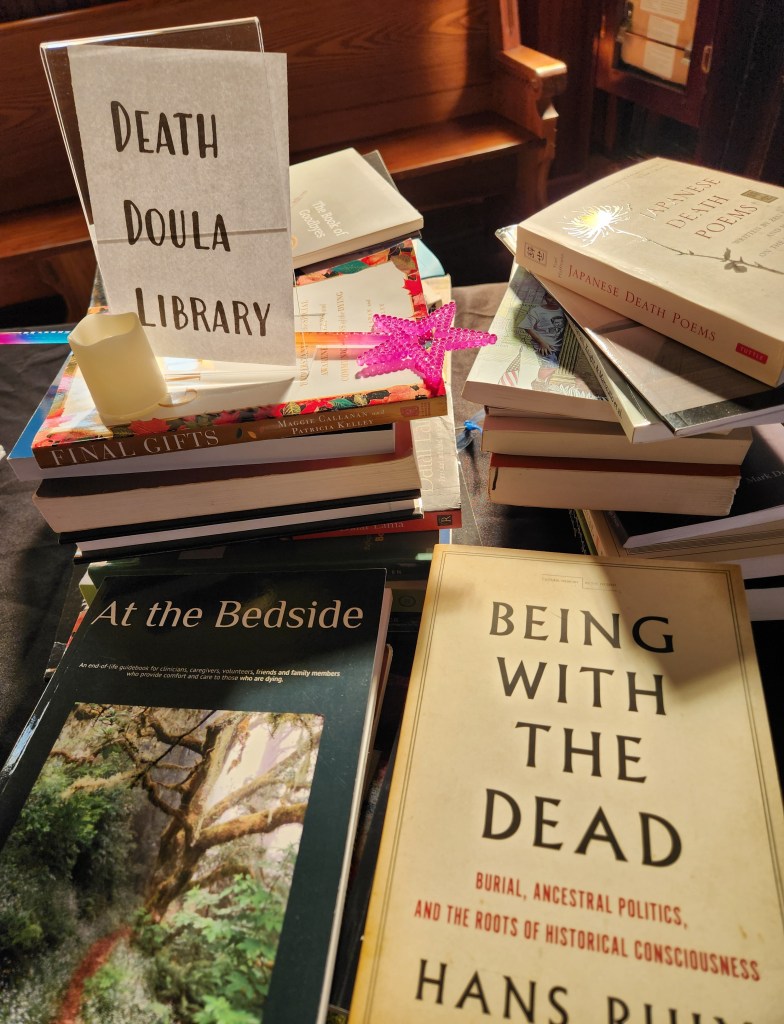
Lyster-Mensh has a lending library including books and life planners.  She lends them out and people bring them back.  She wants people to organize and think about the chaos the day after they die.  She adds, “There are so many kinds of organizers – some are funny and some are serious.  I hand them a stack and let them go through them.” 

Immortality

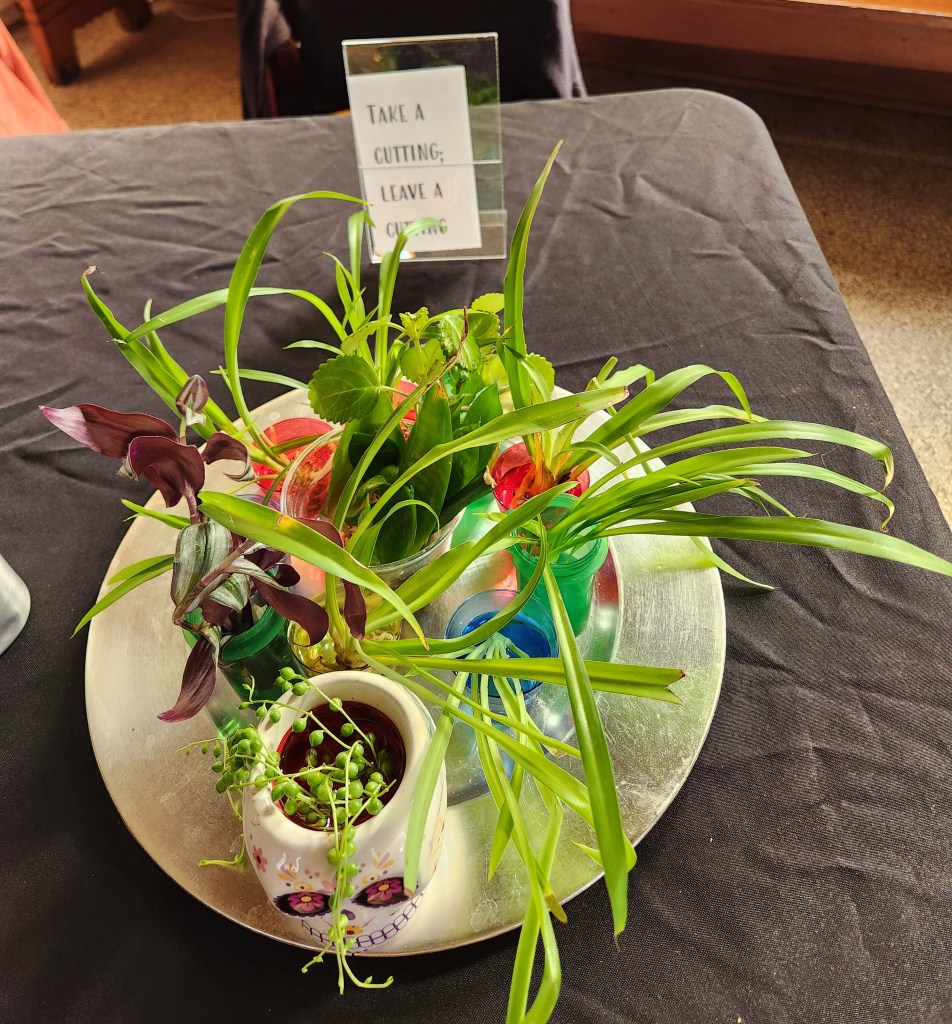
Lydia-Mensch doesn’t talk about immortality, but she alludes to it by giving away plant cuttings. 

She says, “All living things come from something that has died.  The cuttings are all from my mom’s plants.  It’s a symbolic thing – I encourage people to think about taking my plants home; they will live or die and all these are coming from my mom’s plants which come from other plants and I like that idea.  Snake plants, Swedish ivy, tradescantia, spider plants – I love the idea that they are going out into the world.” 

Last February was the first month-long mortality workshop – which she says is a completely new way of encouraging contemplation of end of life scenarios – “It happened because the chapel was open for the month of February, and I asked to do it.  Last year, I did individual appointments.  The year before I did weekly gatherings and events.”  She says the cemetery will probably repeat the experience next year. 

Asked what motivated her, Lyster-Mensh says, “I’ve always had an interest even as a kid.  As I get older and lose more people and get closer to death the ‘eye-rolling’ (encountering people’s annoyance or reluctance to take the issue seriously) motivates me.  When I sit with dying people – and I’m with dying people a lot – their families and friends are often too frightened to be there and so they’re alone and that doesn’t have to be.  So I feel that death awareness is a way to bring people back to being more loving and taking care of each other rather than just leaving people to suffer in fear and isolation.” 

For more information and to sign up for a Death Café, go here:  https://bit.ly/3QNeZxb

1 Comment

Filed under Uncategorized

Photo Essay:  New Congressional Cemetery Tradition Debuted Saturday

Photo Essay:  New Congressional Cemetery Tradition Debuted Saturday

by Larry Janezich

Posted December 16, 2024

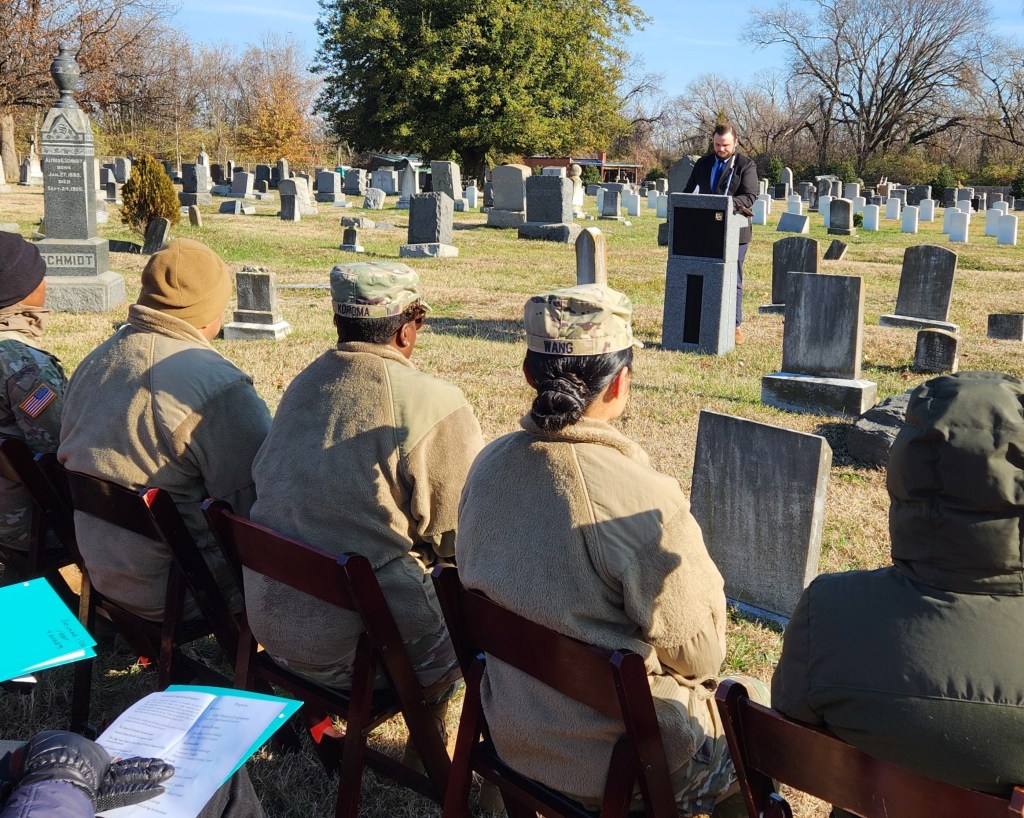
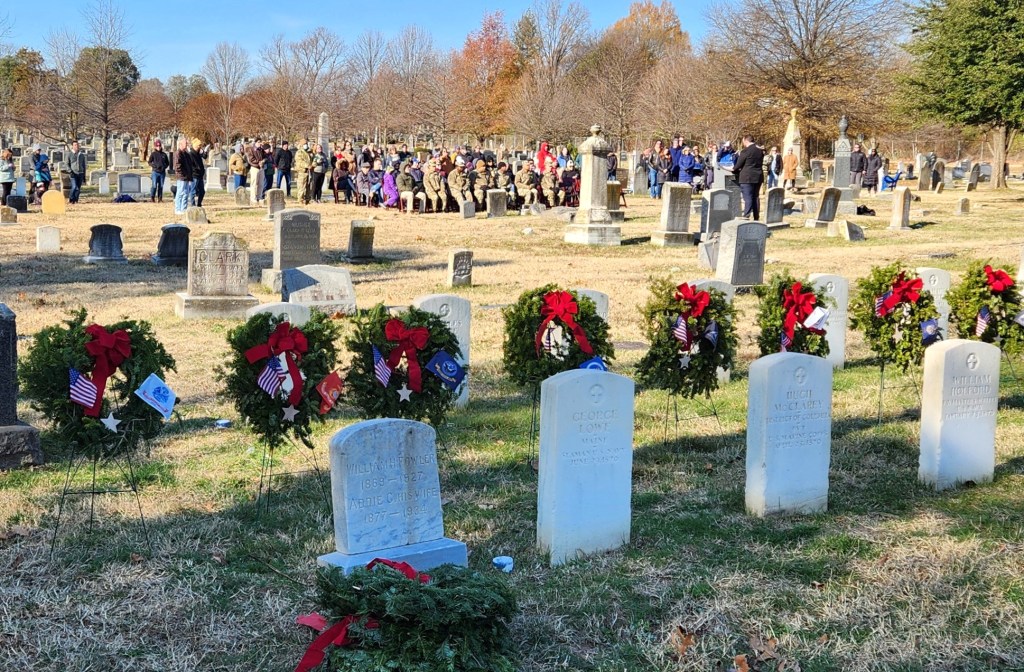
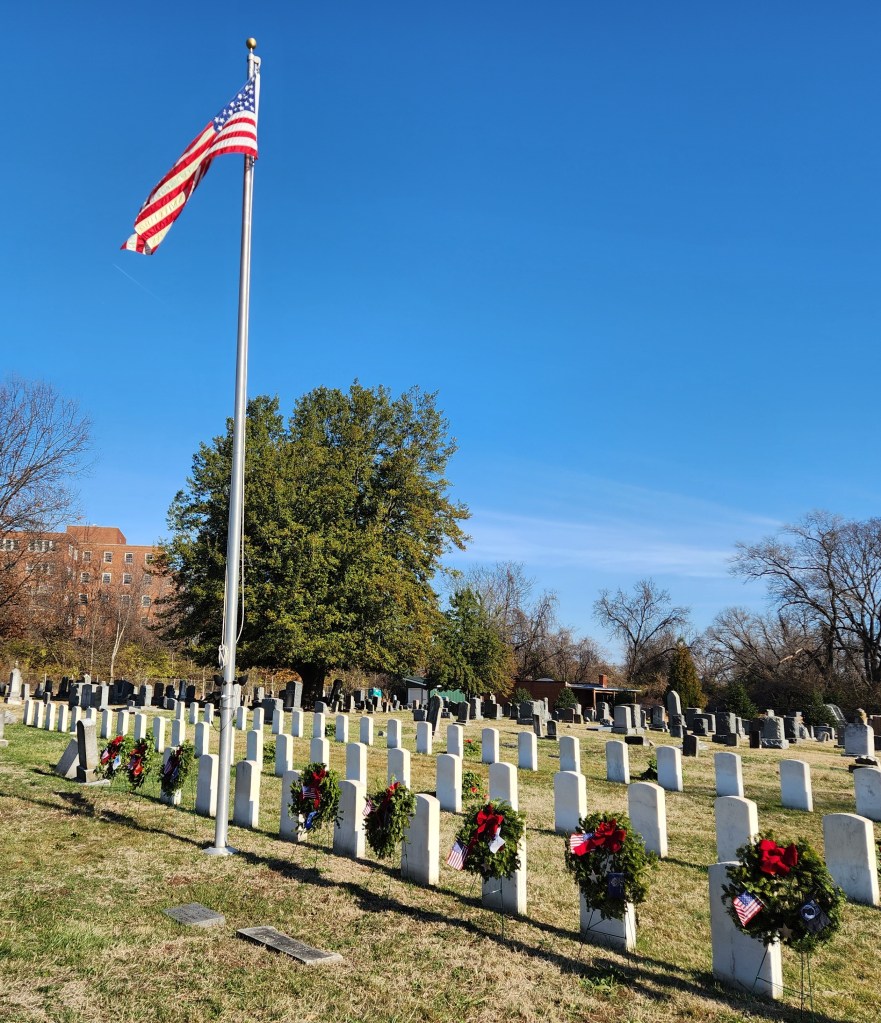
Saturday marked the debut of a new annual ceremonial tradition at Congressional Cemetery with the remembrance of fallen veterans and those who continue to serve in the U.S. Armed Forces.  For the first time ever, the cemetery participated in a national ceremony and laying of wreaths on the graves of those who have served in every branch of the United States military.  Wreaths Across America is a nonprofit organization founded to continue and expand the annual wreath-laying ceremony at Arlington National Cemetery begun in 1992.  On Saturday, more than two million volunteers gathered nation-wide to “Remember, Honor, and Teach” at more than 4,600 participating locations in all 50 states.  https://www.wreathsacrossamerica.org/

There are over 1,700 veterans from almost every American armed conflict dating back to the American Revolution interred at historic Congressional Cemetery and volunteers placed 350 wreaths on veteran’s graves.  Wreaths were donated by community members who ordered them online on the Wreaths Across America website at $17 each.               

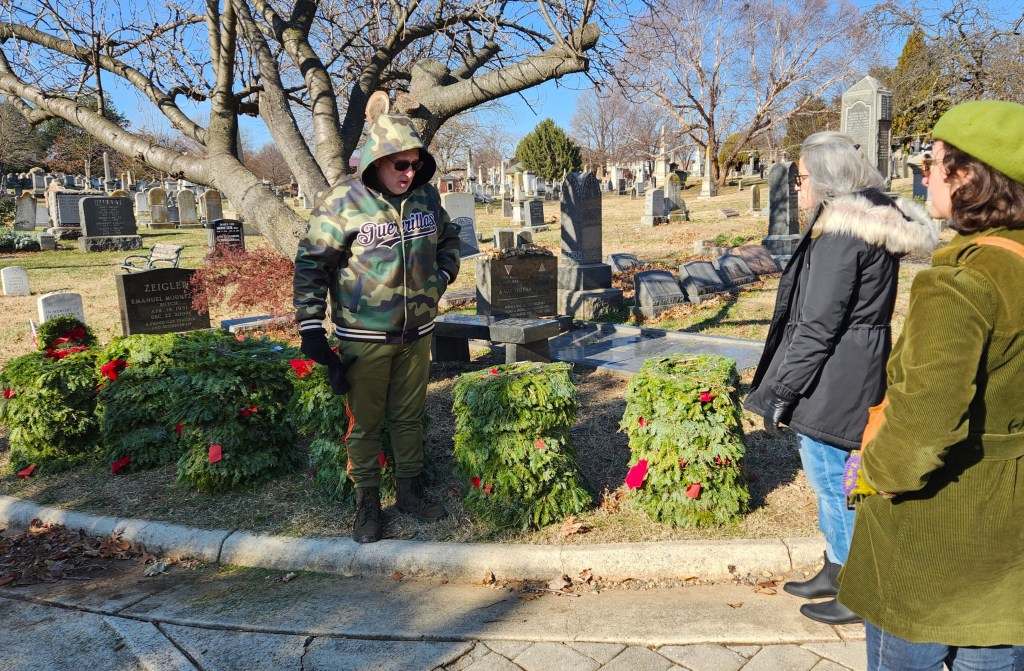
The ceremony came to Congressional Cemetery owing to the efforts of Jim Guckert, founder and Executive Director of Guerrilla Gardeners DC.  After volunteering for wreath-laying in Arlington National Cemetery, Guckert thought that Congressional Cemetery warranted its own service.  He put Wreaths Across America in conversation with representatives of Congressional Cemetery and Saturday’s first commemoration event was the result.

Wreaths Across America’s community partners in the effort included the DC National Guard, Post 46 – The American Legion, The Judge Lynn Chapter of the National Society Daughters of the American Revolution, and Guerrilla Gardeners of Washington DC. 

In remarks, A.J. Orlikoff, Director of Programming, Historic Congressional Cemetery, cited President Lincoln’s address on the purpose of the struggle to the 166th Ohio Regiment who were visiting the White House on August 22, 1864. 

“It is not merely for to-day, but for all time to come that we should perpetuate for our children’s children this great and free government, which we have enjoyed all our lives. I beg you to remember this, not merely for my sake, but for yours…. The nation is worth fighting for, to secure such an inestimable jewel.”

Here are wreaths for each branch of the United States Armed Forces, waiting placement.

Veterans of the Armed Forces selected to place the wreaths in front of the American Flag in the center of the veterans’ section of Congressional Cemetery. 

The wreaths after placement.

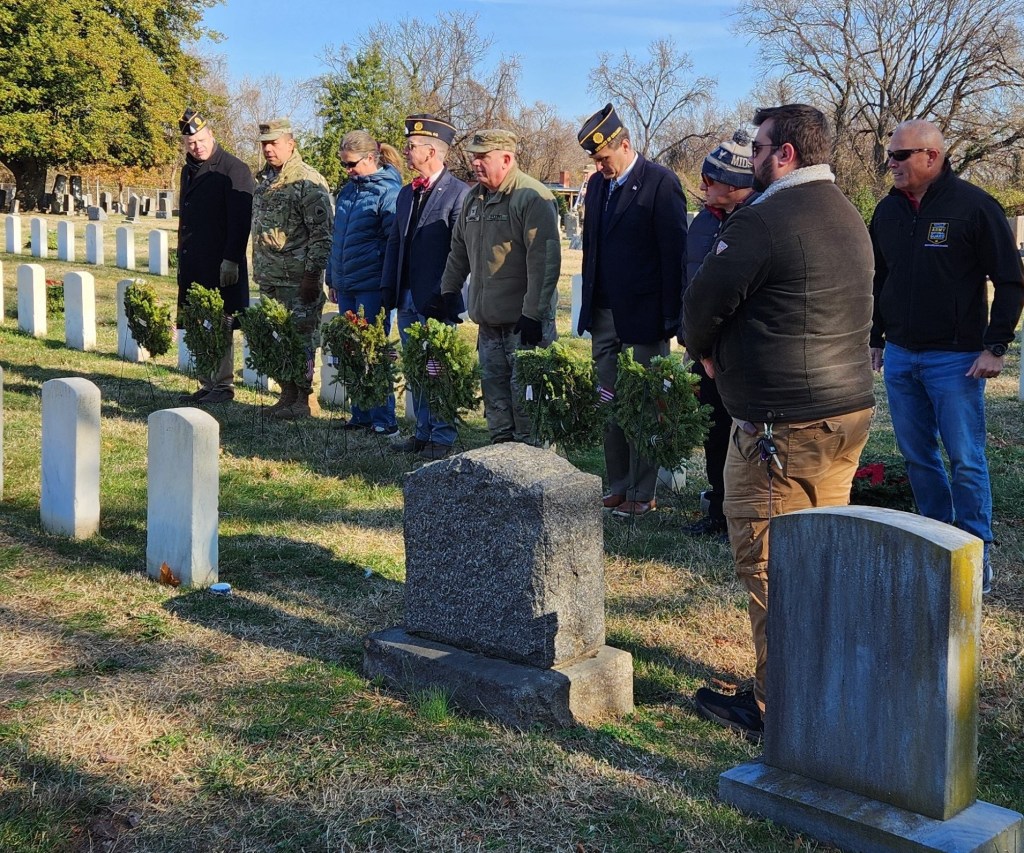
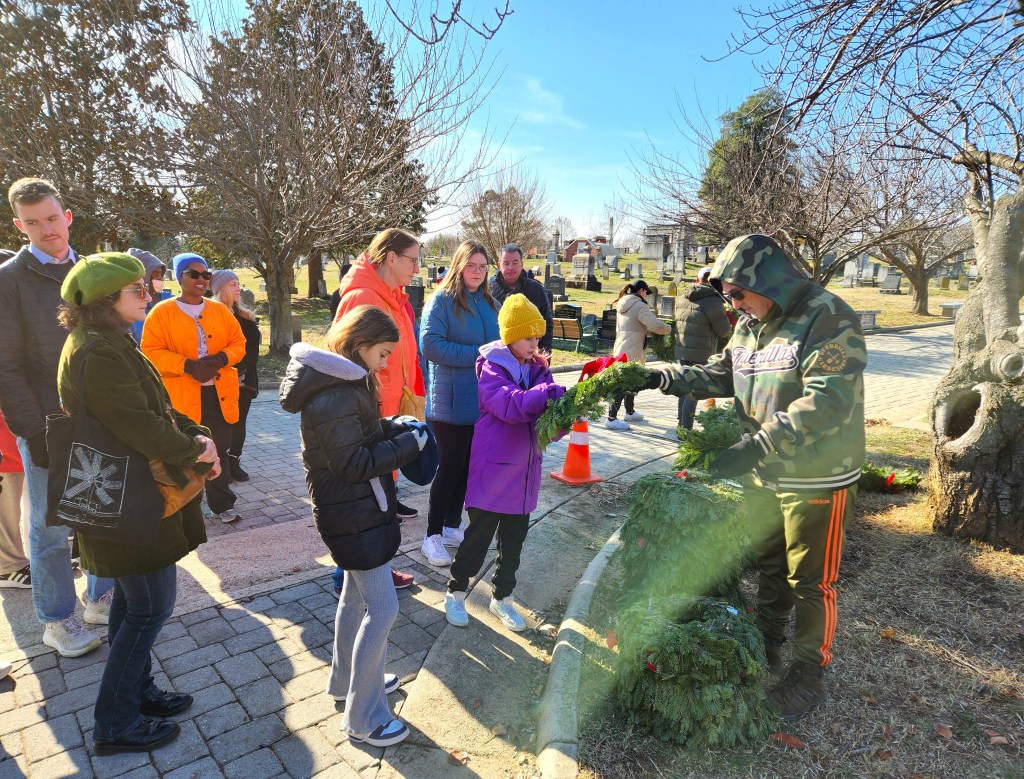
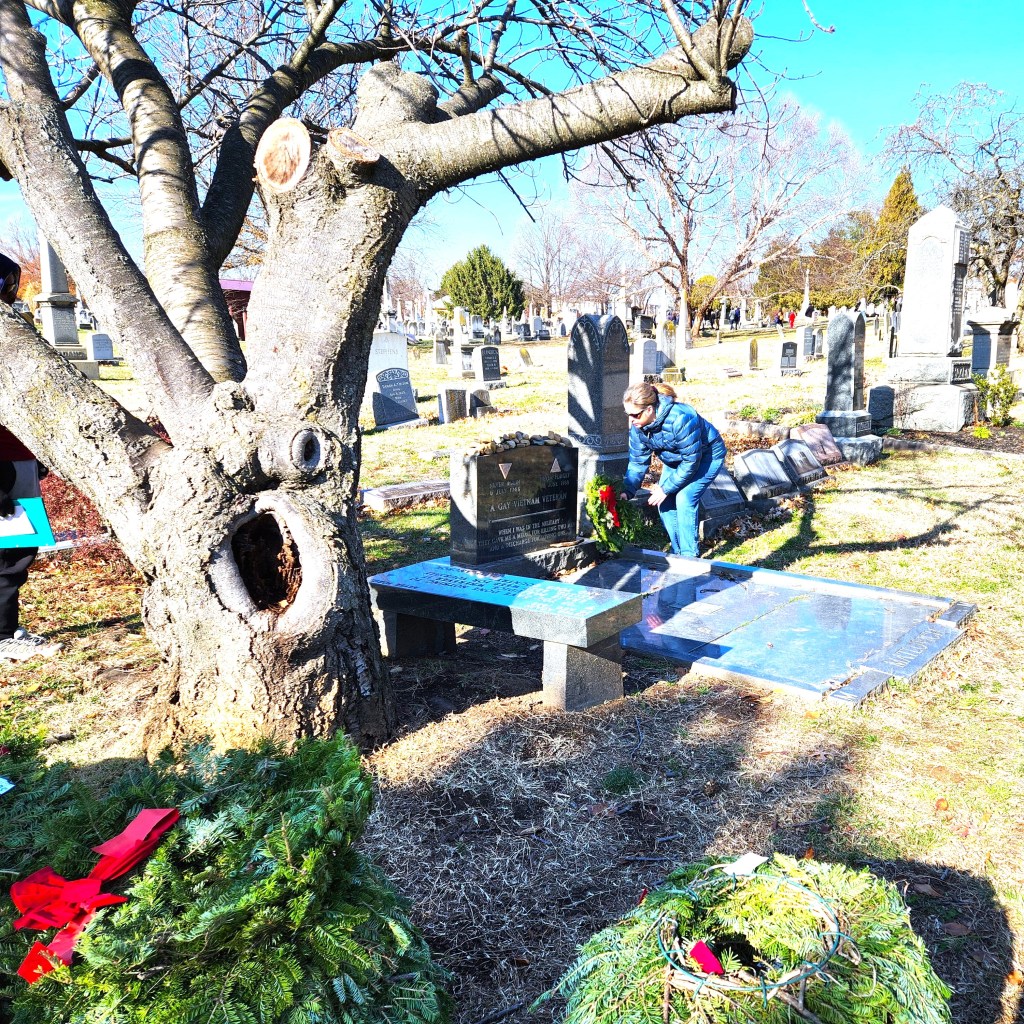
After the ceremony, the volunteers split up into four groups to lay wreaths, each assigned a section of the cemetery.  Section leader Guckert led his group to a pile of wreaths – nearby   was the grave of gay activist Leonard Matlovich who was the first gay service member to purposely out himself to the military to fight their ban on gays. 

Guckert hands out wreaths to volunteers. 

Coast Guard veteran Denise Krepp lays a wreath on Matlovich’s grave. 

For more on The Association for the Preservation of Historic Congressional Cemetery and how to join it, go here:  https://congressionalcemetery.org/
For more on Guerrilla Gardeners DC and how to join, go here:  https://guerrillagardenersdc.org/

Comments Off on Photo Essay:  New Congressional Cemetery Tradition Debuted Saturday

Filed under Uncategorized