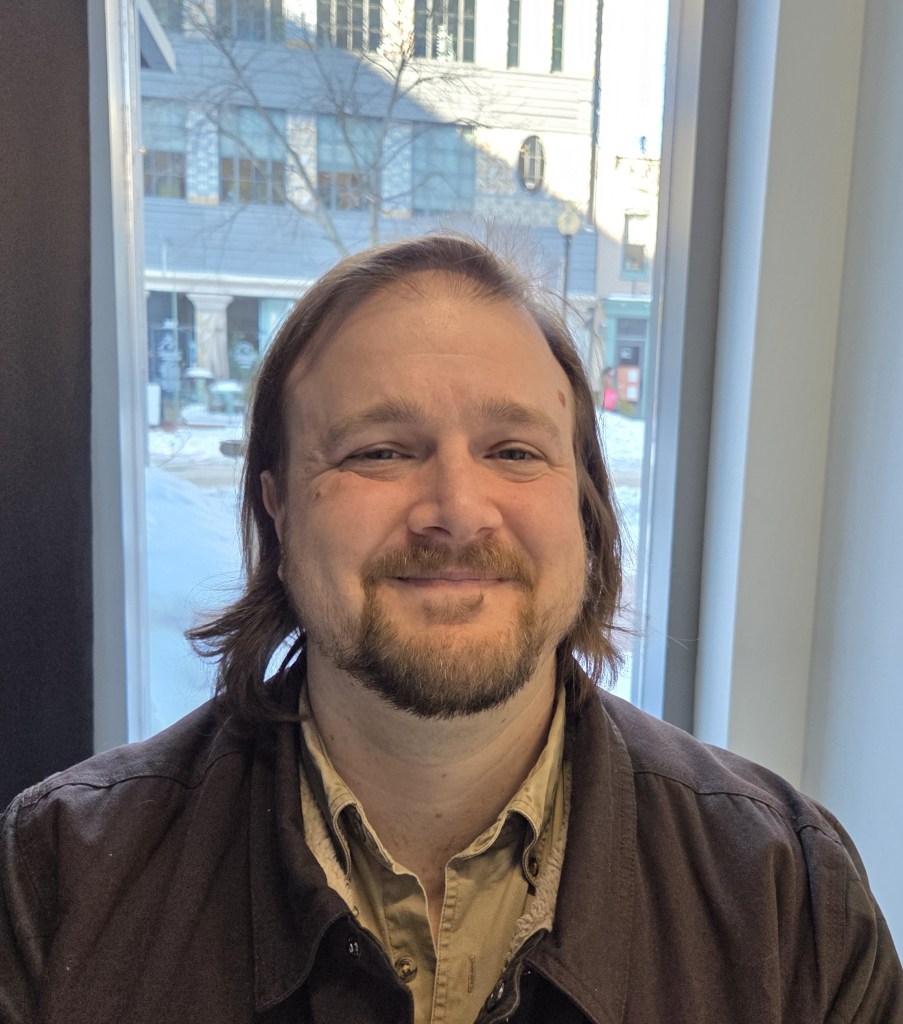
Here’s the new ANC6B Chair Sam Pastore
by Larry Janezich
Posted February 4, 2026
Last week, CHC interviewed ANC6B Chair Sam Pastore. Here’s a condensed version edited for clarity.
Sam Pastore was elected as ANC6B after running as a write in candidate for the ANC6B05 seat left vacant by the retirement of Commissioner Kasie Durkit. One year after being elected, he finds himself Chair of ANC6B – more on that later.
Pastore was born in the house he and his wife Saleela now live in at 8th and North Carolina Avenue, SE. One of his first jobs was working for Dan Donahue of Agora Farms on Eastern Market’s Farmers Line. He graduated from DC’s Field School then attended DePaul University in Chicago where he graduated with a Bachelor’s degree in political science and theory.
He became a real estate professional in Chicago right out of college. Three years later, he was back in DC as a real estate agent, working for several agencies before landing at Coldwell Bankers on Capitol Hill in June of 2023.
Why did you run for the ANC?
Pastore said, “Really because no one else ran and I couldn’t imagine having an empty seat in my own district in a time when parts of our democracy are under stress.” He said, that Coldwell Banker realtor Chuck Burger “could probably tell I had an interest in doing community service work” and Burger – who is Chair of Eastern Market Community Advisory Committee (EMCAC) – asked him to help EMCAC stand up a new public safety committee. He credits ANC6B04 Commissioner Jerry Sroufe (who is the ANC’s representative to EMCAC) for encouraging him to run as a write-in candidate for the seat.
Other Community Service
Pastore engages in other community activities as well. He cofounded The Purpose Party which was active during the pandemic until recently as a mutual aid civic engagement organization distributing free food, free clothing and free hygiene for people of DC who were in need.
He serves on the board of The Hill Center. He says, “That happened because a close family friend of mine who was a supporter of The Purpose Party had been on the board … and when she left, she introduced me to Board Member Barbara Cartland” and that led to an invitation to join the board.
Pastore is also a volunteer for Capitol Hill Village (CHV), most recently shoveling snow for CHV members. In the spring, he volunteers for Garden Palooza which he says is a really good program where CHV goes out and helps folks get their garden together.
What motivates you to perform community service?
Asked what motivates him, Pastore says he is inspired by people like “Dan Donahue and others who get involved, spend the time, and show up – if we all did that we’d have a better community. We’re in this very wealthy powerful community and there are so many barriers but there’s also so many ways people can get involved.”
What surprised you after being elected to the ANC?
Pastore said, “It was just how hard everyone works whether it’s the city council or the ANC commissioners – and how limited the resources are – from website assistance to communications to infrastructure…. I mean our whole ANC gets a $25,000 annual budget and we have one staff person and we try to piece together a legal team for dealings with developers or some restaurant group or a cannabis company that is well funded and organized…. We have to relearn this every time as commissioners turn over. We are outgunned in so many ways. What I wish is that there were more people who showed up at meetings….”
What do you think makes a good ANC Commissioner?
“It’s really hard showing up authentically and being able to listen and stretch a little bit. What I learned this year is there’s kind of multiple roles for anybody who serves as a commissioner where it’s a conversation between being able to be to be convinced of things and talk about things and not be too stuck in our ways and make things personal and also believe in something. It’s being able to show up as themselves rather than with some kind of negative or self-serving agenda.”
Conflict of Interest
Being a real estate broker, or an attorney, or a city or federal employee while serving as an ANC commissioner presents issues commissioners in other professions don’t face. CHC asked Pastore how he would handle potential conflicts of interest. Pastore said that “any property or case that I have a direct financial interest in – I haven’t ran into one yet – obviously I’d have to recuse myself.” On other questions regarding a zoning or alcohol beverage/cannabis issue on a property next to or in close proximity to a property – say being listed for sale or lease by Pastore or his agency – are less clear cut. Pastore says, “I’d have to check with myself because in the end of the day I also do have my own opinions on those things. I understand that if my name is on a property on Barracks Row and there’s a cannabis shop or a restaurant that wants to open up across the way, I do have to check with myself and see I feel about this: ‘Does it have to do with some financial gain?’ But I haven’t run into one of those yet.”
Major Issues for ANC6B
Here’s a list of major issues for ANC6B that Pastore sees for the coming year:
- Zoning and usage issues related to our neighborhood becoming less of a neighborhood in certain ways. Especially about big companies wanting to buy houses.
- Rumsey – this year is going to be the year that the design for that public space happens
- Redesign of the Potomac Avenue/Pennsylvania Avenue traffic circle.
- Issues concerning the on-going expansion of bike lanes and priority bus lanes
- Economic variety on Barracks Row and how do we get smart as a community about development? How much of that is in the hands of the community, how much of it is in the hands of the city, how much is it in just in the hands of the people actually own the property?
- Managing the tensions regarding the push for more affordable housing. Dealing with concerns of people who say how can you tell me what I can to do with my house?
Streamlining ANC Meetings
There have been discussions over the past year about how to streamline ANC6B meetings which sometimes run so long that unfinished business gets pushed to the next Executive Committee meeting. Pastore says “It’s embarrassing to me when we get to the end of the meeting and we we’ve got to rush through people’s issues especially if they’ve waited through the whole meeting and then we say you’ve got three minutes and then, no one else. But I don’t have a solution yet.”
Elected ANC Chair
CHC asked Pastore about the process by which the Commission selects its officers. Pastore says, “What I find is that I don’t see is a lot of people very hungry to do more because taking on these positions is a lot of work and a lot of responsibility. I think it’s essentially a conversation between the commissioners to see who is willing to say they’ll do it. That’s how I saw it this time in terms of a process. Honestly I can’t say that there’s a set process other than at the end of the day somebody puts your name up and you vote on it.”
 CAPITOL HILL CORNER