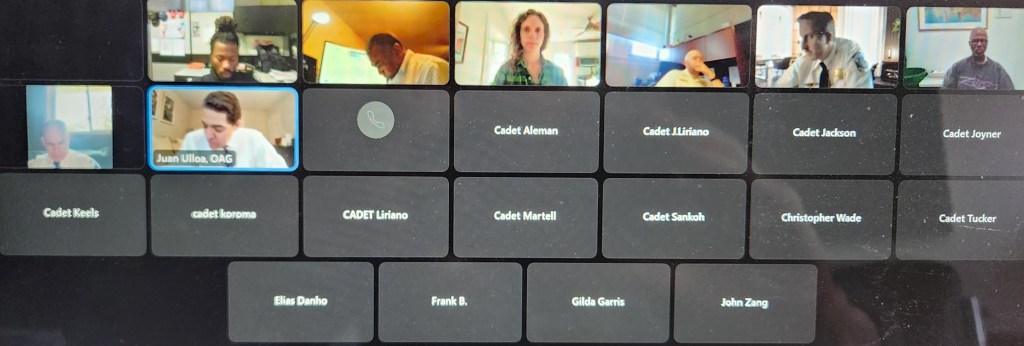
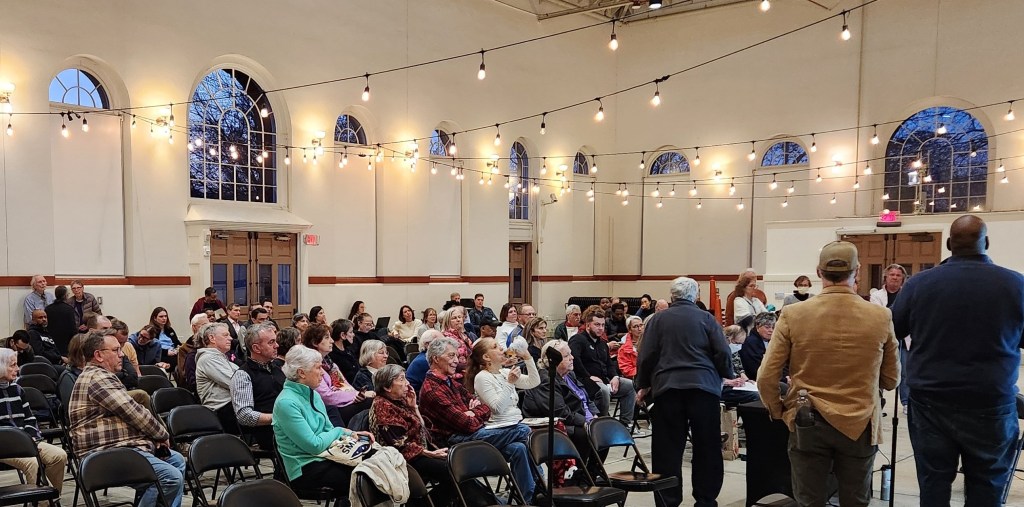
MPD 1st District’s Community Advisory Committee met Tuesday night.
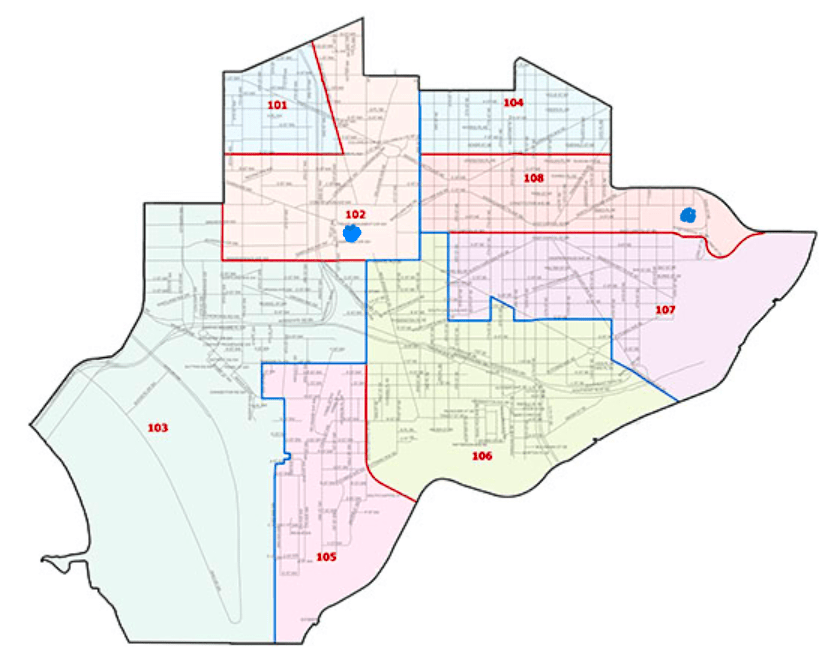
MPD’s First District. Blue dots locate the U.S. Capitol and RFK Stadium, respectively.
Crime Report: MPD Commander Colin Hall Reports on District 1
by Larry Janezich
Posted April 3, 2025
MPD 1st District Commander Colin Hall delivered the monthly crime report to the 1st District’s Community Advisory Committee Tuesday night:
He cited several high profile arrests MPD made in the past few weeks.
The 2023 homicide at the Cru Nightclub in 1300 block of H Street, NE, was closed with two arrests.
The ongoing investigation of the flagrant shooting last October at 1900 One-half Street, SW near the Watermark Buzzard Point apartments resulted in a recent arrest. The incident involved adults and juveniles and the expenditure of nearly 100 rounds. Hall said other suspects are being sought. A stray bullet from this incident wounded a pedestrian on Potomac Avenue, SE.
A second arrest was made in Eastern High School shooting of a student last November, closing out the case.
He also reported :
We’re seeing a 31% decrease in violent crime in the first quarter across the city and a 35% decrease in violent crime in the 1st District – that’s over the 15% drop ending 2024.
We continue pushing down robberies – there was a 38% decline in the first quarter in the 1st District, on top of a 47% drop ending 2024.
We had 20 burglaries in the 1st District so far this year – that’s plus 3 over last year. We follow up after every burglary with our outreach team to talk to businesses about cameras and alarms.
We shut down a crew linked to 21 burglaries throughout the city.
Theft from autos is down but increasing with the warm weather.
We are still seeing thefts of unattended vehicles. That was a problem in the cold but we’re still seeing it in warm weather. We urge using wheel locks and air tags.
We’re seeing tire thefts throughout the city and urge residents to be alert and call MPD to report suspicious activity.
Comments Off on Crime Report: MPD Commander Colin Hall Reports on District 1
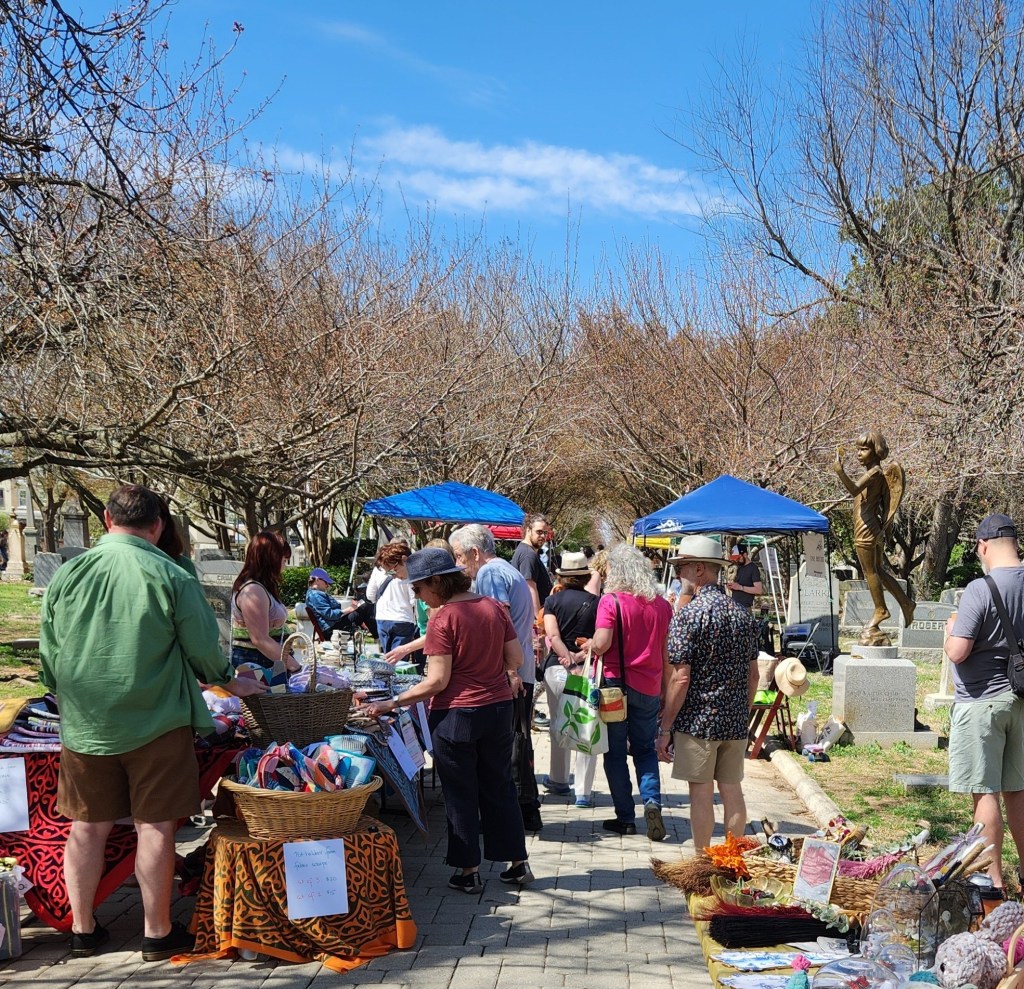
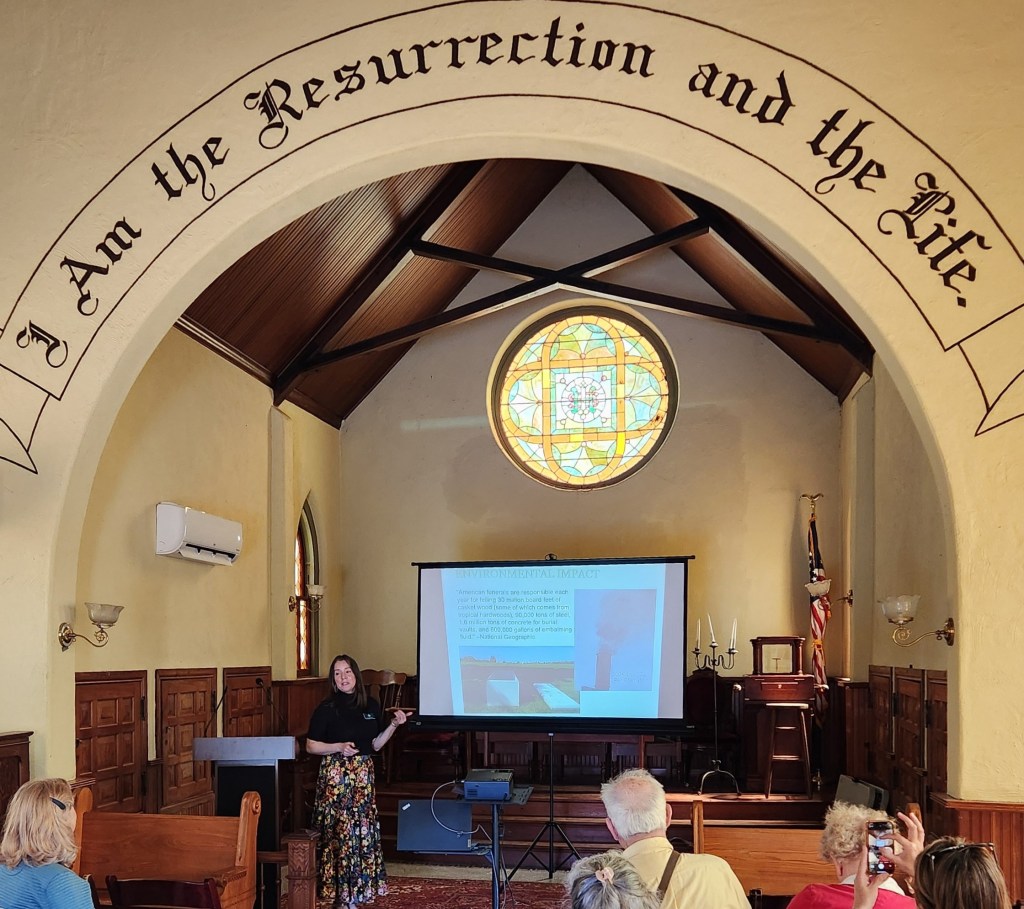
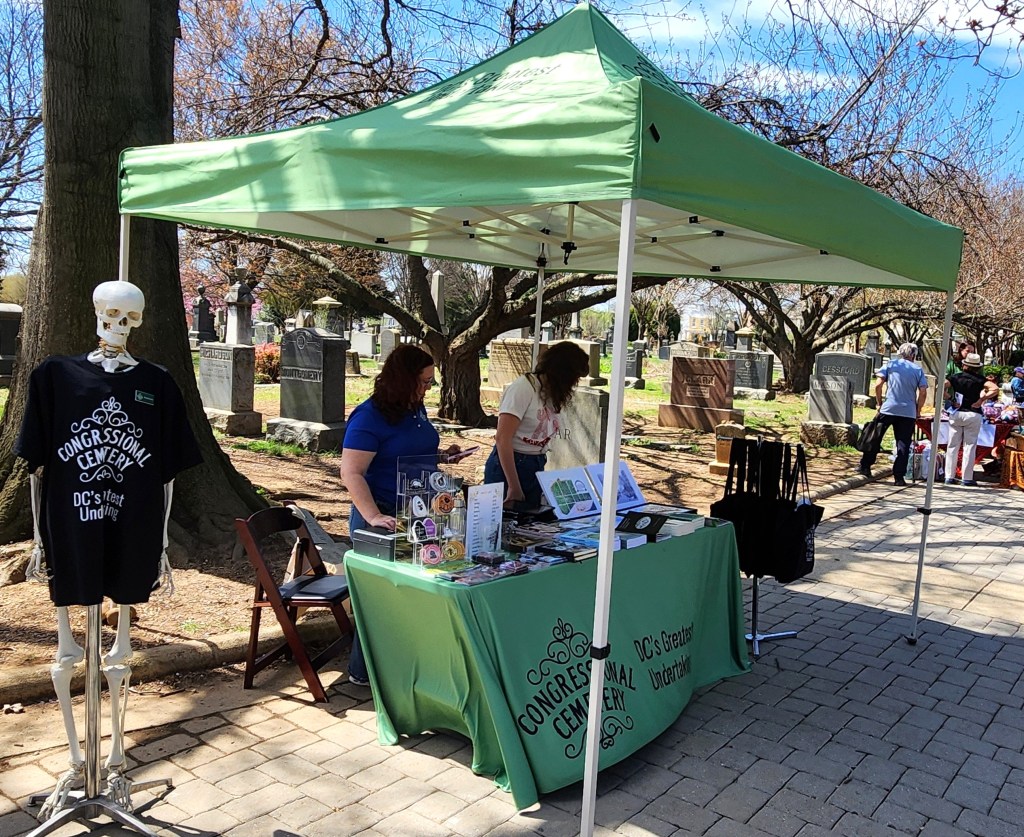
Congressional Cemetery held its Spring Fair on Sunday, March 30, featuring more than two dozen vendors, an Introduction to Green Burial in the Chapel, a tour of historical trees and grave sites, and a presentation on Equinox Gardening.
Vendors included HCC Gift Shop, Adopt-A-Plot at HCC, The Roving Hare, Republic Restoratives, Chippin Pet, From Here to Home Essentials, Catalyst Hot Dogs, Second Story Honey, Black Radish Handmade, The Witch Wife Crafts & Treasures, Open to Being, Green Garden Vintage, Earth-Worker, Hands Along the Nile, Rough Seas Productions, Slow Drip Refashions, Paloma Vintage Designs, Amaya Accessories, Amethyst Alchemist Art, One Seed Designs, D’Bohomama, Necos Boutique, Great Mothers Garden, Solutions, and Folger Theatre.
Congressional Cemetery Associate Lily Buerkle presented the introduction to green burial. It involves, no embalming, body shrouded or placed in a casket of natural material, no grave liner or vault, lowering by hand or by device, a natural marker or a traditional head stone. This is an alternative burial for those not wanting a typical American funeral. Those funerals are – according to National Geographic – responsible each year for felling 30 million board feet of casket wood, 90,000 tons of steel, 1.6 million tons of concrete for burial vaults and 800,000 gallons of embalming fluid. The average cost in the DMV area is around $2000 to $4000. Green burials are allowed in any plot in the cemetery which is the only cemetery in DC which offers green burials. A helpful resource is the Green Burial Council: https://www.greenburialcouncil.org/
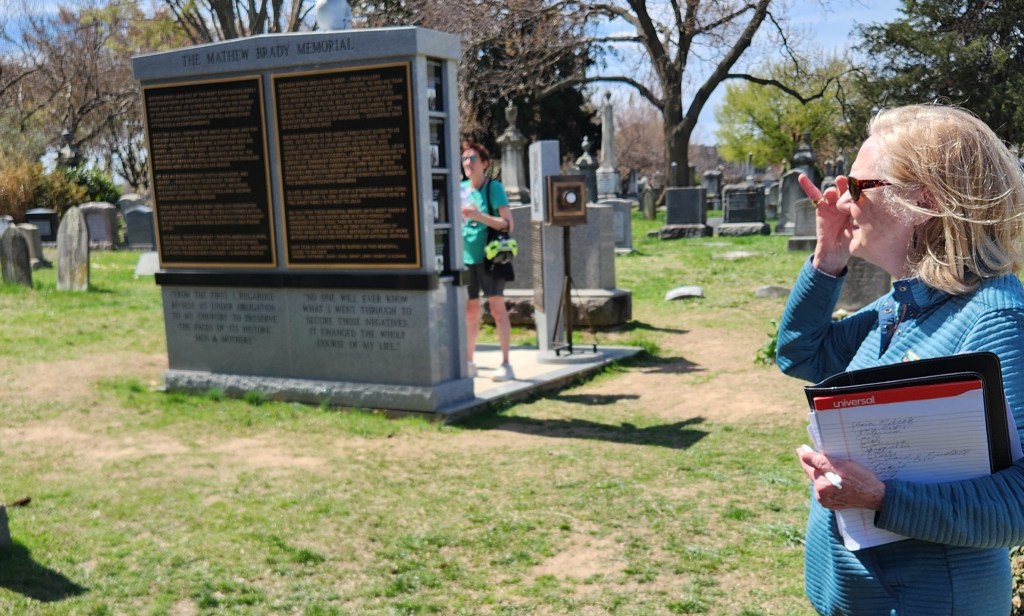
Sharon Metcalf, also an Associate, conducted a tour of historical trees and sites of the cemetery. One of the stops on the tour was at the memorial for Civil War photographer Matthew Brady, dedicated on September 17, 2022. This is of the back of the Memorial.
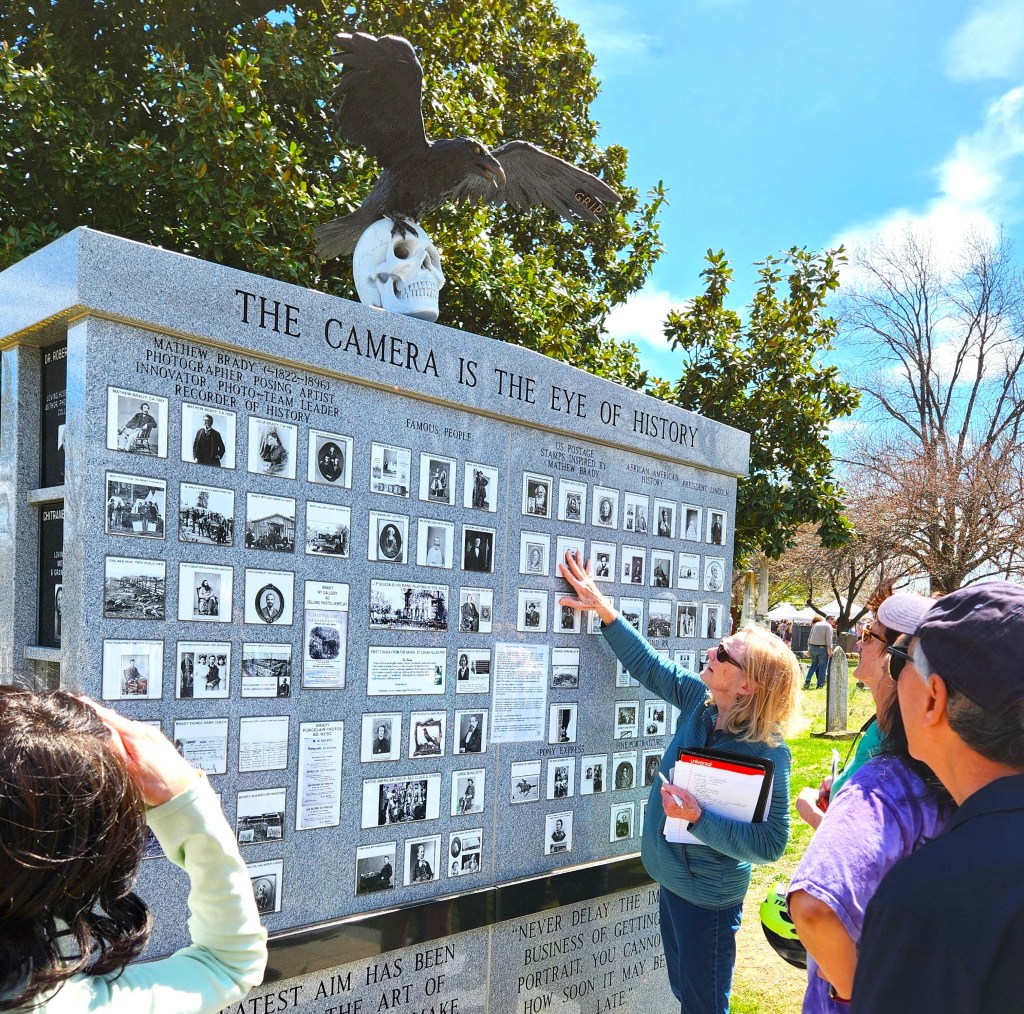
And here’s a photo of the monument’s striking front, surmounted by a sculptured raven and skull, referencing Brady’s photo of Edgar Allen Poe and featuring a selection of Brady’s photos.
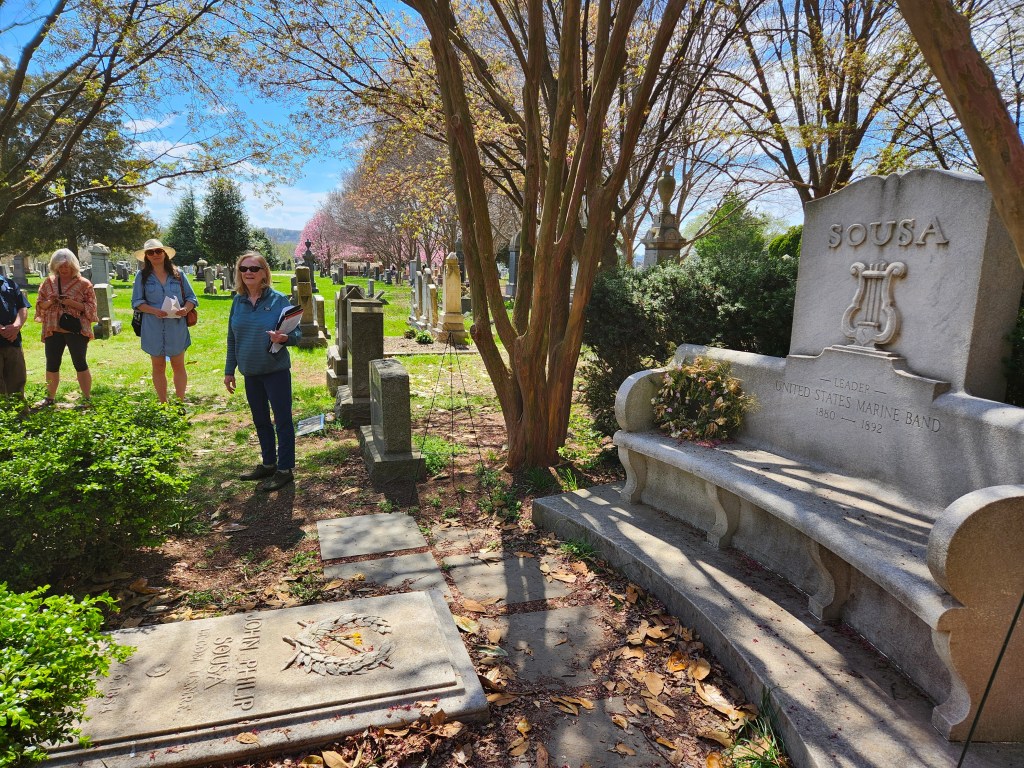
A photo of the stop at John Philip Sousa grave. Sousa, known as the March King, became U.S. Marine Band leader in 1880 and served in that position for 12 years. He wrote over 100 marches (including the “Washington Post” and “Stars and Stripes Forever”), 10 light operas, and other works. Bands from around the world come to play at his grave.
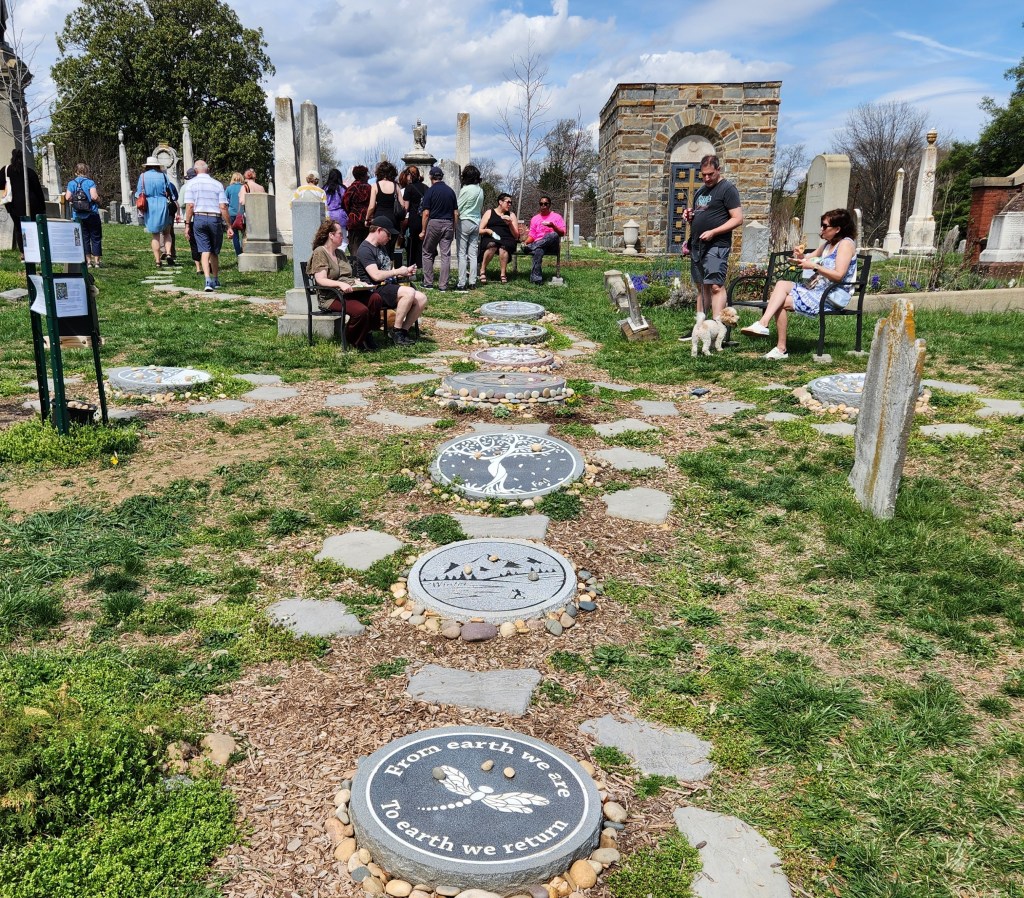
The Circle of Life Tree-henge. The Circle of Life is a recent installation of land art or earth art which celebrates nature’s perseverance. The site comprises a 60 foot circle of linden trees aligned with the points of a compass and serves as an observation site of the sun’s path during solstices and equinoxes. It celebrates and pays tribute the natural environment, invites meditation and reflection, and offers an opportunity to record those thoughts in a journal kept on site. It was created by a group of friends interested in Congressional Cemetery and green burial in partnership with Congressional Cemetery and a testimony to those who choose green burial as a simple and sustainable end to their existence. For more, go here: https://bit.ly/42c1D2O
The Association for the Preservation of Historic Congressional Cemetery is a private nonprofit organization established in 1976 and dedicated to the restoration interpretation and management of Congressional Cemetery. It is a predominantly volunteer based organization relying on over 400 neighbors, history buffs, conservators, dog walkers, and armed forces personnel each year to help restore and maintain this national treasure. In 1979 Congressional Cemetery was listed on the National Register of Historic Places and became a National Historic Landmark in 2011. For info on joining the association or to make a donation to help their cemetery, email staff@congressionalcemetery.org or go here: www.congressionalcemetery.org
The Week Ahead….
Tuesday, April 1
MPD 1D Community Advisory Committee will hold a virtual meeting at 6:00pm.
304-308 K Street, NE. Revised application of 304, 306, 308 K Street, LLC for a special exception for the residential use of an alley lot and an area variance from the requirements for creation of a new alley record lot, and an area variance from the lot dimension requirements and subdivide an alley record lot into two record lots, and to construct two semi-detached, two story, principal dwelling units in the RF-1 zone.
313 2nd Street, NE. Historic Preservation Application of St. Joseph’s Catholic Church for concept approval for renovation and expansion of an existing carriage house, razing of two structures (the current Parish Center and a single-vehicle garage), and landscape alterations.
Thursday, April 3
ANC6B Planning and Zoning Committee will hold a virtual meeting at 7:00pm.
Currently at the Rubell Museum. American Vignettes: Symbols, Society, and Satire.
September 27th, 2024 – Fall, 2025. 65 I Street, SW. 11am – 5pm. You can probably find parking on a nearby side street.
American Vignettes: Symbols, Society, and Satire showcases nearly 100 artworks spanning painting, photography, sculpture, installation, and mixed media by over 40 emerging and established artists, all from the Rubells’ collection of more than 7,700 works of contemporary art. Here’s a selection of some pieces categorized as Symbols which address our and the artist’s relationship to flags, emblems, and slogans.
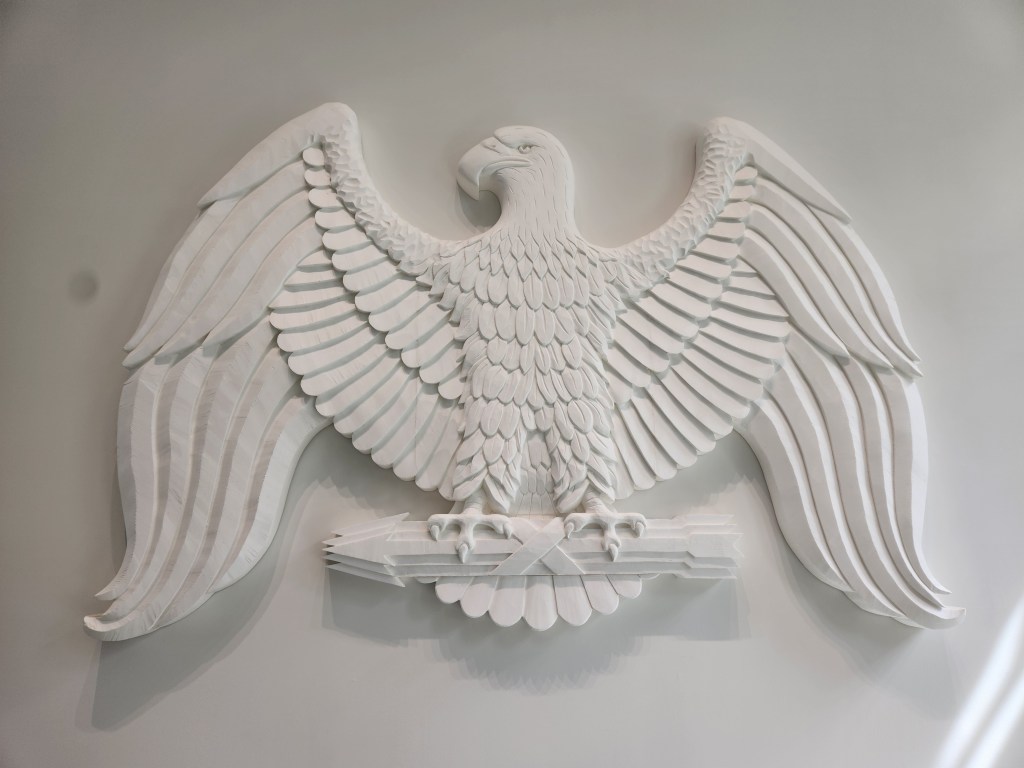
Piotr Uklanski. Untitled (American Eagle). Styrofoam. 79 X 118 in.
“In an untitled American Eagle Piotr Uklanski depicts the eagle used on the American quarter. The eagle is a symbol with layered implications, emblematic of the United States, Uklanski’s native Poland, and many other countries, while also being associated with the Nazi Party and later appropriated by Neo Nazis worldwide. In engaging with such imagery, the artist challenges viewers to recognize and reinterpret symbols across cultural codes, whether political or historical.”
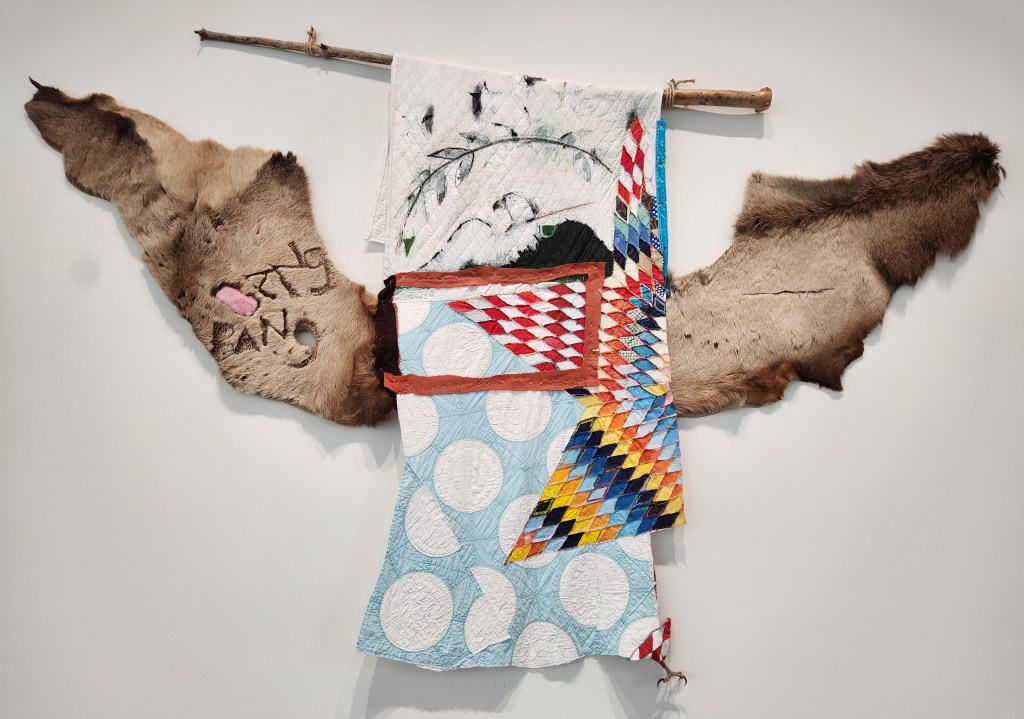
Natalie Ball. Bang Bang. Elk hide, rabbit fur, oil stick, acrylic, charcoal, cotton and pine. 84 X 124 in.
“Bang Bang came from my solo exhibition in New York at Half gallery titled Bad Lucky Indian. … I was thinking through gesture, materiality, complex narratives, form, assemblage, but mostly humor. In the studio I was looking at the great seal of the United States and I started to think about what that seal and its eagle means to me, what it means for our history, and what it means to be a dual citizen: to be a citizen of the Klamath Tribes, of a sovereign nation, but also a citizen of the United States…..I wanted my own seal. The eagle and its symbolism have been appropriated historically. It has a significance in my culture too, and I wanted to bring that forward and honor it in a different way.
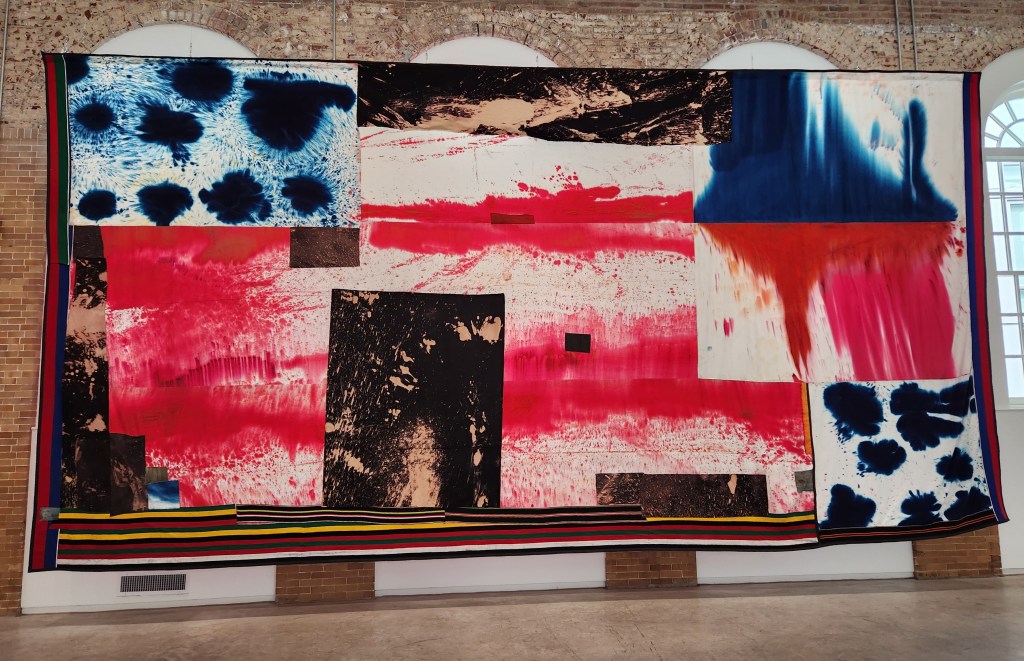
Sterling Ruby. Flag. Bleached and dyed fabric and elastic. 174 X 343 in.
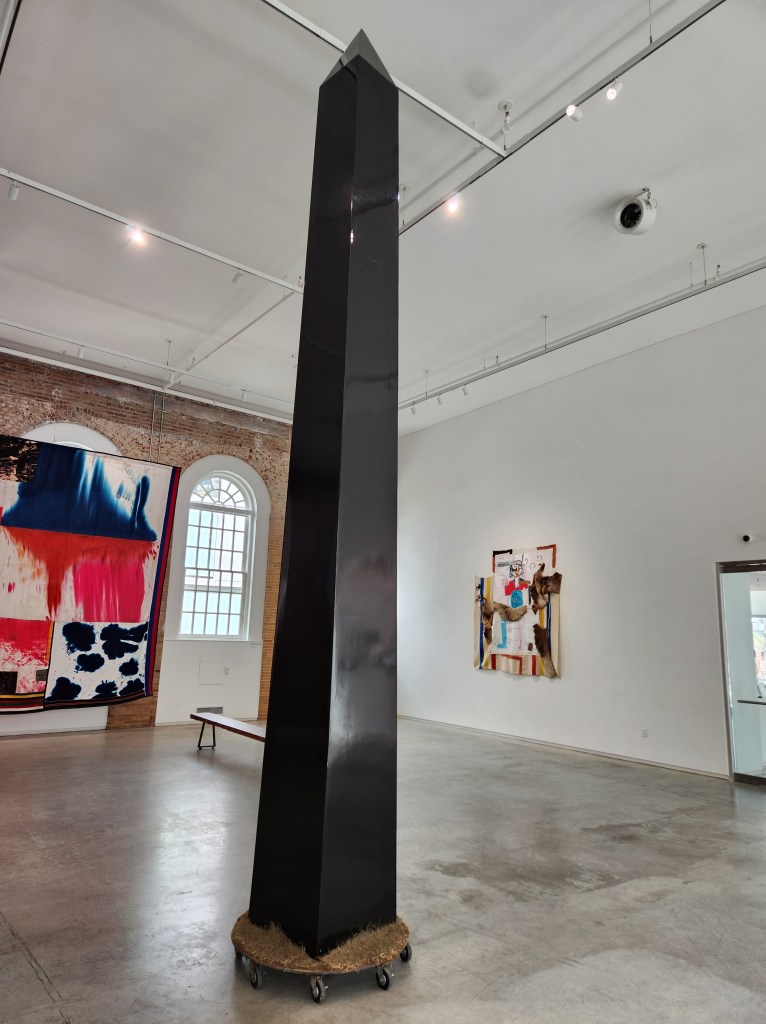
Damian Ortega. Transportable Obelisk. Fiber glass with metal base and wheels. 236 1/8 x 23 5/8 x 23 5/8 in.
“I am thrilled by the idea of a work that commemorates an imprecise moment, which could be associated with anything, just by the fact of moving the piece to one place or another. This work is a mobile print of reference. It is a point of departure but also a full stop, even though it could change its position.”
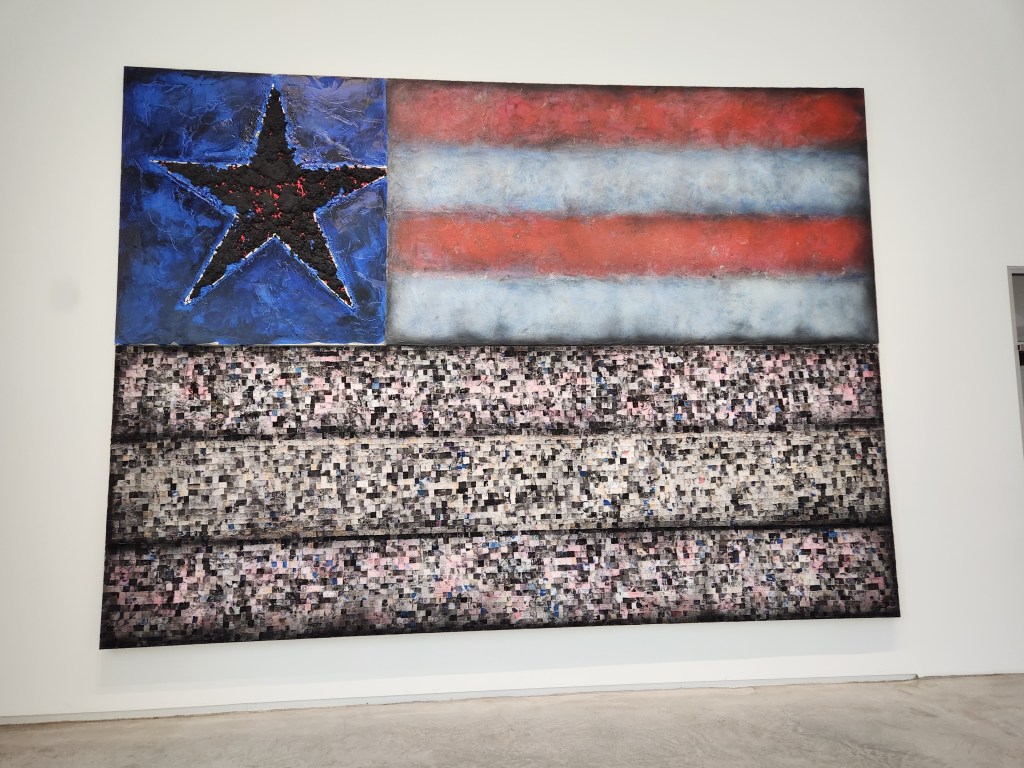
Vaugn Spann. Dark Days Bring New Hope (Never Forget). Polymer paint, pulp, mixed media, terry cloth, canvas on aluminum stretcher bars. 160 x 220 in.
“This painting centers around the idea of hope but also around the idea of gloom or even doom. Dark days bring New Hope (Never Forget) is from Flag series. The series is a postmodern idea of how we might take these symbols, our relationship to these icons, and splice new meanings into them. The totallity of the piece is about the idea of claiming space and holding on to that proximity to the flag to interpret it on my own. In the painting the flag is very dark; it’s a gloomy flag because there’s a lot of darkness and trauma we as a nation are perpetually working through.”
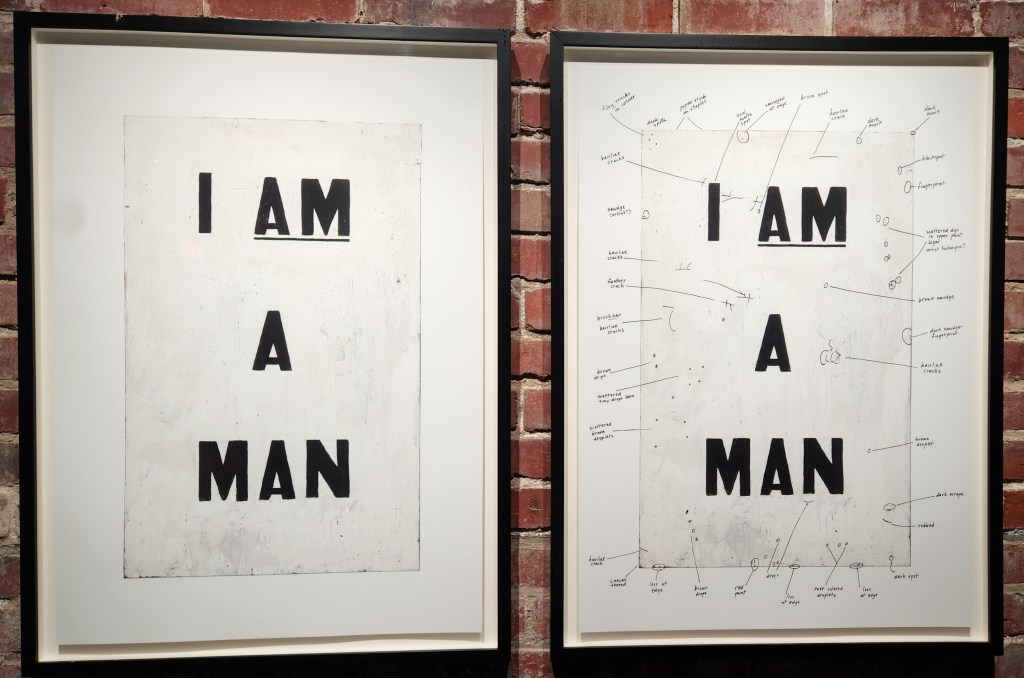
Glenn Lignon. Condition Report D. Iris print and iris print with serigraph, each 35 x 26 in.
“The text displayed on both panels of this diptych derives from protest placards from the American civil rights movement of the 1960s, specifically the Memphis sanitation workers strike in 1968. During this strike, over 1000 African American men went on strike for better pay and safer working conditions. Martin Luther King Junior went to Memphis to march with these workers and make speeches in support of their strike. He was assassinated in Memphis the following day. Ligon first created a painting of the protest placard in 1988, untitled (I Am A Man), which the print on the left directly mirrors. For the right panel, Ligon gave his painting to an art conservator to create a condition report with handwritten annotations, which was in turn made into a print. In addition to the historical depth of the text presented, Ligon allows the object to be reinterpreted in a new context.”
The Week Ahead….
Highlights:
Friday: CM Charles Allen holds community office hours at Quill & Crumb at the Folger Shakespeare Library (see below).
Tuesday, Wednesday & Saturday: (See Free DC Events under “Capitol Hill Corner Would Also Like You To Know About” below)
Monday, March 24
ANC7D 7D01 Hold a Special Virtual Meeting to confirm election/voting details for filling Single Member District 7D01 seat at 6:30pm.
Discussion of the renewal of a Class C restaurant license with entertainment and summer garden endorsements at Granville Moore’s, 1238 H Street, NE.
Discussion of a new Class C Restaurant license with extended holiday hours, carry out and delivery endorsements at Tapori 600 H Street NE, located within ANC6C.
Discussion of the status of the application for a new medical cannabis license for Proper Exotic, 313 8th Street, NE.
Friday, March 28
CM Charles Allen holds community office hours at Quill & Crumb at the Folger Shakespeare Library from 4 to 5:30pm. RSVP here: http://charlesallenward6.com/calendar
Capitol Hill Corner Would Also Like You To Know About:
Free DC Event – Tuesday, March 25
Members of Congress Office Visits: Encourage House Reps to pass the DC Local Funds Act – 10:00am to 3:00pm .
Rayburn House Office Building, 45 Independence Avenue Southwest, Washington, DC,
Memoirist Kat Chow Discusses Her Bestselling book Seeing Ghosts in Conversation with Jung Yun. Kat Chow is a reporter, teacher, writer and the author of Seeing Ghosts: A Memoir, named a Notable Book by The New York Times.
Sponsored by Hill Center Private Events. Local organizations will be present to share how you can help them meet their mission. Find the right fit for your talents as we build a better community.
More than 100 residents turned out for Wednesday night’s community meeting on the Rumsey Renovation plans which was held in the North Hall of Eastern Market.
City Scales Back Rumsey Aquatic Center Plan
by Larry Janezich
Posted March 13, 2025
Thursday night, DPR and DGS presented design options for renovation of the Rumsey Aquatic Center which were substantially different from the more ambitious plans of CM Charles Allen, who secured additional funding for the project based on those plans.
The boost in $15 million in funds for the Rumsey renovation was intended to support a new second story with community amenities like a senior center with a tech lounge, a business incubator space, and an indoor fitness center. These were in addition to the DPR’s initial budget ($20 million) to expand and renovate the swimming pool which would occupy the first floor of the new building.
That’s not what the designers brought back to the community.
Instead, developers presented to the community three slightly different proposals, all of them without a build-out on the second floor, as well as a host of reasons why the original vision could not be realized. In addition to what they characterized as a limited overall budget of $35 million, the designers cited the cost of LEED/net zero certification as a significant constraint.
Here’s Allen’s reaction:
“Two years ago, I asked DPR and DGS leaders what it would cost to build a second floor to expand services and programs while modernizing Rumsey pool. They gave me an exact number, and I found that exact money – that’s the budget we have. It’s clear from tonight’s meeting there’s not enough space on one floor to meet the needs of the community here, and I’m frustrated how quickly they’re trying to walk away from the fully funded second floor. I will work to get them back on track and believe we will find a solution to deliver the generational project everyone wants.”
ANC6B Commissioner Jerry Sroufe, in whose single member district the Rumsey Center falls, said “if you only have three options and no second story that’s a bitter pill to swallow. I didn’t think they were very responsive to the concerns raised and I don’t think that the things they said they couldn’t do because of various restrictions are true. I am sure they could do things differently if they wanted to – exceptions can be made and they didn’t make any. I didn’t like any of the options in particular. It seems they wanted one story.”
Two polls taken during the meeting to which there were 66 respondents showed a clear preference for bigger and better pool space and fewer amenities. Regarding the possible amenities squeezed into the first floor – a hot tub, a yoga studio, and a fitness studio – a 40% plurality chose “none of the above.”
Roy Philips, a neighbor and frequent user of Rumsey Pool who attended last night’s meeting, said that “the presenters didn’t provide options that capture what the community is looking for. In building options they have lots of constraints …. Due to the constraints they said all they can do is build a new structure that is roughly the size and footprint as the current building. They can make the pool about 12 feet wider to accommodate 2 more swimming lanes. There were no options to extend the building into the plaza or with a second floor…It seems like they are focused on all the impediments rather than a vision of what the community really wants.”
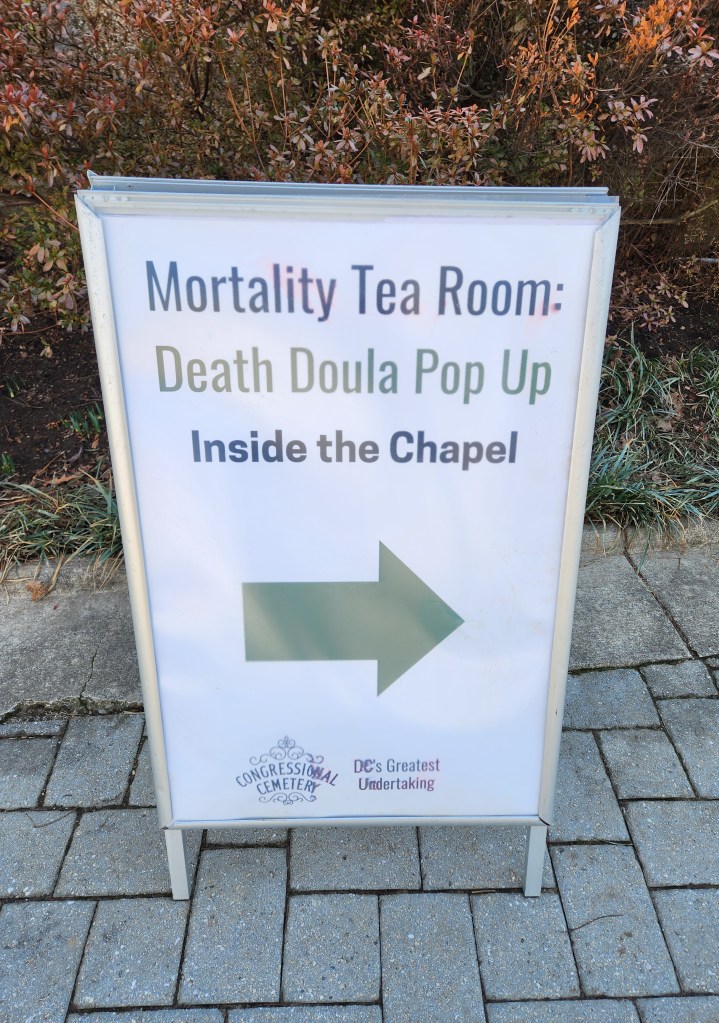
Last week, Congressional Cemetery wrapped up a month long series of Death Doula Pop Ups held inside the cemetery’s chapel. These “Mortality Tea Rooms” were an extension of the “Death Café” program sponsored by the cemetery. The “Death Café” is a loose knit international movement to facilitate regular discussions about death over food and drink with a dozen or so participants.
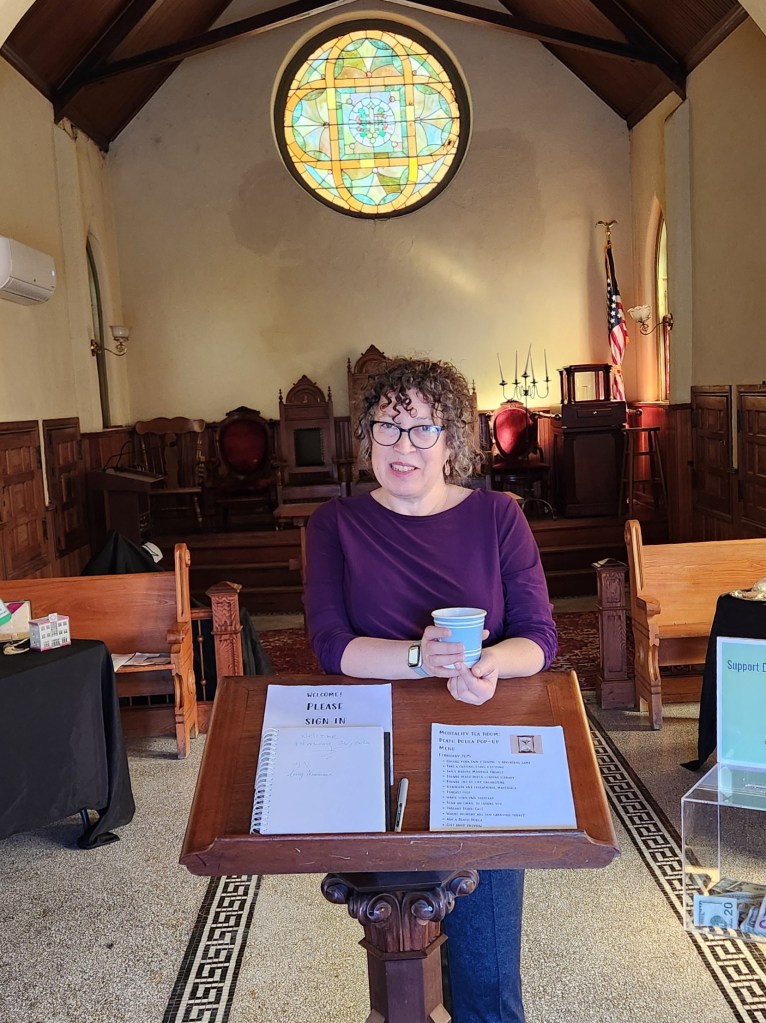
This series was coordinated and hosted by Congressional Cemetery’s Death Doula in Residence, Laura Lyster-Mensh.
A visit to one on the events last week found Lyster-Mensh offering tea and information through a series of exhibits illustrating a death doula’s mission and her own approach to her practice.
And that’s what death doulas do – provide information about end of life choices both for families and individuals and support for terminally ill persons and their families.
Lyster-Mensh conducts a tour of her Mortality Tea Room exhibits:
Impermanence
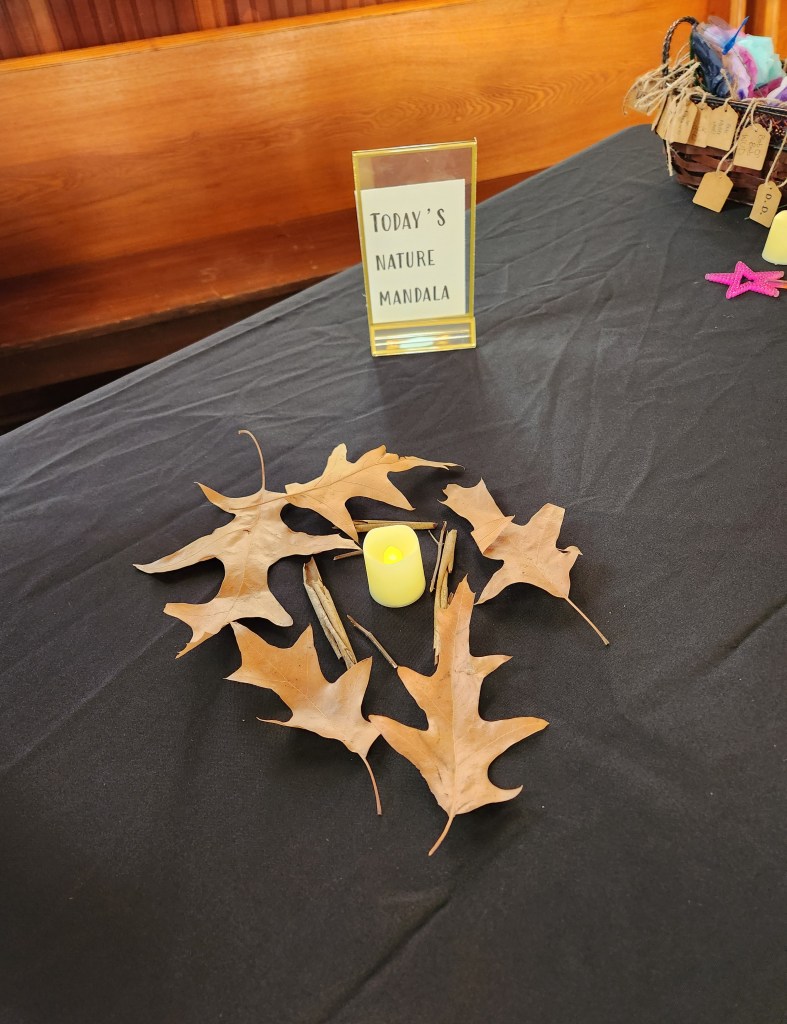
Every day, she starts a new nature mandala – a geometric shape made of things in nature picked up on the cemetery grounds by visitors to the chapel. She says, “People are shy about things associated with bodies – so I’ve invited people to be part of building this geometric shape as a study of impermanence. At the end of the day, I wash it away – and we start over the next day.
Community Mourning
She references the Mexican tradition of Day of the Dead and said that that on the Day of the Dead last year an ofrenda was set up in the chapel. (Ofrenda means “offering” in Spanish and refers to the colorful altars set up to honor deceased loved ones on the Dia de los Muertos Mexican holiday.) She says that it displayed “hundreds of objects and photographs and flowers. It was just splendid – a way of introducing ancestors and a way of talking about the past.”
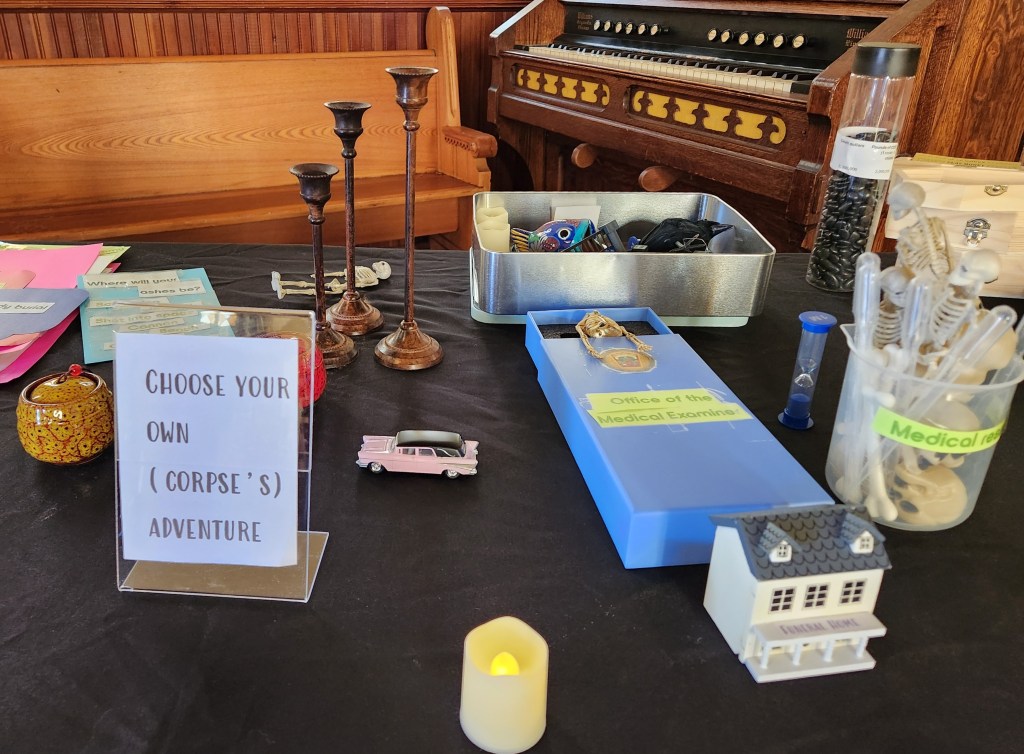
Choose Your Corpse’s Adventure
She moved on to what she called her pet project, a game called Choose Your Corpse’s Adventure. She says, “Most people don’t think about what happens to their body after they pass – that causes expensive chaos. So I set up toys to show people their options – how much money will it cost you to die and how much carbon will it take? I get them to think – if you have as much money as you want and as much carbon as you want, how much do you need? I ask them to think about that. Given options such as water cremation, human composting, or fire cremation, what is the actual cost financially and environmentally? And the party – what about the party you might have after you’re gone? By end of the game, people have gotten a better idea of death’s costs and impacts. The real thing is the conversation, especially with couples. That’s my goal – to get people talking and to think about their behavior in these terms.”
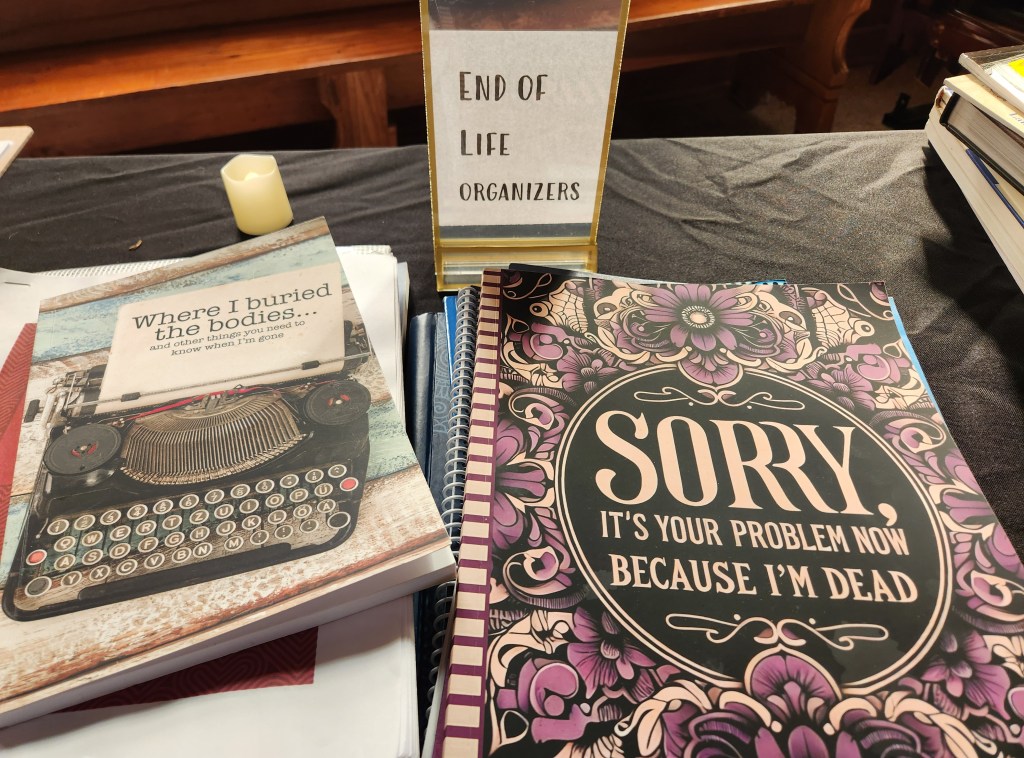
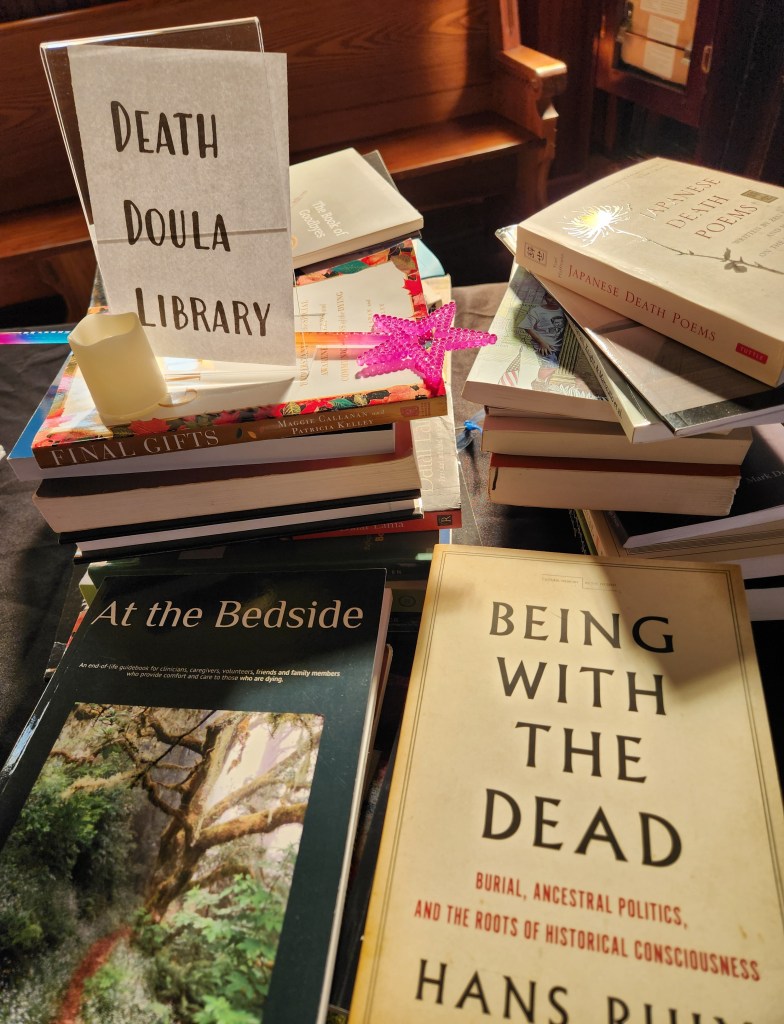
Library and Life Planner Area
Lyster-Mensh has a lending library including books and life planners. She lends them out and people bring them back. She wants people to organize and think about the chaos the day after they die. She adds, “There are so many kinds of organizers – some are funny and some are serious. I hand them a stack and let them go through them.”
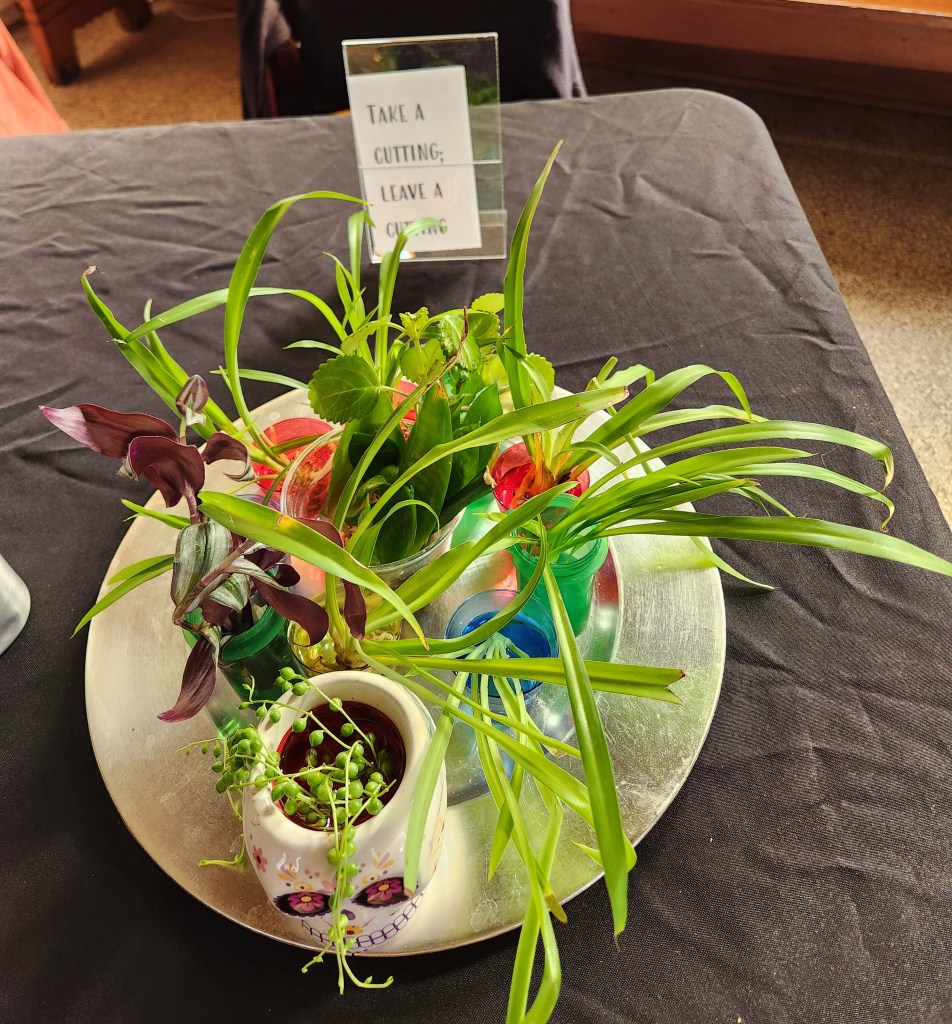
Immortality
Lydia-Mensch doesn’t talk about immortality, but she alludes to it by giving away plant cuttings.
She says, “All living things come from something that has died. The cuttings are all from my mom’s plants. It’s a symbolic thing – I encourage people to think about taking my plants home; they will live or die and all these are coming from my mom’s plants which come from other plants and I like that idea. Snake plants, Swedish ivy, tradescantia, spider plants – I love the idea that they are going out into the world.”
Last February was the first month-long mortality workshop – which she says is a completely new way of encouraging contemplation of end of life scenarios – “It happened because the chapel was open for the month of February, and I asked to do it. Last year, I did individual appointments. The year before I did weekly gatherings and events.” She says the cemetery will probably repeat the experience next year.
Asked what motivated her, Lyster-Mensh says, “I’ve always had an interest even as a kid. As I get older and lose more people and get closer to death the ‘eye-rolling’ (encountering people’s annoyance or reluctance to take the issue seriously) motivates me. When I sit with dying people – and I’m with dying people a lot – their families and friends are often too frightened to be there and so they’re alone and that doesn’t have to be. So I feel that death awareness is a way to bring people back to being more loving and taking care of each other rather than just leaving people to suffer in fear and isolation.”