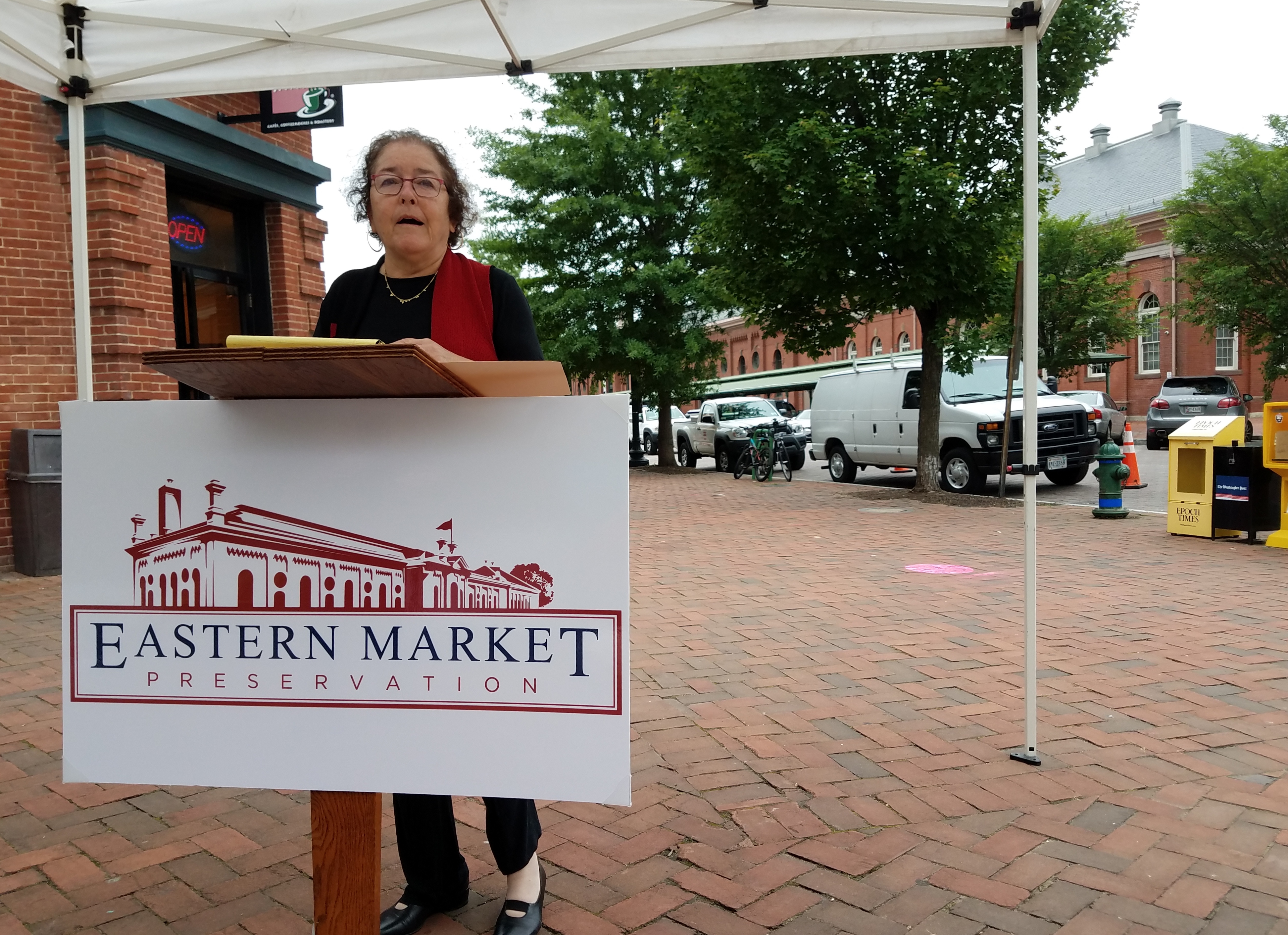
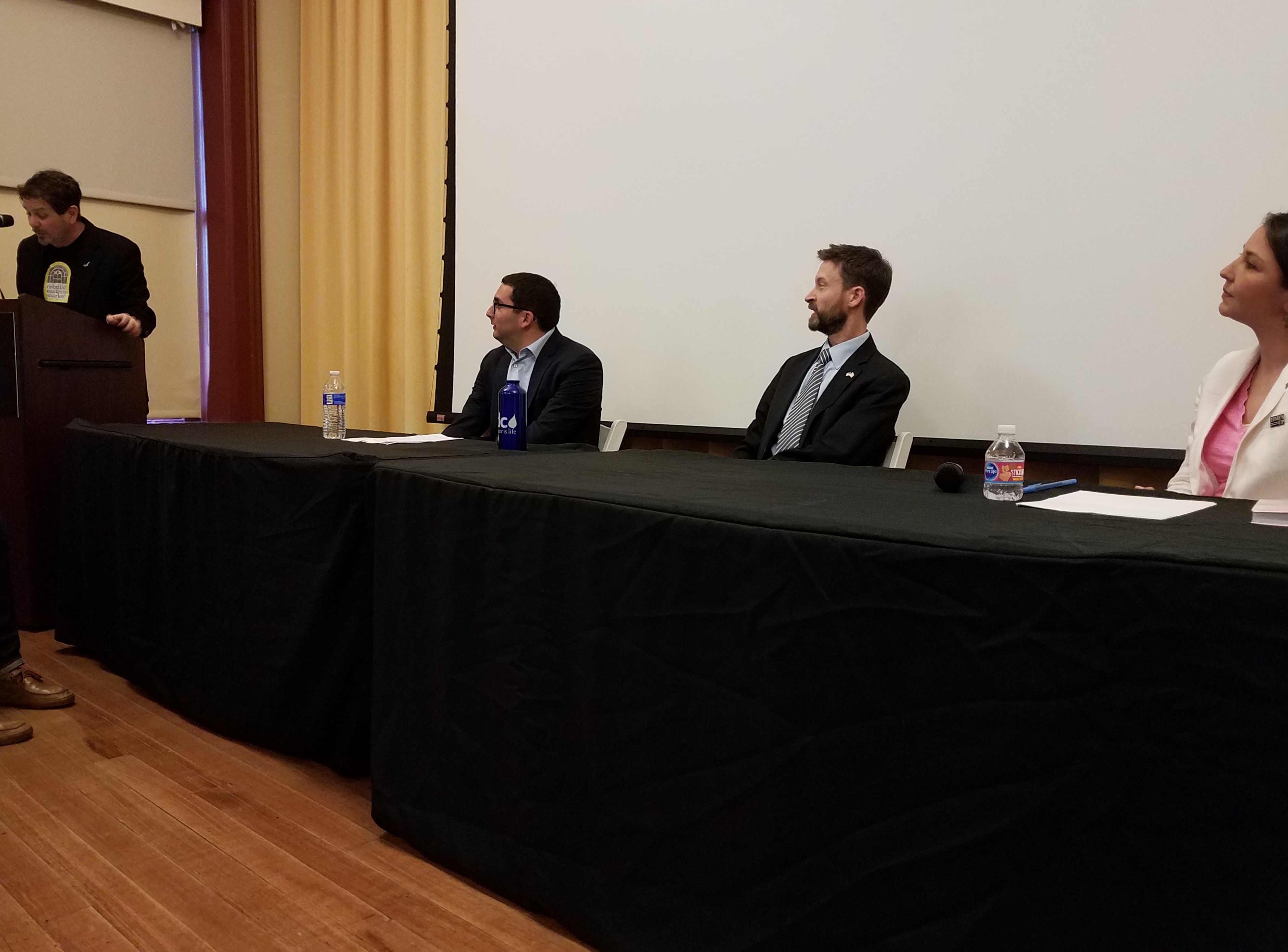
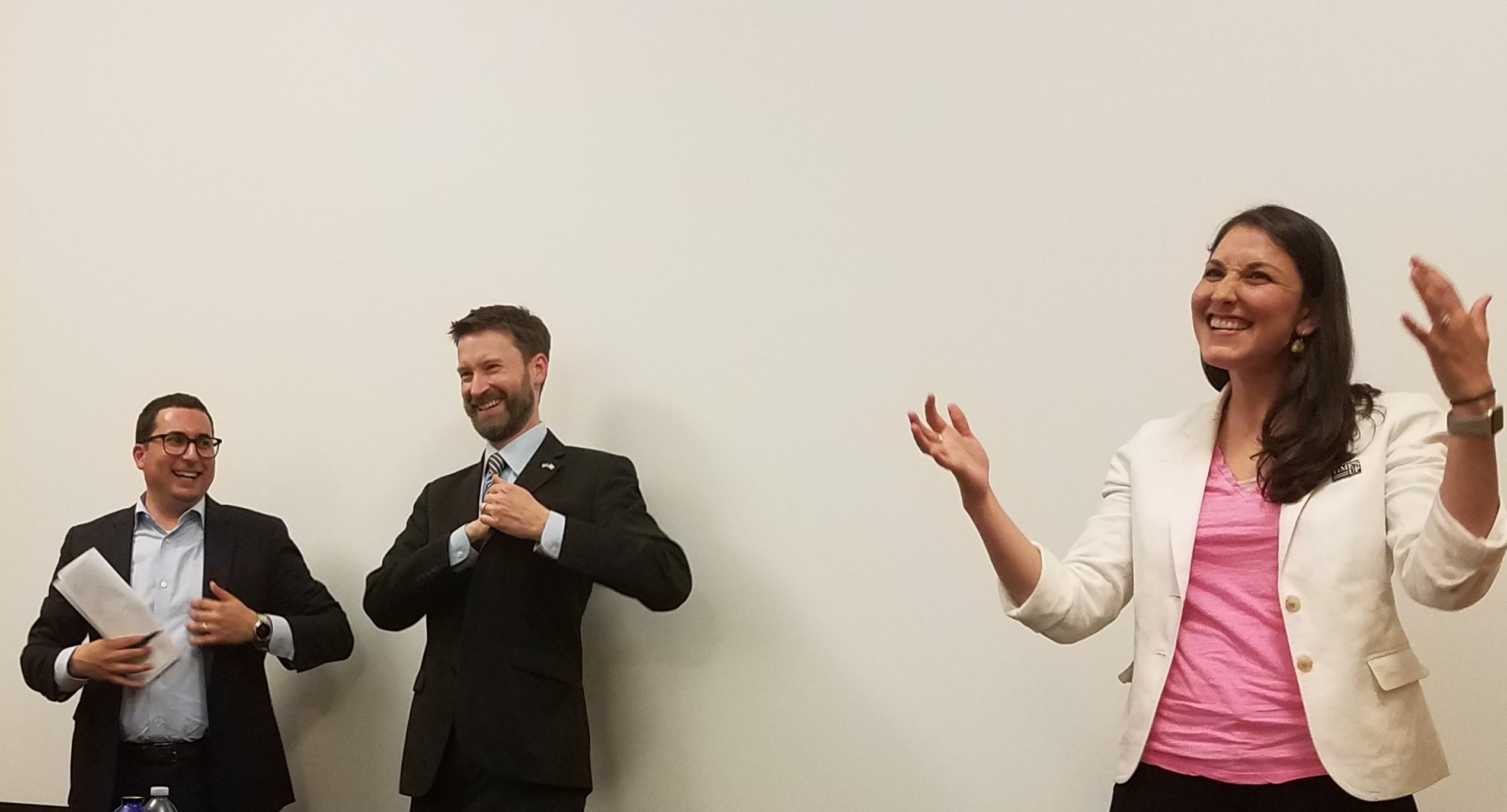
Ellen Opper-Weiner, President of Eastern Market Preservation and Development Corporation, releases a report on how to save Eastern Market.
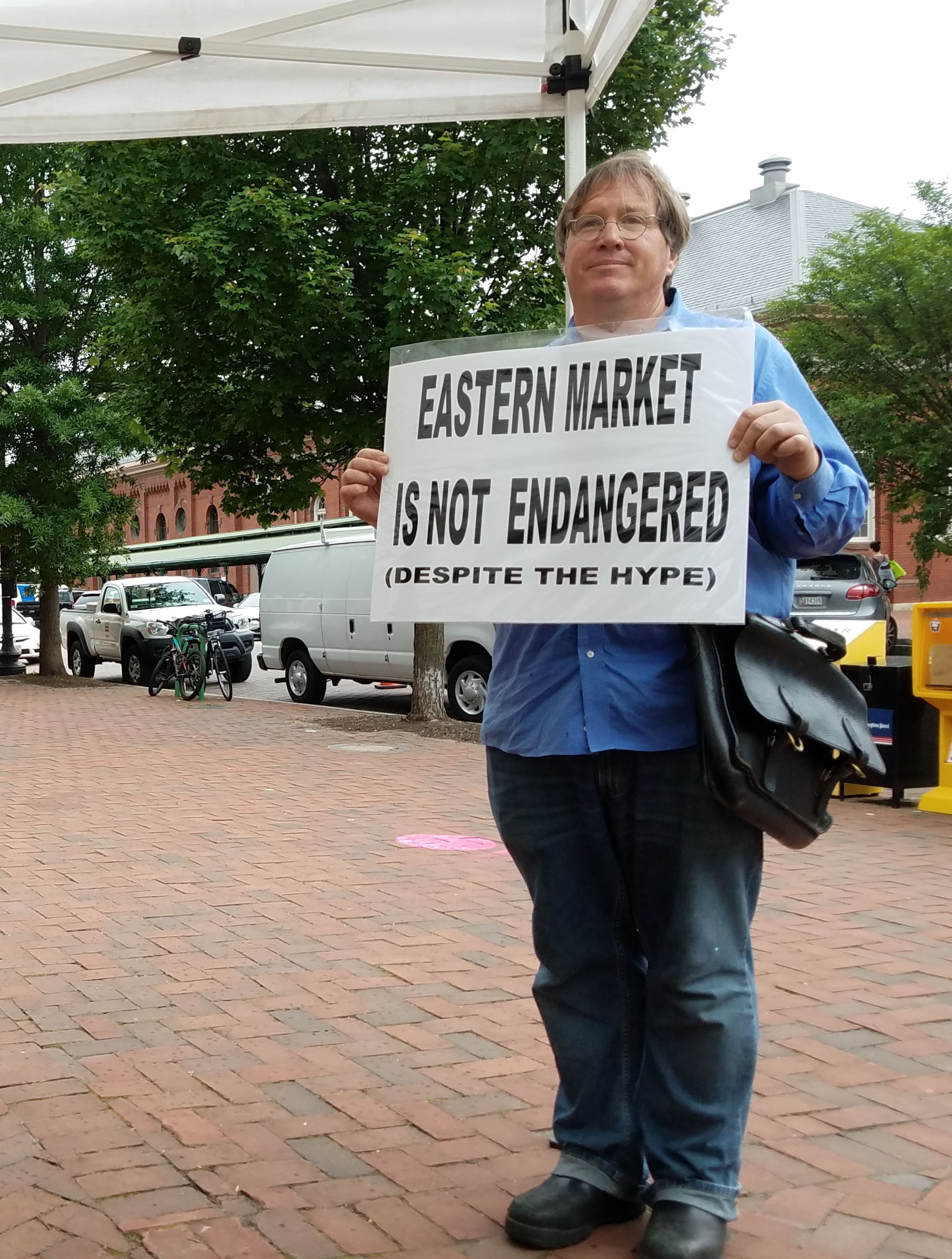
Not everyone agreed the Market needs saving – pictured is Joe Snyder, an artist and street vendor whose business would suffer if one of the report’s recommendations – the opening of 7th Street to traffic on weekends – is implemented.
New Player Says Eastern Market Is in Trouble – Releases Report on How to Save It
By Larry Janezich
Last Tuesday morning, a new non-profit community organization – Eastern Market Preservation and Development Corporation (EMPDC) – held a news conference to release a report it commissioned from an expert in urban markets, listing a series of recommendations (see below) for saving Eastern Market as a food market. The organization – currently with half a dozen or so members – is headed up by longtime community activist Ellen Opper-Weiner, who said, “The merchants and vendors at Eastern Market are an essential part of the Capitol Hill community. Their businesses are being run into the ground by a bullying management who threatens retaliation when concerns are raised as opposed to addressing problems brought to its attention. Eastern Market needs our support.” A link to the group’s website and petition is here: http://bit.ly/2s5vOsh
To that end, the group commissioned a study at a cost of $6,000 plus $2,100 in associated expenses, to bring in an outside expert – Aaron Zaretsky, executive director of Public Market Development, Inc., who the report states, has consulted on historic market operations for 40 years. Zaretsky conducted 20 formal hour-long interviews with Eastern Market principals over four days in March of 2018, as well as “many informal discussions with a variety of tenants, residents and customers”. Despite several attempts, he said, he was not able to interview current market management.
In related developments, at Wednesday night’s meeting of the Eastern Market Community Advisory Committee (EMCAC) – established by the city to provide oversight and advice on the Market – Chairperson Donna Scheeder announced that $300,000 from the Eastern Market operating funds derived from Market revenues would be transferred to the Deputy Mayor for Planning and Economic Development (DMPED) to fund a long term strategic plan for the Market and its associated Special Use Area comprising the close-by streets and plazas where Market-related activities occur. She also said that $25,000 would be transferred to the city’s budget to fund a security study anticipating the possible use of bollards to protect the Market and street vendors from vehicles on weekends.
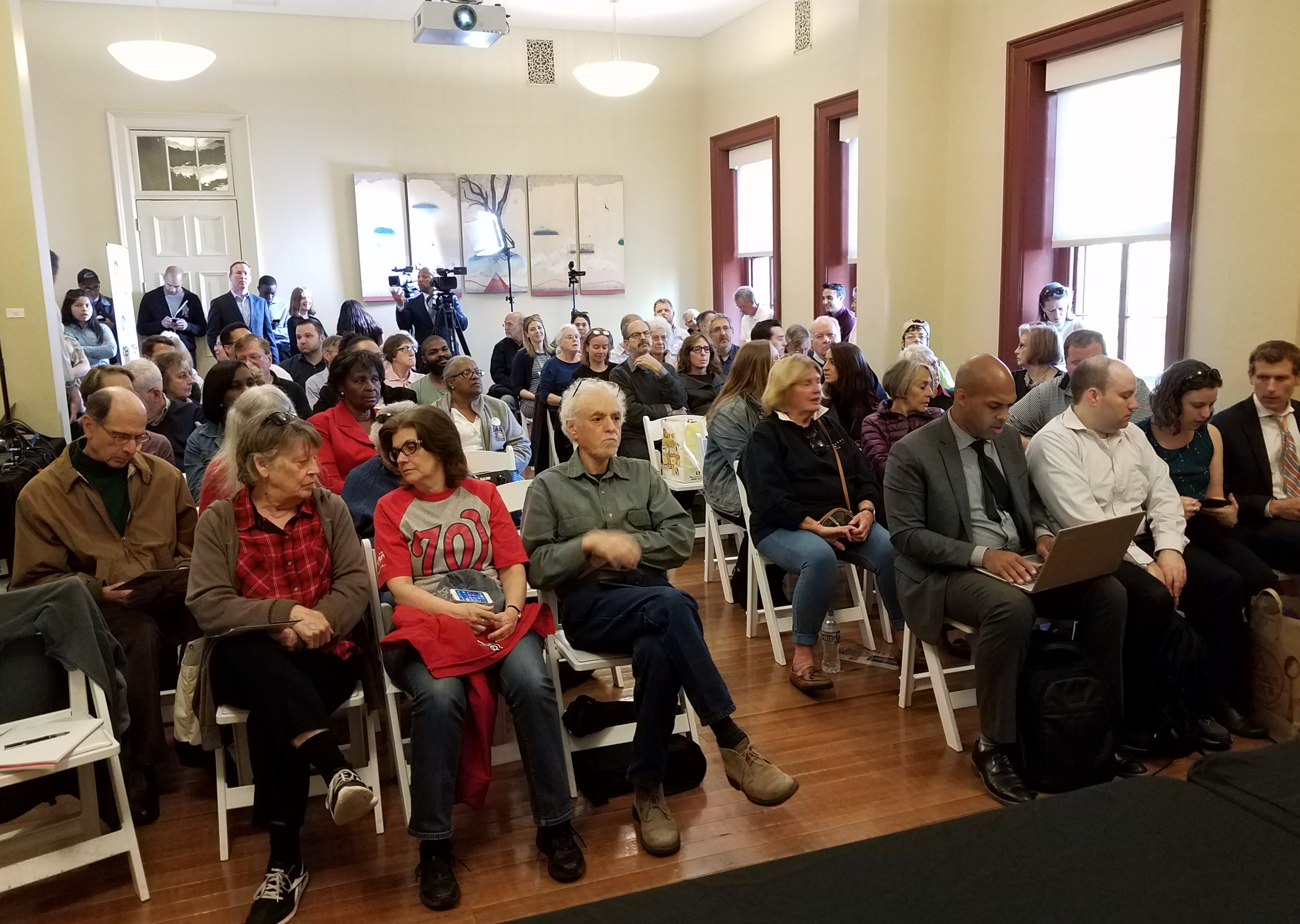
At that meeting, Opper-Weiner told EMCAC about the new Eastern Market Preservation group and said they wanted to work with EMCAC for the benefit of the Market. EMCAC board member Chuck Burger (who represents Capitol Hill’s micro Chamber of Commerce – CHAMPS – on EMCAC) said he had been interviewed for the report, and agreed with much of it. “I don’t have a problem with the report”, he said, but was concerned that the public might confuse the new group with EMCAC given the similarity of the two groups’ logos. He went on to say, “The report is a positive thing and should be put in the pool of ideas. “
The list of Zaretsky’s 29 recommendations – some of them new, some of them familiar, and some of them controversial include the following:
Immediately transfer management of the market to a temporary placeholder.
Contract Market management to a non-profit entity with a 12 member governing board with positions for market representatives, community representatives, and business experts, with designated seats for minority representation.
Open 7th Street and C Street to vehicular traffic seven days a week.
Move the weekend flea markets elsewhere.
Reconfigure the layout of the South Hall food merchants’ stalls and move refrigerated units to the basement to increase retail space.
Provide more special events and target programs for special populations such as ethnic food festivals and senior days with 10% off.
Strictly limit outside market vendors to artists and craft makers who create their own products.
Do not allow people who are not producers to sell at the market and do not allow real farmers to sell products such as oranges that are never locally produced. Do not allow farmers who were grandfathered in 1997 to pass that right to their relatives.
Relocate the event functions of the North Hall to the Hill Center and fill the North Hall with complementary fresh food production and fresh food uses.
Fine any merchant or employee who parks on the street within two blocks of the Market. Cancel all current tenant parking spaces in alleys or streets adjacent to the Market.
Efforts should be made to recruit additional African American vendors.
Provide fair, long term leases with Market tenants as soon as new management entity is formed.
Resist the temptation to offer uniformly upscale offerings. Intentionally appeal to a racially and economically diverse customer mix.
The report states that the South Hall merchants (all but one were interviewed) were highly and universally critical of the current market management. The report emphasizes that statute requires the city to contract with a nonprofit to manage the Market and that states that the market manager “should have experience operating an historic urban fresh food or farmers’ market”. Asked for reaction to the report, representatives of South Hall merchants said they had not read the report and were uncertain whether merchants would take a position on the recommendations.
A link to the report with the complete list of issues and recommendations is here: http://bit.ly/2kl0qS4







 CAPITOL HILL CORNER