Category Archives: Uncategorized

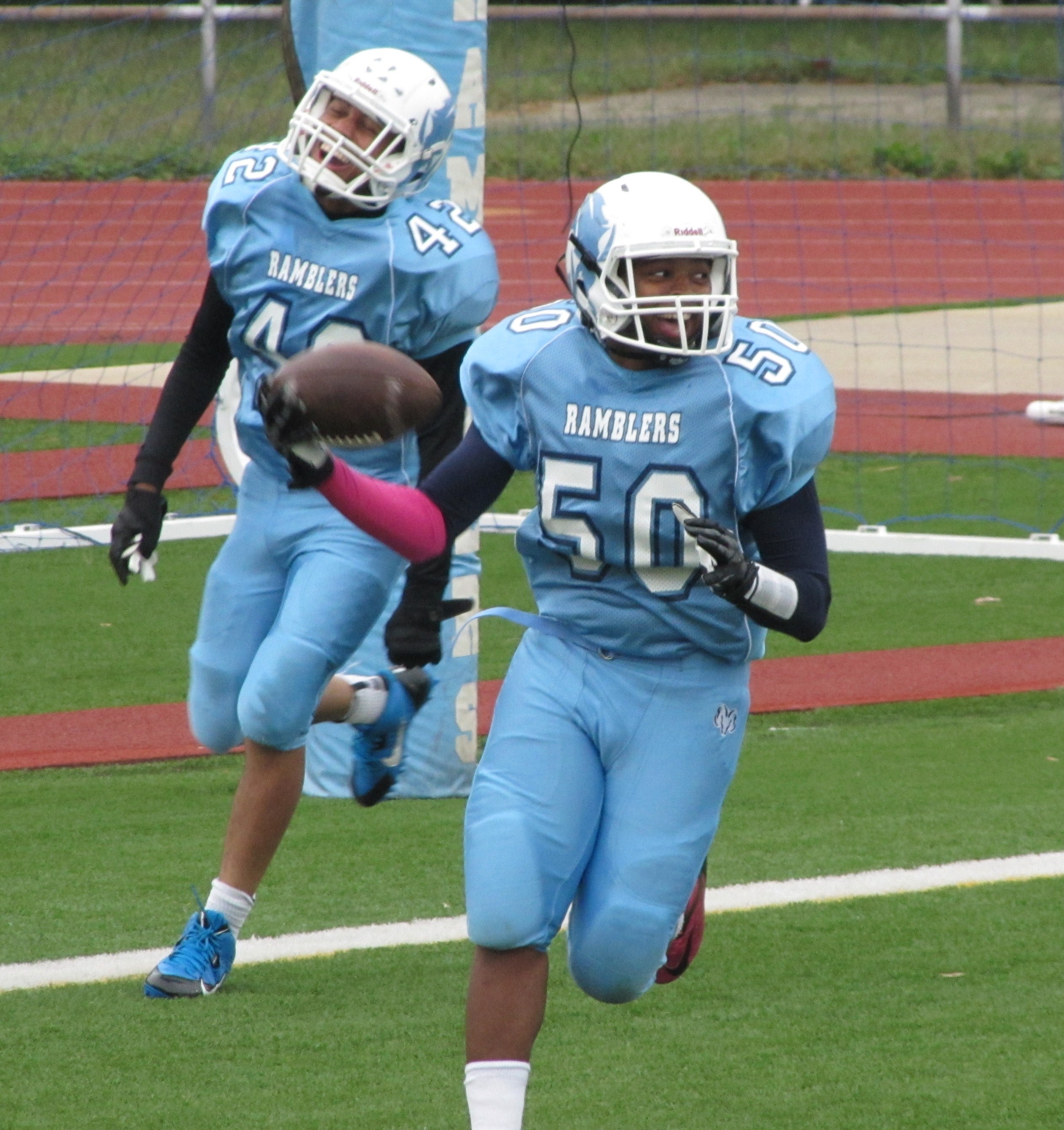
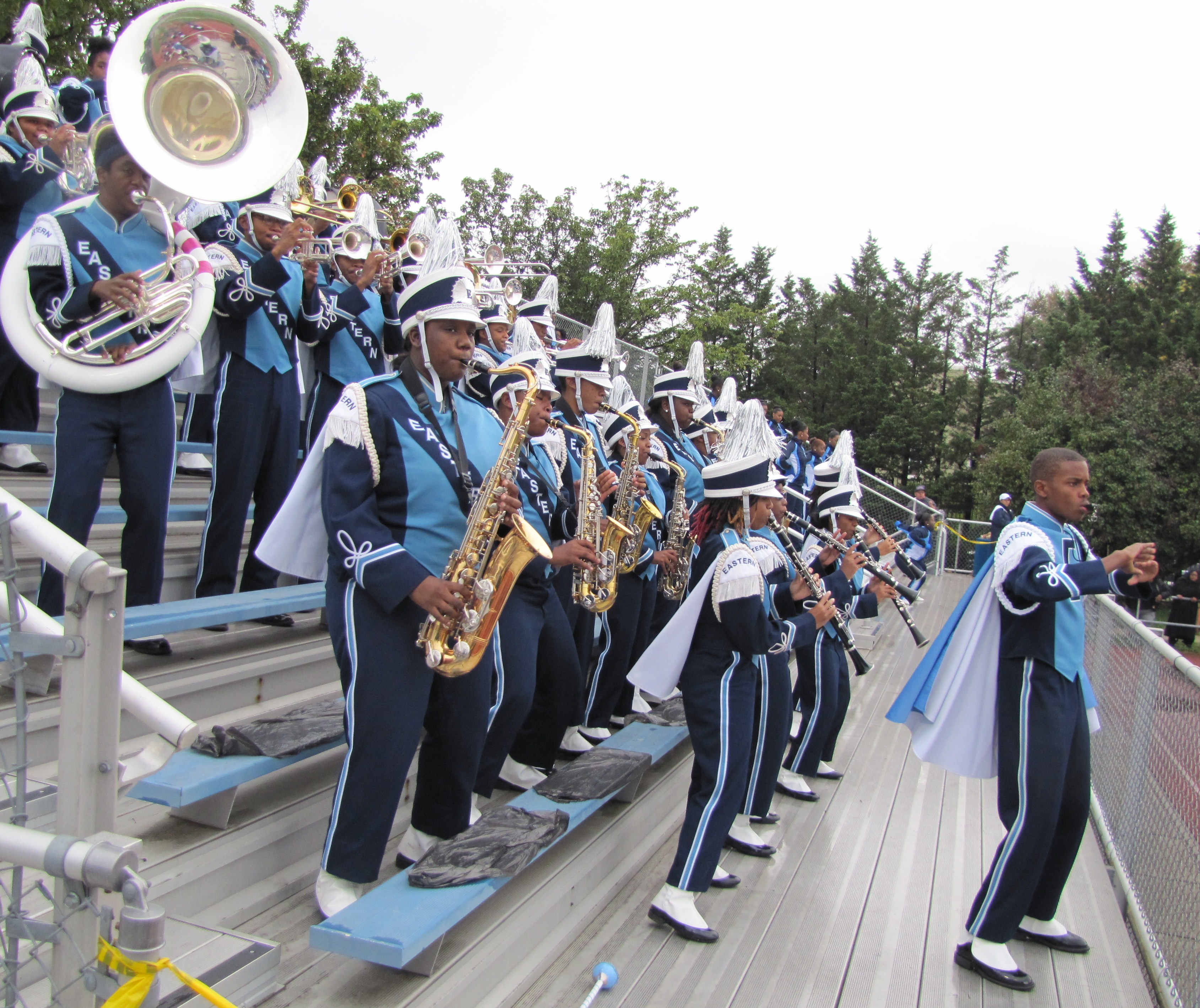
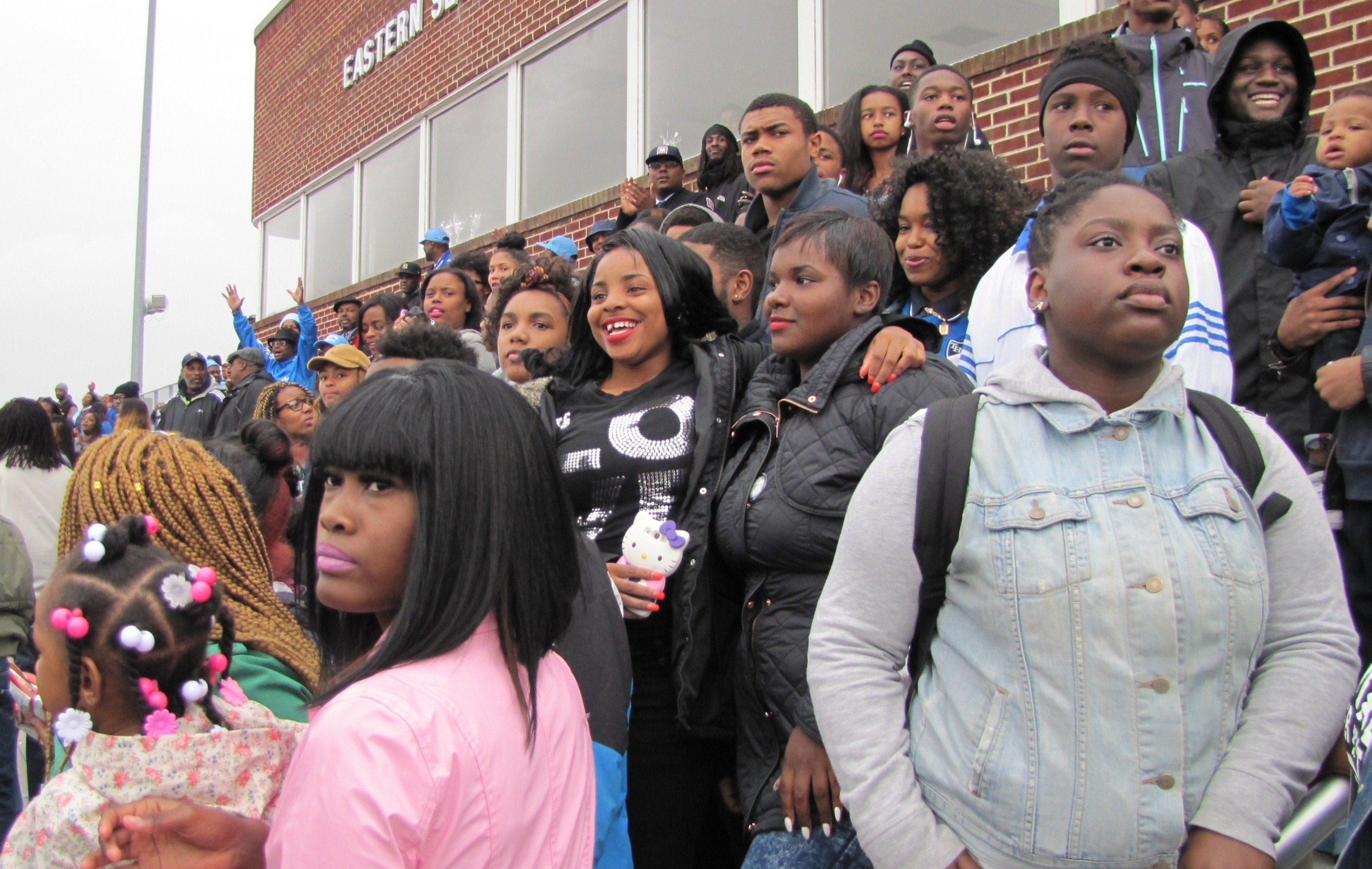
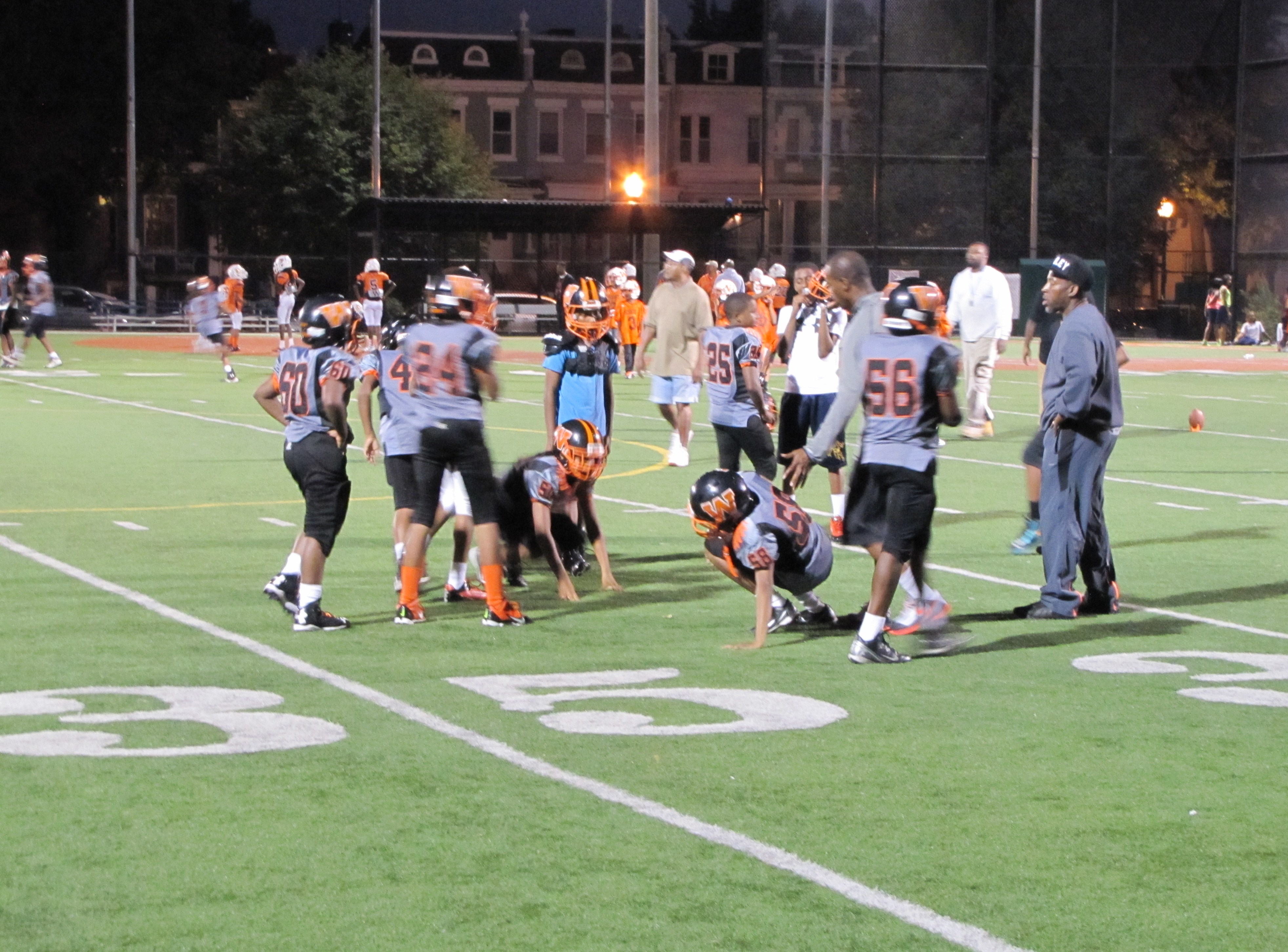
Eastern High Football – Eastern Defeats Roosevelt – Photo Essay

Eastern High Football – Eastern Defeats Roosevelt – Photo Essay

by Larry Janezich

Saturday afternoon, Eastern High Ramblers defeated the Roosevelt Raiders, 32 – 0.  Eastern’s remaining home games are:

October 24th, 7:00 p.m., against Cardozo;

November 7th, 7:00 p.m., against Phelps;

Admission tickets cost $5.

1 Comment

Filed under Uncategorized

Ugly Mug Seeks to Double Seating & Add Retractable Roof – Photos

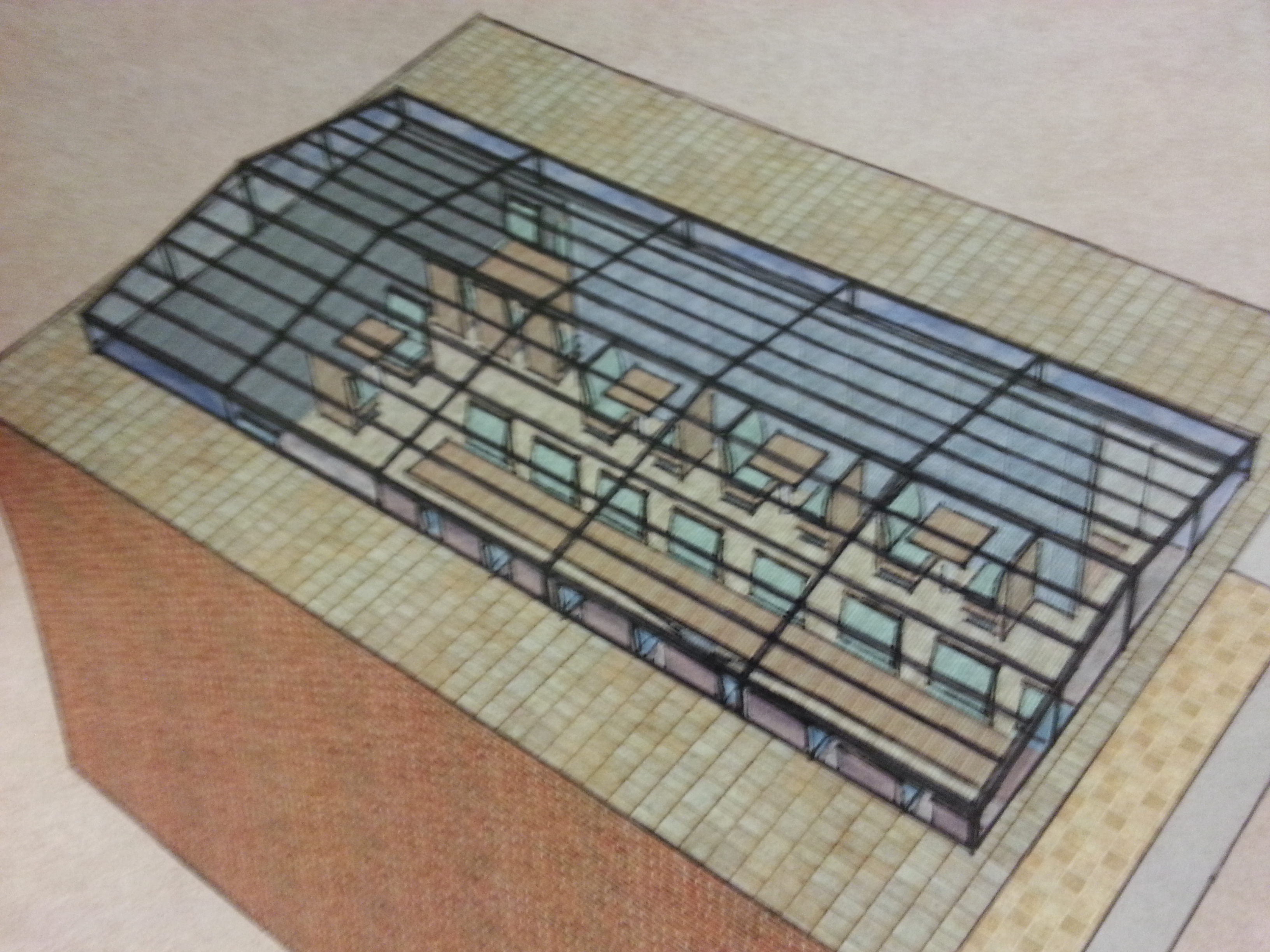
Rendering of the Glass Roof in Closed Position

Rendering of the Glass Roof in Closed Position

...And Open.  The Panels Slide to the Sides and Stack on Top of the First Row of Panels

…And Open. The Panels Slide to the Sides and Stack on Top of the First Two Rows of Panels, Leaving a Ten Foot Opening

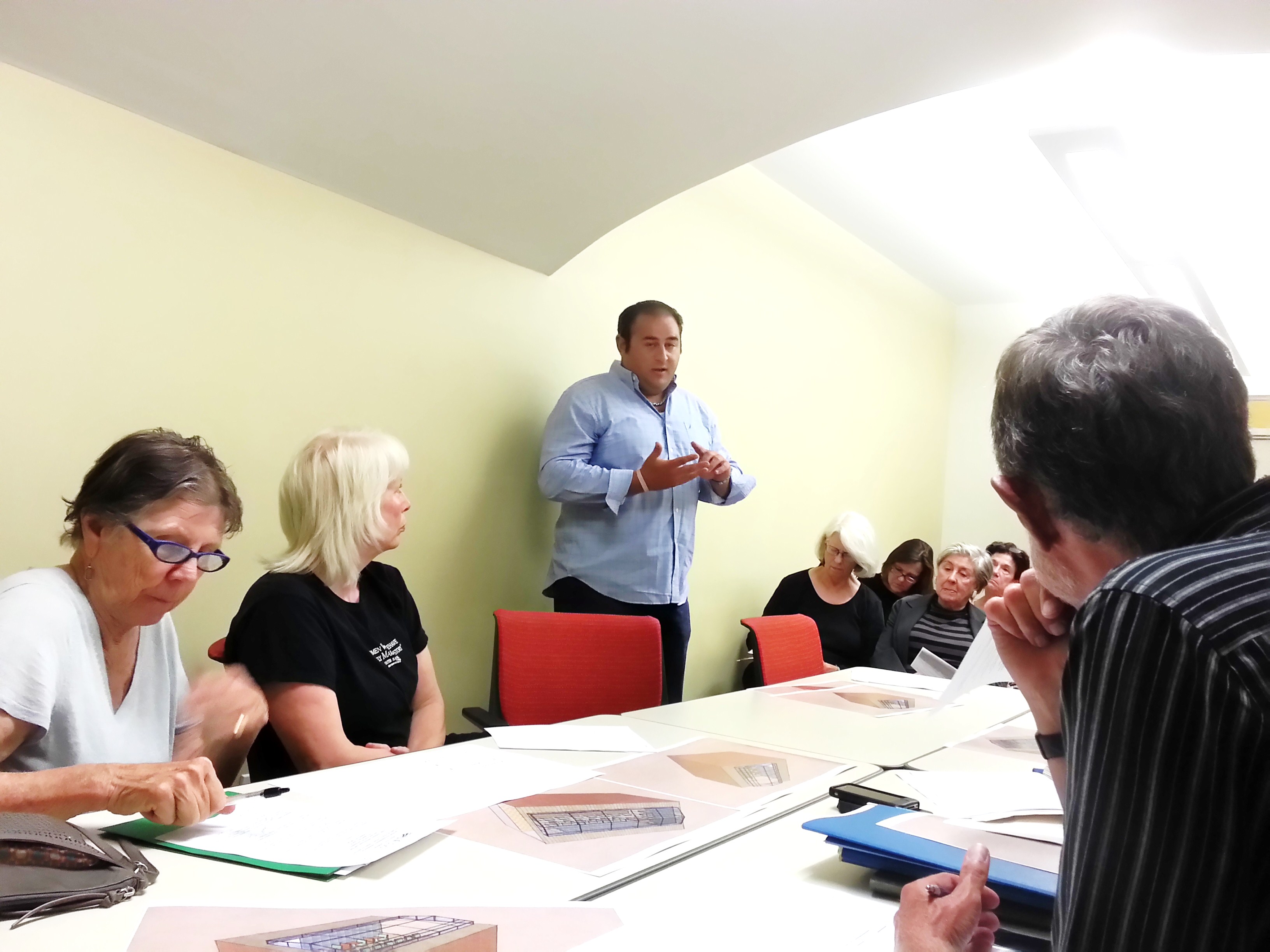
Jablonski Makes His Case to the ANC6B's ABC Committee

Jablonski Makes His Case to the ANC6B’s ABC Committee

Ugly Mug Seeks to Double Seating & Add Retractable Roof – Photos

Owner Claims His Hands Are Tied on Rodent/Trash Issues

by Larry Janezich

Last night Gaynor Jablonski, owner of the Ugly Mug on 8th Street and District Two Bar & Grill and Jake’s American Grill in NW, presented his request for a proposed second floor expansion of the Ugly Mug to ANC6B’s Alcohol Beverage Committee.  Any substantial change in a liquor license (increased seating) requires approval of the Alcohol Beverage Review Board (ABRA), and the ANC’s weigh in on the question.  The committee makes a recommendation to the full ANC, which meets next week.

Jablonski’s plan entails gutting the two current second floor apartments above the “Mug” and adding a new 16 x 30 foot room behind them, providing room for an additional 100 seats to his restaurant and raising the capacity from the current 89 to a total of 189.  The new 16 x 30 room would have a retractable glass roof which would open when the weather allowed for it.

Considerable resistance has developed among nearby residents, not only from those in close proximity, but from those who are trying to impose standard best operating practices regarding noise, odor, trash disposal and rodent control for all of the food establishments on Barracks Row.  Recently, neighbors have organized successfully to bring best operating practices as a condition of &Pizza’s approval for an outlet on Barracks Row.  Commissioner Ivan Frishberg has stated that he hoped that would become a model for the rest of the food businesses on the street.

Jablonski spent considerable time explaining why his hands were tied by structural and economic limitations regarding his ability to address trash and rodent concerns.  “Why should I be penalized for having come here 8 years ago?” he asked the Committee.

Clearly, nearby neighbors who were in attendance felt that the answer to that question is that Jablonski is asking to more than double the size of his operation, while not taking robust measures to mitigate the effects of this expansion on the neighborhood.

Seven of those nearby neighbors who attended the meeting in the cramped Frager’s Conference Room on the third floor of the Hill Center rose to express their concerns, which focused especially on trash and noise (Jablonski intends to move his DJ from the first to the second floor) but included parking as well.

Commissioner Kirsten Oldenburg alluded to a large volume of emails commissioners had received expressing concerns about the expansion.

One resident of the block spoke in favor of the expansion, saying she encouraged development and thought that additional foot traffic would benefit Barracks Row.  She said the Ugly Mug had been a responsible neighbor, and that she had moved to her apartment on the block expecting to live with the noise generated by a commercial strip.

The greatest concerns of committee members seemed to be trash, rodents, and limiting the time when the glass roof would be opened.  Jablonski is hoping the committee will approve the same closing time for the glass roof as for his outdoor patio, 11:00pm Sunday through Thursday, and midnight on Friday and Saturday.  He said that providing inside trash storage would be prohibitively expensive.  Regarding odors, he said he thought controls were unnecessary,
“the odor coming out is good – its food.”  He said he was willing to “look into it” but “it would be very expensive.”

Commissioner Brian Pate told Jablonski that he was asking the committee to create “additional externalities which are problems for the neighbors…I’d like to think there’s a better way of dealing with trash than when you moved in to the space” in 2008, and Pate urged Jablonski to find a way to address the trash and rodent issues, saying he can’t support the request for expansion unless Jablonski comes up with best practices.  Jablonski said “It will be very expensive, but I have no problem with giving it a shot.”

Commissioner Kirsten Oldenburg said that for her there were two issues – trash, which in her opinion a voluntary agreement cannot control because management schemes fail, and hours for having the glass roof open, which can be controlled.

Committee Chair Sara Loveland said she was inclined to support the expansion if hours for the open roof could be finalized and the trash issue could be addressed.

The committee subsequently voted 5 – 0 to take no position regarding a recommendation to the full committee which will take up the issue at its meeting next Tuesday at Hill Center, when it will hear again from Jablonski.

ABRA is scheduled to hear the request on November 10.

8 Comments

Filed under Uncategorized

Problems Cited with Union Station/Navy Yard Circulator

Problems Cited with Union Station/Navy Yard Circulator

Concerns Surface that Proposed Expansion Could Make Them Worse

by Larry Janezich

Recent riders of the Union Station/Navy Yard (USNY) Circulator have probably noted its unreliability and long wait-times.  Scheduled to run every ten minutes, and with the District Department of Transportation (DDOT) claiming the average wait-time is 11 minutes, riders of the USNY Circulator are accustomed to wait 20 minutes or more.

The unreliability of this particular line is one of the reasons for its low ridership, and this in turn results in one of the highest rider subsidies in the city, one that DDOT says amounts to $4.61 per rider.  But there are other reasons for low ridership.  The route is hampered by its weekday-only operation.*  In addition, the ride can be long, owing to circumventing U.S. Capitol Police security restrictions, too few buses, and traffic congestion.

In addition to low ridership, the subsidy is greater for this route given the DDOT policy which allows its employees to ride the Circulator for free, and DDOT is located near the Navy Yard Metro stop.  Although these employees are supposed to be counted in the ridership (credit for which would lower the subsidy) a recent Riverfront BID survey noted that the DDOT employees are often waved aboard without being registered by the system in order to save time.  (Until recently MARC riders coming from Union Station to the Navy Yard could ride free; that policy has changed.)

As part of its 2014 DC Circulator Transit Development Plan, DDOT has announced a plan to extend USNY route to the Southwest Waterfront Metro Station and has reportedly purchased three additional buses for the line.  Despite the extra buses, there are concerns that the extension will make the current problems worse.

Last night, at ANC6B’s Transportation Committee meeting, former ANC6B Commissioner Ken Jarboe – who currently sits on Capitol Hill BID’s Transportation Committee – explained the concerns as the Committee prepared to consider a measure to endorse the extension.

Jarboe recommended that any endorsement of the extension by the ANC take these concerns into consideration.  He suggested that the ANC urge extending service to the weekends year round, as well as extending winter hours to 9:00pm instead of 7:00pm.  In addition, he recommended that the ANC press for reduced waiting time and an accurate count of DDOT employees who are riding free so the route can be credited for those riders.  He told CHC that not counting free riders shows up in the subsidy, making the route look worse than it is (given that DDOT employees should be counted, whether they pay or not, and this would show up as credit for the line), and placing the route at a disadvantage in the face of political pressure for the service to be self-sufficient.

The impetus for extending the route comes from a desire to provide service for all the new construction occurring near the Southwest Waterfront.  Jarboe added that there is a desire to provide a link to re-establish the Southwest Waterfront/Convention Center Circulator which was terminated some years ago owing to low ridership.  The preeminence of developer concerns can be explained in part by the Circulator’s unusual funding structure, which includes contributions from the local Business Improvement Districts (BIDs).

*Currently, the USNY Circulator runs weekdays (unless there’s a Nats game) from 6:00am until 7:00pm from October 1 to March 31.  From April 1 – September 30, it runs 6:00am until 9:00pm on weekdays plus 7:00am until 9:00pm Saturdays.  Each Circulator route has its own hours – for example, the Dupont/Georgetown Circulator runs until midnight Sunday through Thursday and until 2:00am Friday and Saturday.

2 Comments

Filed under Uncategorized

The Week Ahead….

Word is that Radici - Formerly The Silver Spork - Will Open in "A Couple of Weeks"

Word is that Radici – Formerly The Silver Spork – Will Open in “A Couple of Weeks”

And Here's a Hint of What It Will Look Like

And Here’s a Hint of What It Will Look Like (Photo Taken from C Street Entrance)

Capitol Hill Corner:  The Week Ahead…

by Larry Janezich

Tuesday, October 7

ANC6b Planning and Zoning Committee meets at 7:00pm at St. Coletta’s of Greater

Washington.

Among items on the agenda:

Ten Historic Preservation Applications for various additions

Request for zoning variance for 429 12th Street ,SE, (rear for conversion, alteration, restoration, repair, & use of one-story structure for human habitation as a flat (two-family dwelling) on alley lot for alley access to street, which is not at least 30 feet in width.

Subcommittee report on Planned Unit Development of 1333 M Street SE

Wednesday, October 8

ANC6c meets for its regular monthly meeting at 7:00pm at the Heritage Foundation, 214 Massachusetts Avenue, NE

(Agenda not available at press time)

Wednesday, October 8

ANCb Transportation Committee meets at 7:00pm in Hill Center.

Agenda:

1333 M Street SE Planned Unit Development Traffic Impact Study

Pennsylvania Avenue & 7th Street SE red light camera request

2014 DC Circulator Transit Development Plan Update.  DDOT has announced a long term Circulator plan.  Commissioner Frishberg has announced his interest in pressing for one of the proposed extensions – the Navy Yard route all the way to the Waterfront Metro.  Frishberg notes that this would connect the Eastern Market community to two schools currently in the Capitol Hill feeder system, Amidon Bowen Elementary and Jefferson Middle School.

Thursday, October 9

ANC6a meets for its regular monthly meeting at 7:00pm, Miner Elementary School, 601 15th Street, NE

Among items on the agenda:

Update on Pepco plant demolition by David Holmes

Update on Options Public Charter School by Josh Kerns

Liquor license renewals for:

1. China House, 1601 Benning Road, NE

2. J&K Market, 234 15th Street, NE

3. M&T Grocer’s Beer and Wine, 201 15th Street, NE

Sidewalk Café for Ben’s Chili Bowl, 1001 H Street, NE

Sidewalk Café for OhZone Lounge, 1380 H Street, NE

Thursday, October 9

ANC6b ABC Committee meets at 7:00pm in Hill Center.

Agenda:

Liquor license renewals for

1. Capitol Supreme Market, 501 4th Street SE

2. Yes Organic Market, 410 8th Street SE

3. Roland’s of Capitol Hill, 333 Pennsylvania Avenue SE

4. 7th L Street Market, 700 L Street SE

Substantial Change:   The Ugly Mug Dining Saloon, 723 8th Street SE, expansion of second floor & addition of 144 seats, changing total capacity to 242.  (The Ugly Mug has also announced its intention to install a retractable roof for al fresco drinking and dining.) 

Comments Off on The Week Ahead….

Filed under Uncategorized

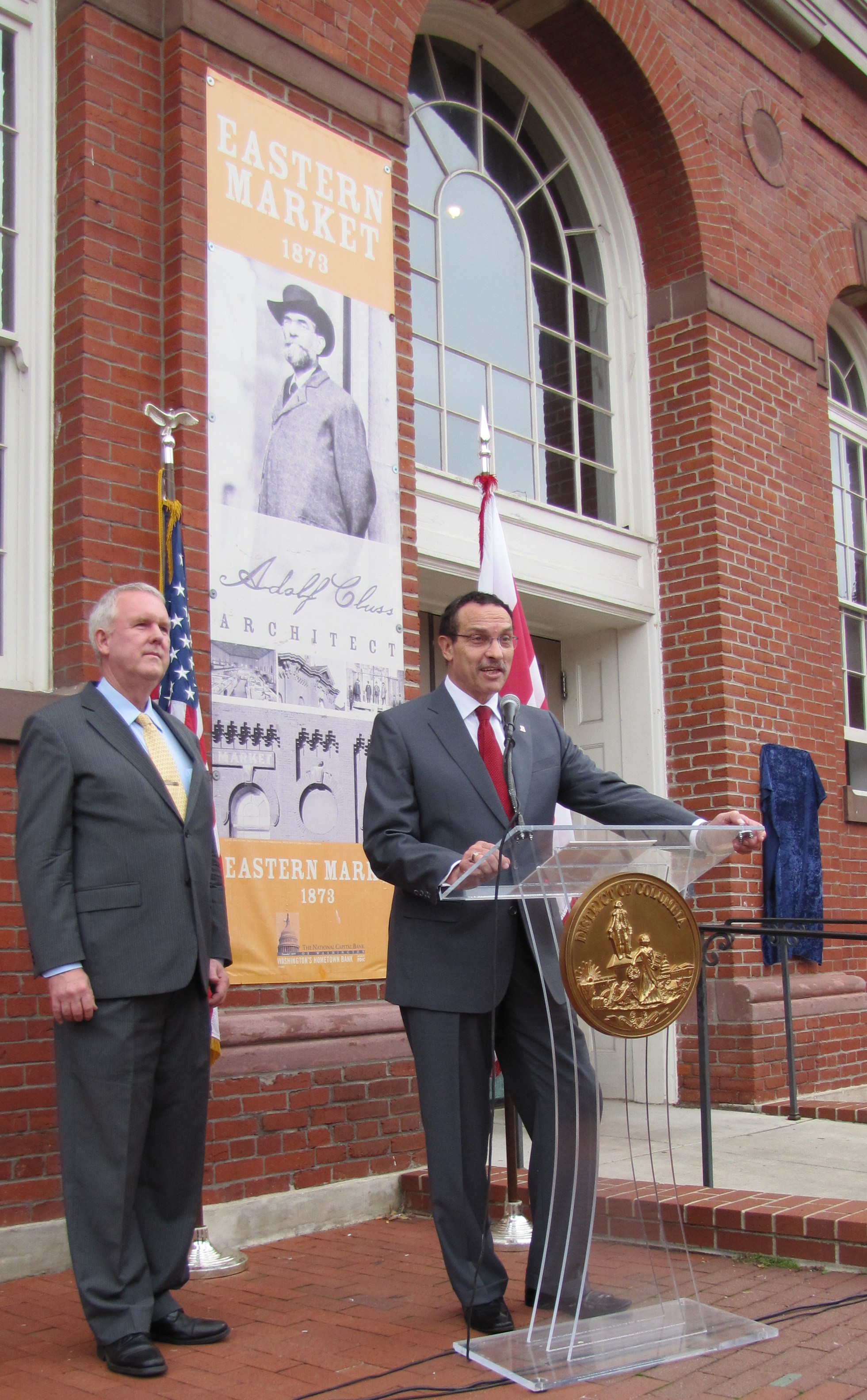
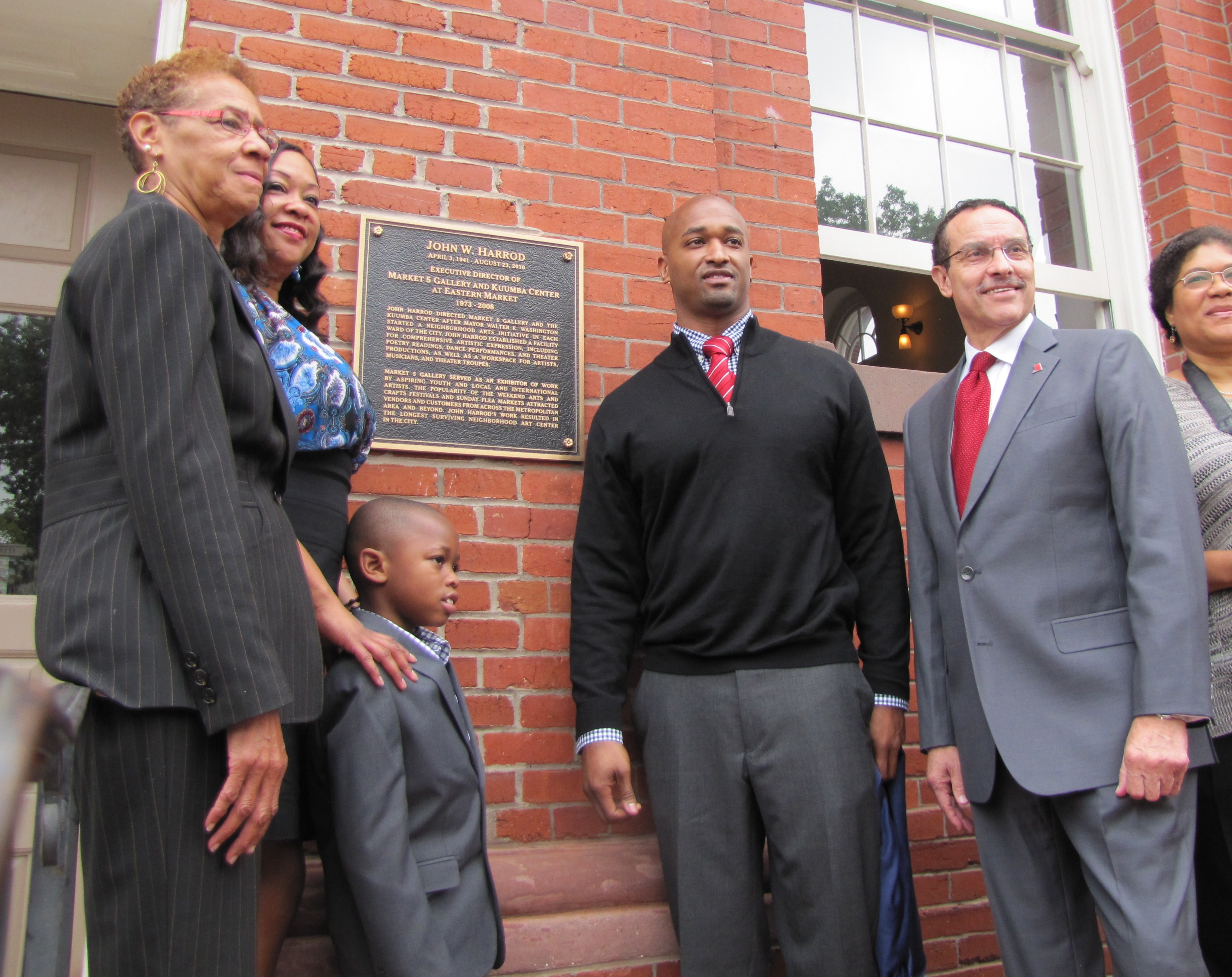
Mayor Gray Honors John Harrod, Founder of Arts Center at Eastern Market

Mayor Gray Opens Ceremony Honoring John Harrod

Mayor Gray Opens Ceremony Honoring John Harrod.  The veiled plaques is to the right.

"John Harrod touched all our lives.  One thing I learned from him is that sometimes controlled anarchy is a good thing."

“John Harrod touched all our lives. One thing I learned from him is that sometimes controlled anarchy is a good thing.”

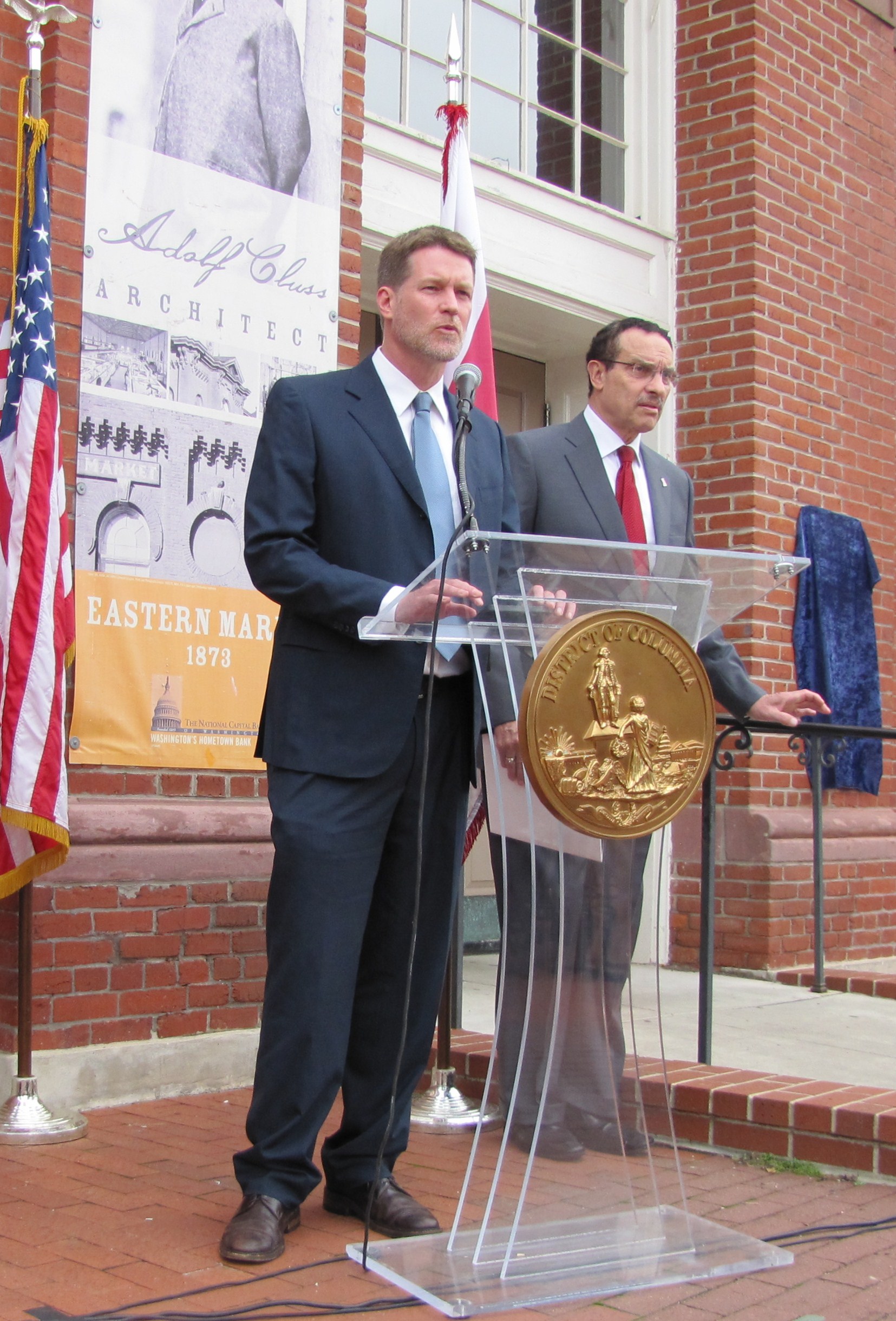
Eastern Market Manager Barry Margeson cited Harrod's love of the arts and people.

Eastern Market Manager Barry Margeson cited Harrod’s love of the arts and people.

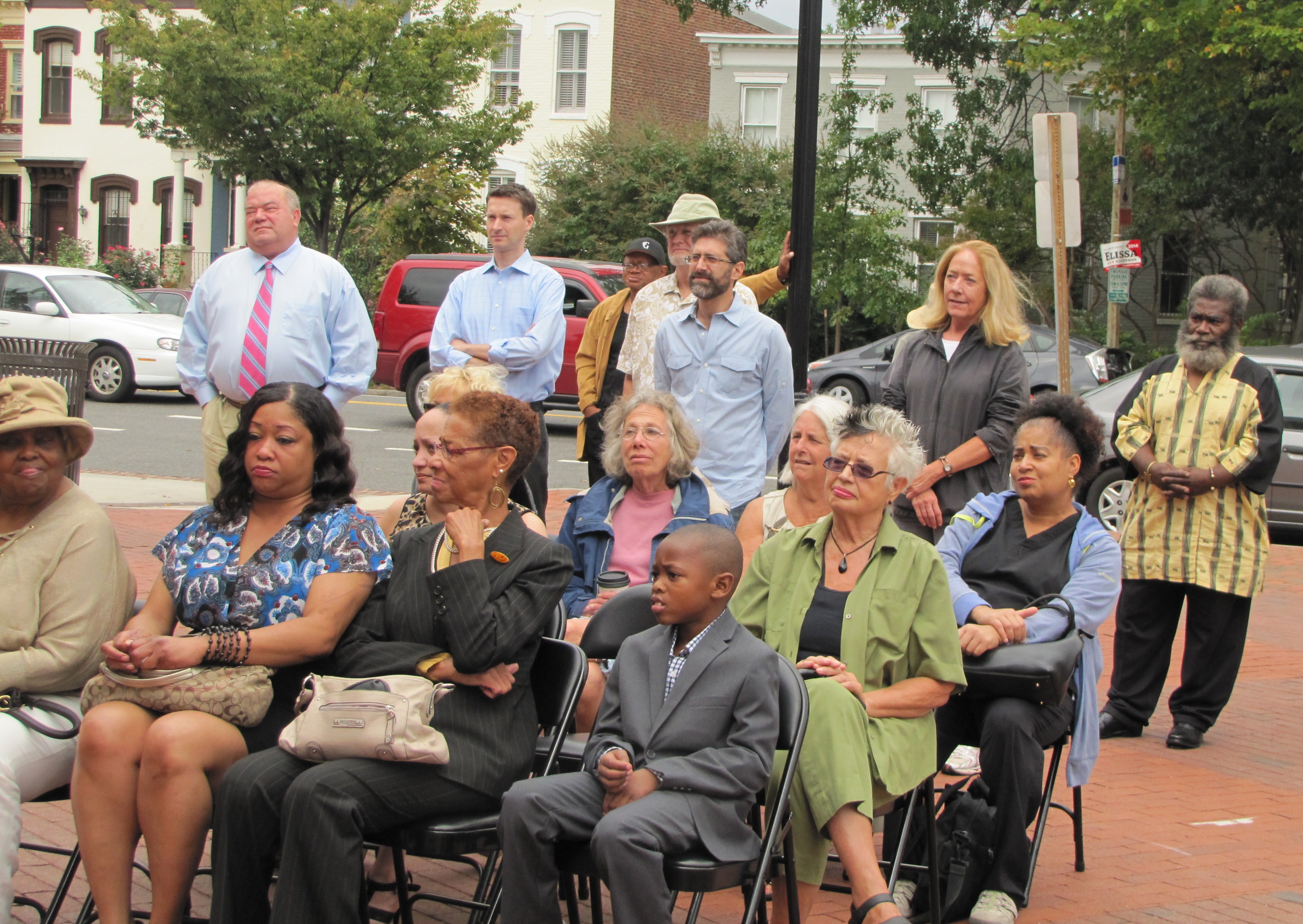
Harrod Family Members (seated, front row) and Eastern Market stakeholders (standing)

Harrod Family Members (seated, front row) and Eastern Market Stakeholders (standing)

Harrod's Son and Daughter Unveiled the Plaque

Harrod’s Son and Daughter, Aisha and Amon, Unveiled the Plaque

Mayor Gray Honors John Harrod, Founder of Arts Center at Eastern Market

Bronze Plaque on Eastern Market Wall Unveiled

by Larry Janezich

Today, Mayor Gray and CM Tommy Wells paid tribute to John Harrod, the founder of the Market 5 Gallery and Kuumba Center at Eastern Market – the longest surviving neighborhood arts center in the city.  The occasion was the unveiling by Harrod’s son and daughter of a bronze plaque attached to the wall next to the north entrance to Eastern Market’s North Hall.

Speaking to a crowd of more than 50 who gathered to celebrate the event, Gray recounted that in 1973, after Mayor Walter Washington started a neighborhood arts initiative in each ward of the city, Harrod founded Market 5 Gallery at Eastern Market – a neighborhood arts center dedicated to art, poetry, music, dance and theater.  Gray honored Harrod’s work and recounted how 31 arts and crafts vendors contributed funds to cast a bronze plaque after Harrod’s death in 2008.

Located in Eastern Market’s North Hall, the Gallery exhibited the work of local and international artists along with that of aspiring youths.  The Gallery expanded outdoors in 1983, with Harrod’s sponsoring of the Sunday arts and crafts festivals.  The resulting crowds eventually led to the establishment of the weekend flea markets on the Hine playground.

CM Wells recalled how Harrod “touched all our lives” and how he first encountered him when Wells was Ward Six coordinator for Marion Barry in 1986.  “One thing I learned from him,’ said Wells, “is that sometimes controlled anarchy is a good thing.”  He said that Gallery 5 thrived and grew and solidified itself and became the “heartbeat of Capitol Hill.”

Eastern Market Manager Barry Margeson cited Harrod’s profound love of all arts of all cultures, his deep humanity and appreciation for all people, and his strong convictions and stubbornness.

Tom Rall recalled coming to Eastern Market in 1983 and being the only exhibitor outside on Sundays.  In those days, Eastern Market was closed on Sunday, and Harrod kept Gallery 5 open despite lack of water, heat, rest rooms and air conditioning.  Rail subsequently spent the next 25 years as the manager of the outside Sunday flea market.  Rail lamented the loss of the North Hall as exhibit space for art and pleaded with Gray and city officials to “return art to the walls of the North Hall.”  Gray said he would work with others to see what could be done.

After being cast, the plaque languished, unhung, until the arts and crafts and other outside vendors recently mounted an effort to have the plaque installed.  Vendor and artist Joe Snyder was credited with collecting the $1600.00 from outside vendors and farmers and coordinating the actions which lead to today’s ceremony.

Snyder told Capitol Hill Corner, “As you know, none of us, arts and crafts vendors would be at the market had it not been for John; in fact, the city wide weekend phenomena of Eastern Market in last 35 years probably would have never developed without him.”  Snyder also gave credit to Peterbug Matthews, life-long Capitol Hill teacher and community activist who joined the effort have the plaque installed.

1 Comment

Filed under Uncategorized

Hine Coalition Requests Expedited Procedures in Final Court Review of Hine Project

Hine Coalition Requests Expedited Procedures in Final Court Review of Hine Project

Litigants Cite Recent Court Decision Faulting Sloppy Zoning Commission Review

By Larry Janezich

Last Friday, Oliver Hall, the attorney for the Hine Coalition, filed a response to a Stanton/Eastbanc (SEB) request for expedited resolution of the Hine Coalition’s appeal of a recent Appeals Court decision ratifying the Zoning Commission (ZC) approval of the Hine Development.  Hall’s response said the Coalition and Intervenor EMMCA not only had no objection to expedited resolution, but that they also seek expedited resolution of the appeal.   (ed. note: phrase in italics has been corrected to reflect language of the response.)

Hall cited a Court decision just one week before SEB filed a request for expedited consideration in the Hine appeal.  It that decision, the Court slammed ZC procedures and remanded the controversial 901 Monroe Brookland project to the ZC to justify its support of the project.  Opponents of the Brookland project had asked the Court to overturn the ZC’s approval which opponents said was too big for Brookland and too dense for the community.  The Court decision came with a reprimand to the ZC for failure to act as factfinder – “to neutrally find the facts, then apply the appropriate law and thus determine the outcome.”

According to the Washington Business Journal, the ZC has never rejected a PUD.  The Court’s critique of the ZC’s standard operating procedure on PUD’s sets a precedent for the agency’s accountability – which the Commission has long been accustomed to operating without.

At the heart of the Court’s criticism was the ZC’s verbatim adoption of the Brookland developer’s proposed findings of fact in response to the Brookland litigant’s appeal of the ZC’s decision.  The Court opined that the procedure “raises serious concerns as to whether the Commission order actually reflects a considered judgment by the Commission as to the arguments of the parties.”

Hall says in his filing that the ZC relied on the developer’s report in the Hine development in a similar manner, pointing out the ZC’s verbatim adoption of “paragraph after paragraph and page after page of SEB’s proposed findings.”  When raised as an issue in the initial appeal, Hall says the Court treated the ZC reliance on SEB’s proposed findings as a non-issue.  The filing goes on to point out specific instances where the ZC failed to explain its reasons for approving the Hine PUD’s height and density.

Two of the partners in the Brookland project (200 apartments and 13,000 square feet of retail, two blocks from the Brookland-CUA Metro) will be familiar to the long time followers of the Hine project: the Menkiti Group (one of the finalists in the Hine development selection) and Esocoff & Associates, an architectural firm and one of SEB’s partners in the Hine development.

The Zoning Commission is the curious “independent, quasi-judicial” body which makes decisions every month affecting the quality of life in DC’s neighborhoods.  Three members are DC residents appointed by the Mayor.  One member is a representative of the Architect of the Capitol. One member is a representative of the National Park Service.

Here is a list of the current ZC Members and excerpts from their public profiles from the ZC website.

Chair, Anthony J. Hood

Chief of the Printing and Mail Management Section, Facilities Operations Branch, of the U.S. Environmental Protection Agency in Washington, DC; Member, Board of Directors of the Bryant Park Homeowners Association; Member, 5th District’s Citizens Advisory Council, Member Bryant Channing Streets, Orange Hat Patrol; Deacon, Greater First Baptist Church of Washington, DC.

Vice Chair, Marcie Cohen

Retired from (unspecified) public and private sectors; recipient of Loeb Fellowship at Harvard Graduate School of Design; former Visiting Senior Scholar, Great Cites Institute, University of Illinois; former Vice Chair of DC Housing Authority; former Board Member, National Low Income Housing Coalition.

Robert Miller

Former Deputy Director of the Mayor’s Office of Policy and Legislative Affairs; former Legislative Counsel to the DC Council Chairman; Member, National Capital Planning Commission.

Michael G. Turnbull, FAIA  – Architect of the Capitol Designee

Assistant Architect of the Capitol; former Director of the Department of Design and Construction at the Art Institute of Chicago; Member, American Planning Association.

Peter G. May – National Park Service Designee

Associate Regional Director for Lands, Resources, and Planning with the National Capital Region of NPS; former project administrator, Architect of the Capitol; former Deputy Director of Operations in the District of Columbia’s Office of Property Management; former architect with Weinstein Associates Architects (no relation to Amy Weinstein) and Quinn Evans | Architects; Board Member Capitol Hill Community Foundation; former member of District of Columbia Public Schools Modernization Advisory Board and Committee of 21.

61 Comments

Filed under Uncategorized

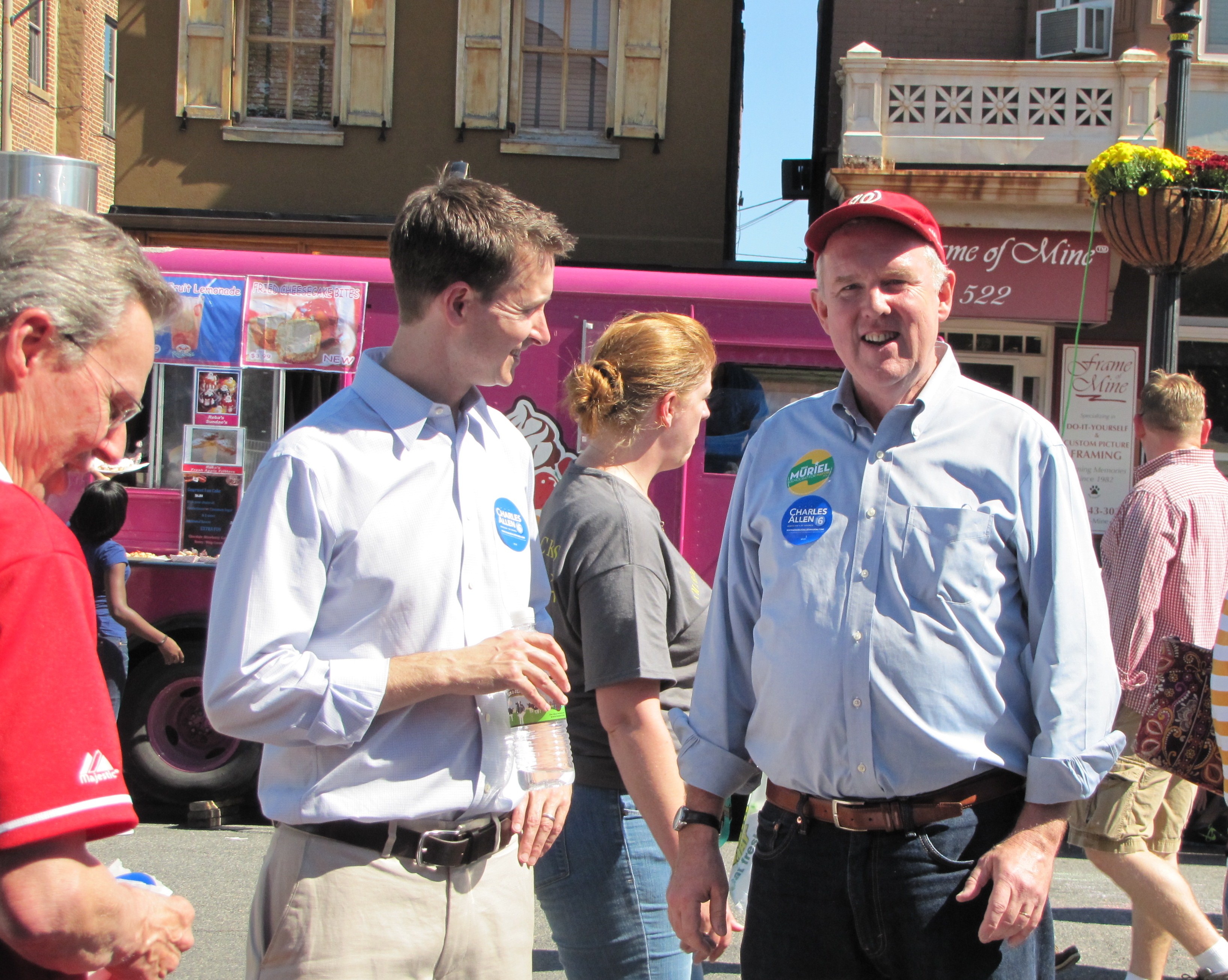
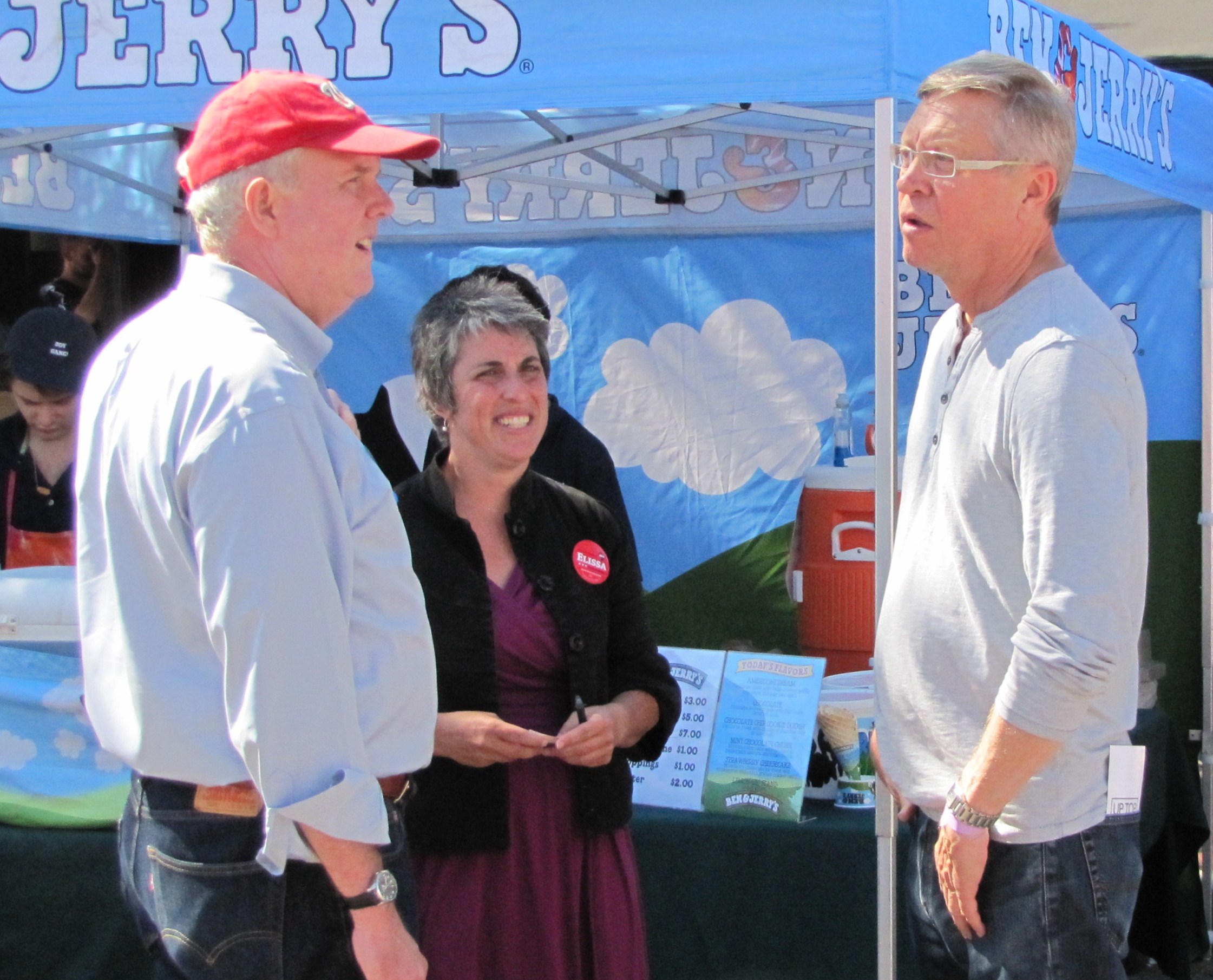
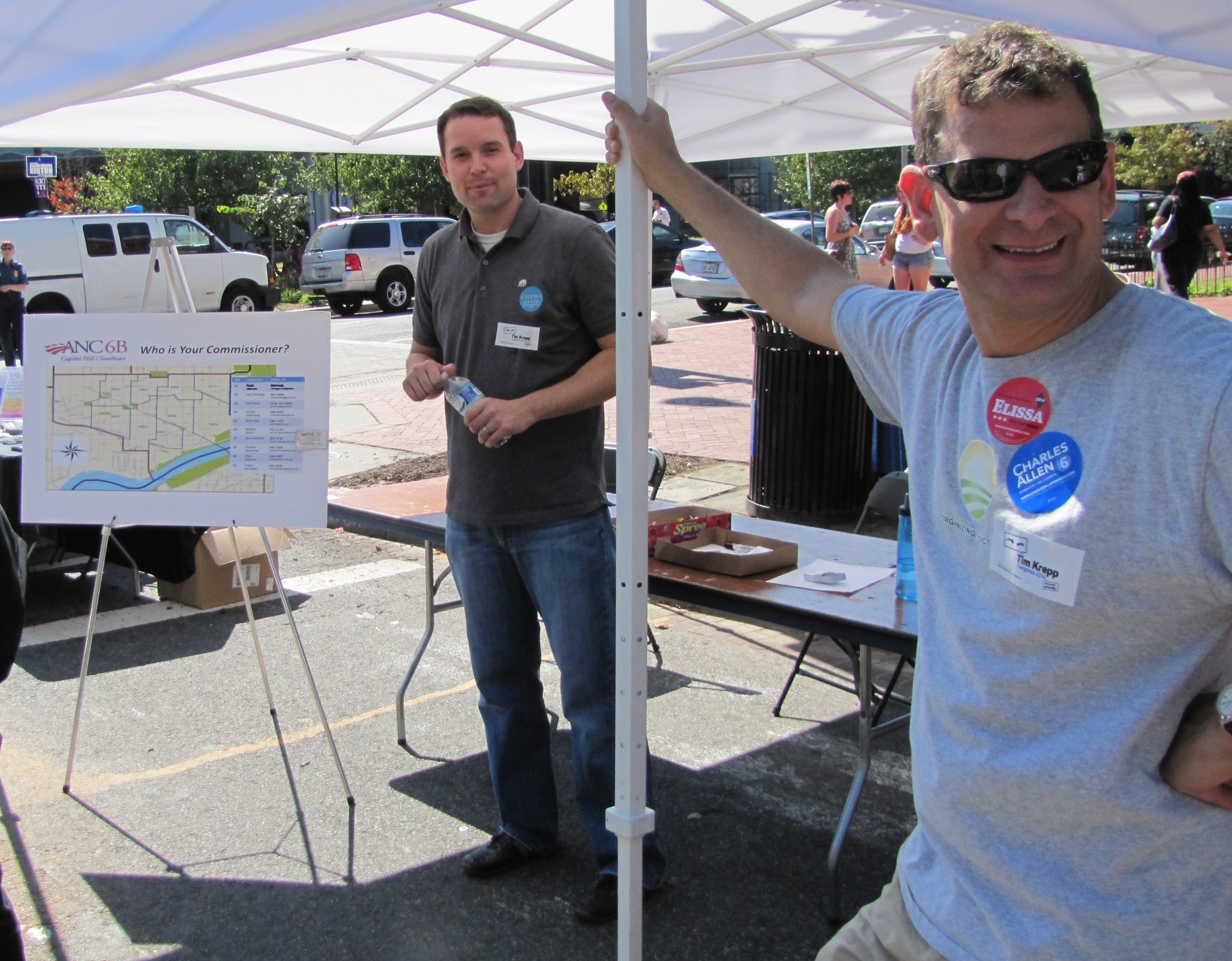
The Week Ahead …Barracks Row Fest Photo Essay & the City Paper on Peter May

 Scenes from Saturday’s Barracks Row Fest

Outgoing Councilmember Tommy Wells with his likely successor, Democratic nominee for Ward Six CM Charles Allen

Outgoing Councilmember Tommy Wells with his likely successor, Democratic nominee for Ward Six CM Charles Allen

CM Wells with CM at Large Candidate Elissa Silverman and NBC4 News Reporter Tom Sherwood

CM Wells with CM at Large Candidate Elissa Silverman and NBC4 News Reporter Tom Sherwood

ANC6B Chair Brian Flahaven (L) and ANC6B Vice Chair Ivan Frishberg (R)

ANC6B Chair Brian Flahaven (L) and ANC6B Vice Chair Ivan Frishberg (R)

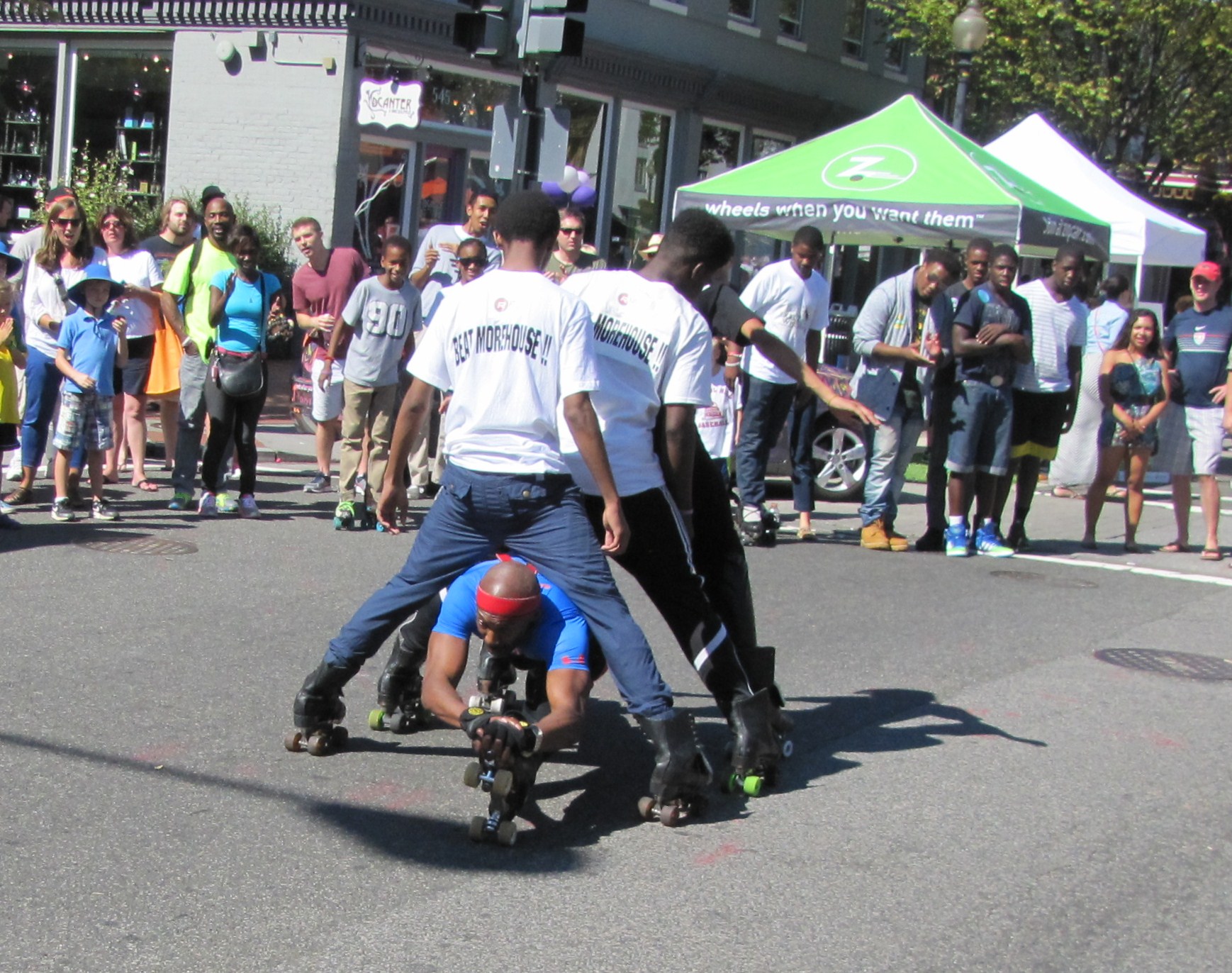
Skillz Skaters Demonstrate Prowess on Asphalt

                                            Skillz Skaters Demonstrate Prowess on Asphalt

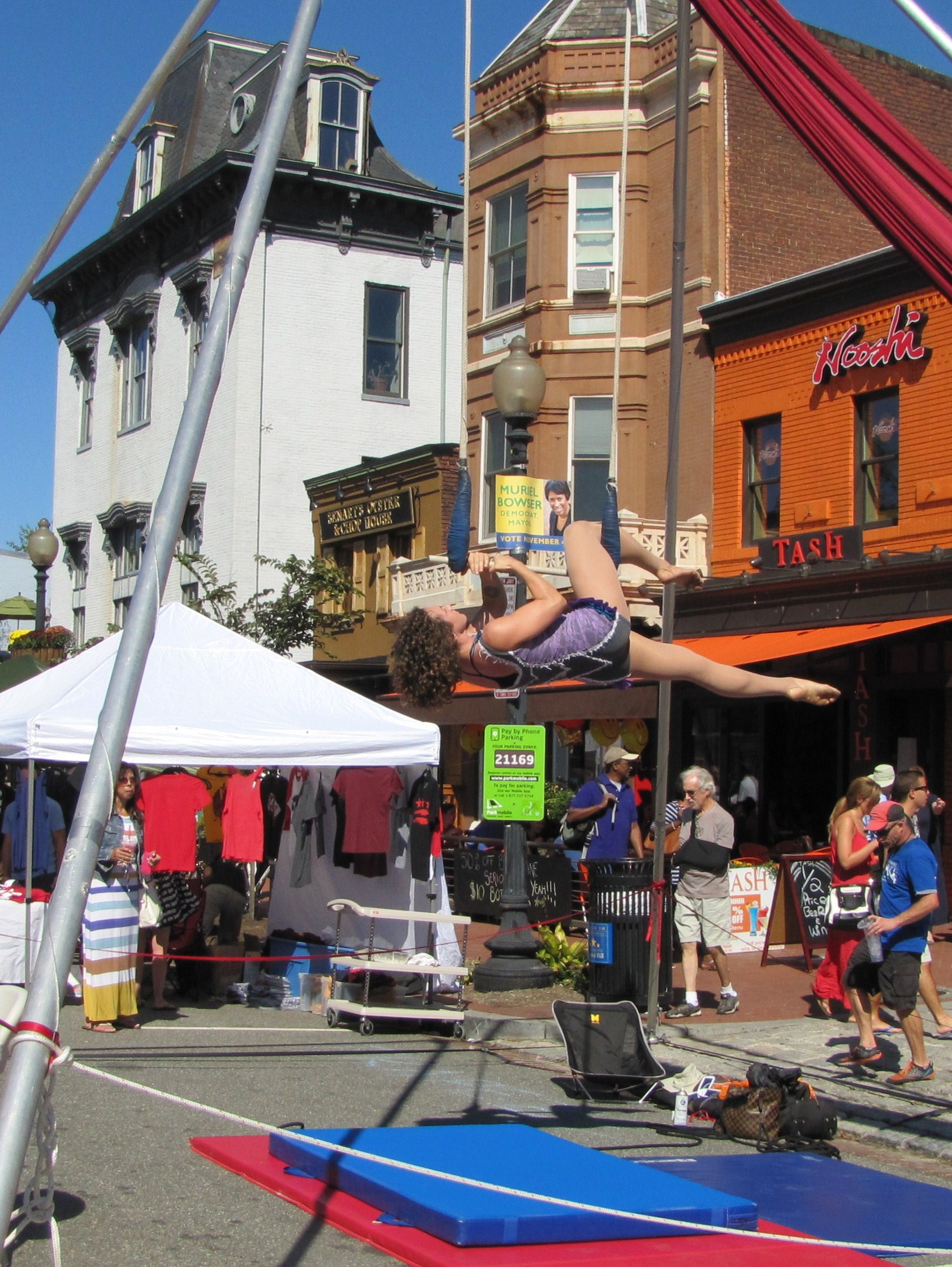
Trapeze Artist

                                                                                Trapeze Artist

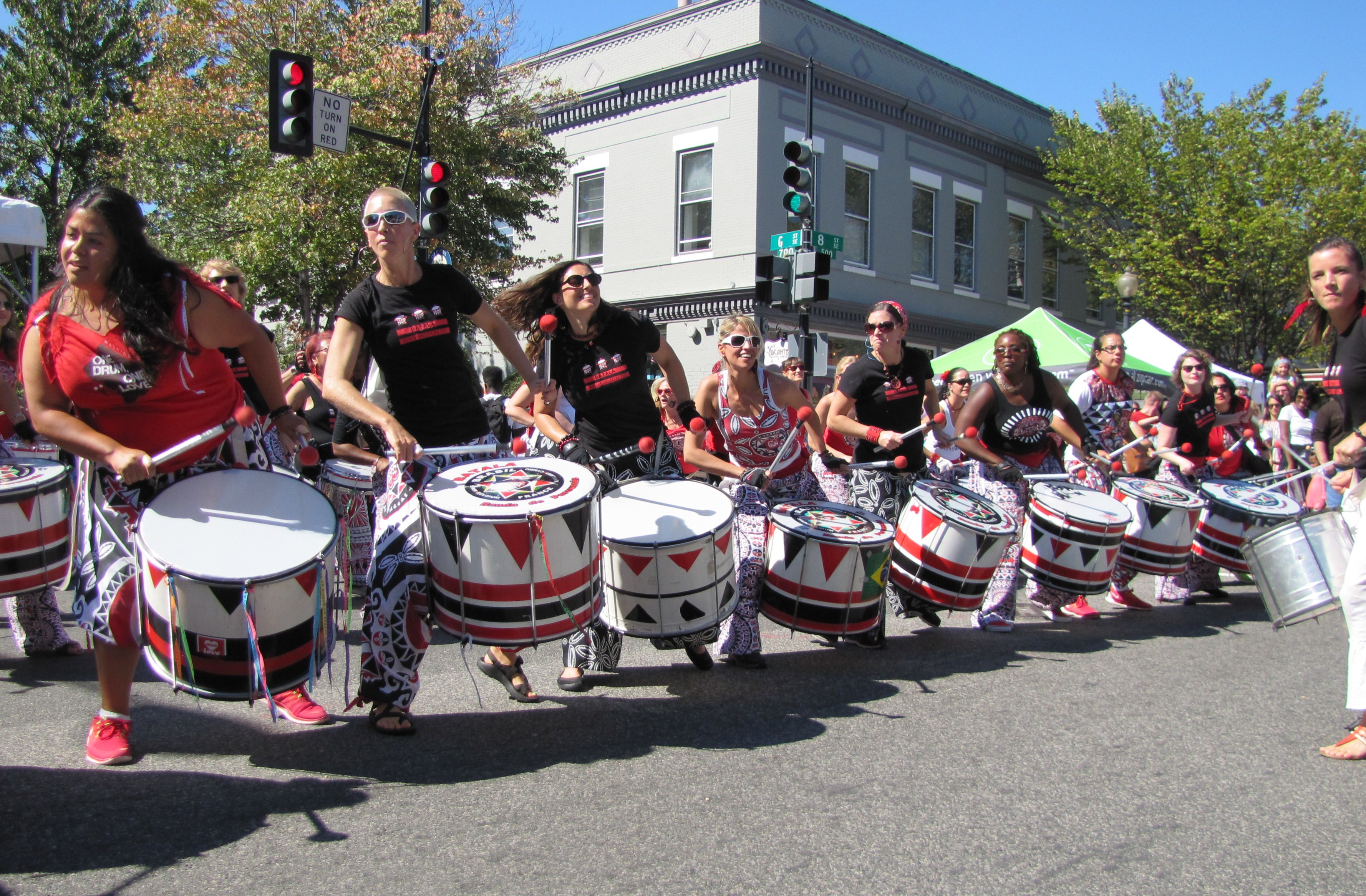
Batala Women Drummers

                                                                   Batala Women Drummers

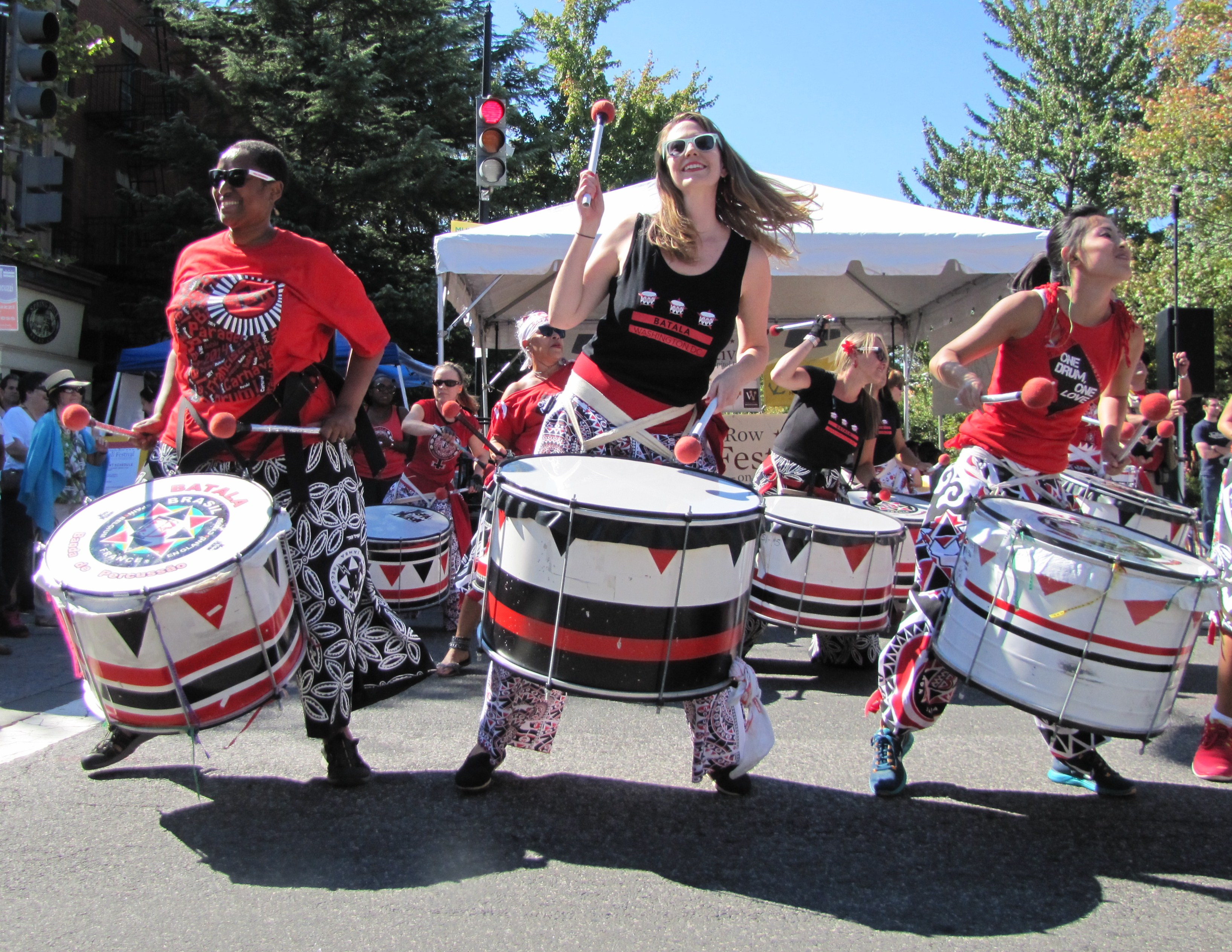
Empowerment Through Drumming

                                                                Empowerment Through Drumming

Howl to the Chief's Main Attraction

                                                   Howl to the Chief’s Main Attraction

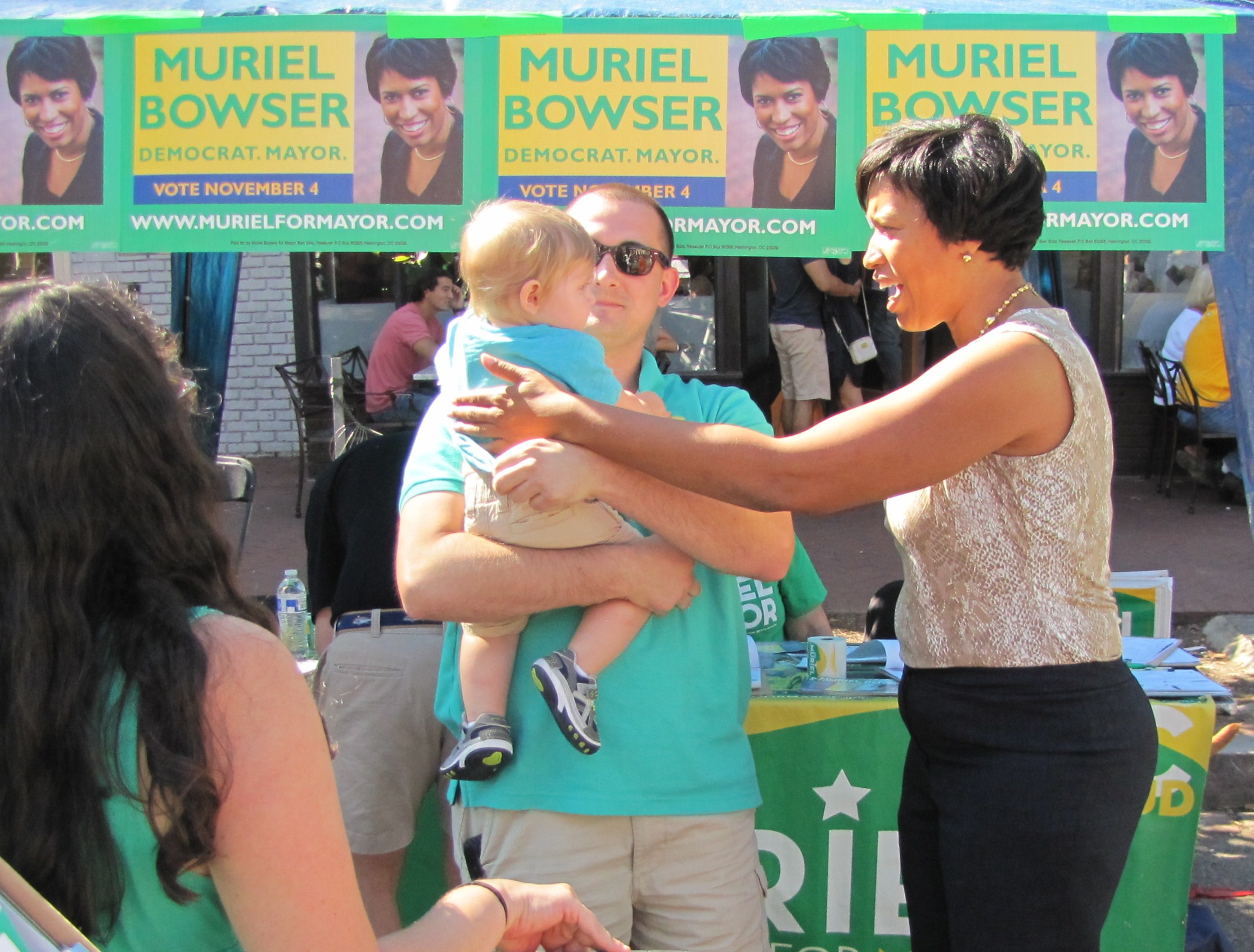
There's Just Something about Politicians and Babies

                                      There’s Just Something about Politicians and Babies

 The Week Ahead …Barracks Row Fest Photo Essay & the City Paper on Peter May

by Larry Janezich

The City Paper Article on Peter May

For those of who missed it, City Paper (CP) ran a lengthy front page profile of Capitol Hill resident Peter May, who it calls “the most powerful man shaping D.C.’s growth you’ve never heard of.”  May’s title is: Associate Regional Director for Lands, Planning, and Design for the National Capital Region of the National Park Service (NPS), and by virtue of that position, he sits on the DC Zoning Commission and the DC Board of Zoning Adjustment.  As a member of the Zoning Commission, he participated in the consideration of the Hine Development and – if the developers of the Frager’s site want a building more than 50 feet high there, he will be voting on that.  He is also the overseer of Capitol Hill NPS Parks:  Folger, Lincoln, Stanton, Marion(!), Potomac Avenue Metro, Seward Square, Twining Square, Maryland Avenue Triangles, the Pennsylvania Avenue Medians and 59 inner city triangles and squares (“pocket parks).

May is in charge of enforcing what many think are antiquated NPS regulations for these parks which prevent DC from developing the cultural and aesthetic amenities on public spaces which are seen everywhere in Europe.  He is described in the article by a former colleague as someone who is charged with protecting the federal and NPS interests but who takes community interests into consideration while doing so.  What the colleague does not have to say is that the federal government pays May’s salary.

Some residents have found the NPS to be unresponsive to concerns; some ANCs  have found the NPS attitude dismissive.  The CP article finds that no one wants to answer the question of why, exactly, the federal government should have a voice in micromanaging the city’s communities and neighborhoods, but that’s likely to remain the case until the District achieves true and independent home rule.  The link to the City Paper article is here:  http://bit.ly/1u0tRYD

New Capitol Hill Business

Jade Fitness, a boutique fitness facility at 1310 Pennsylvania Avenue, SE, officially opened for workouts on September 2, 1014.  Jade Fitness offers yoga, Zumba, Boot Camp classes, CorrectFit, Weekend Warrior and ABC Workout among others.  A grand opening celebration is scheduled for October. For more information, see here:  www.jadefitnessdc.com

The Week Ahead….

Tuesday, September 30

ANC 6B Executive Committee Meets at 7:00pm in the Hill Center to set the agenda for the October 14 ANC6B monthly meeting.

Tuesday, September 30

The Department of General Services will conduct the second tour of the Eastern Branch Boys and Girls Club for prospective development teams from 9:30am until 4:00 pm.  Commissioner Brian Flahaven is expected to announce a separate community tour of the site in the near future.

Thursday, October 2

ANC6B Commissioner Brian Flahaven holds a meeting on the 81 Unit Building at 1600 Pennsylvania Avenue, SE, project at 7:30 pm at New York Pizza (1401 Pennsylvania Ave SE). Greg Selfridge of NOVO development will be on hand to provide updates on the construction and answer questions.  (See CHC posting here:  http://bit.ly/YyyQU6

Saturday, October 4

Dead Man’s Run.  Congressional Cemetery.  6pm – 8pm

http://www.congressionalcemetery.org/dead-mans-run-2

Saturday, October 4

Blessing of Animals/Feast of St. Francis. Lincoln Park  10:00 am. Sponsored by Church of St. Monica and St. James.

2 Comments

Filed under Uncategorized

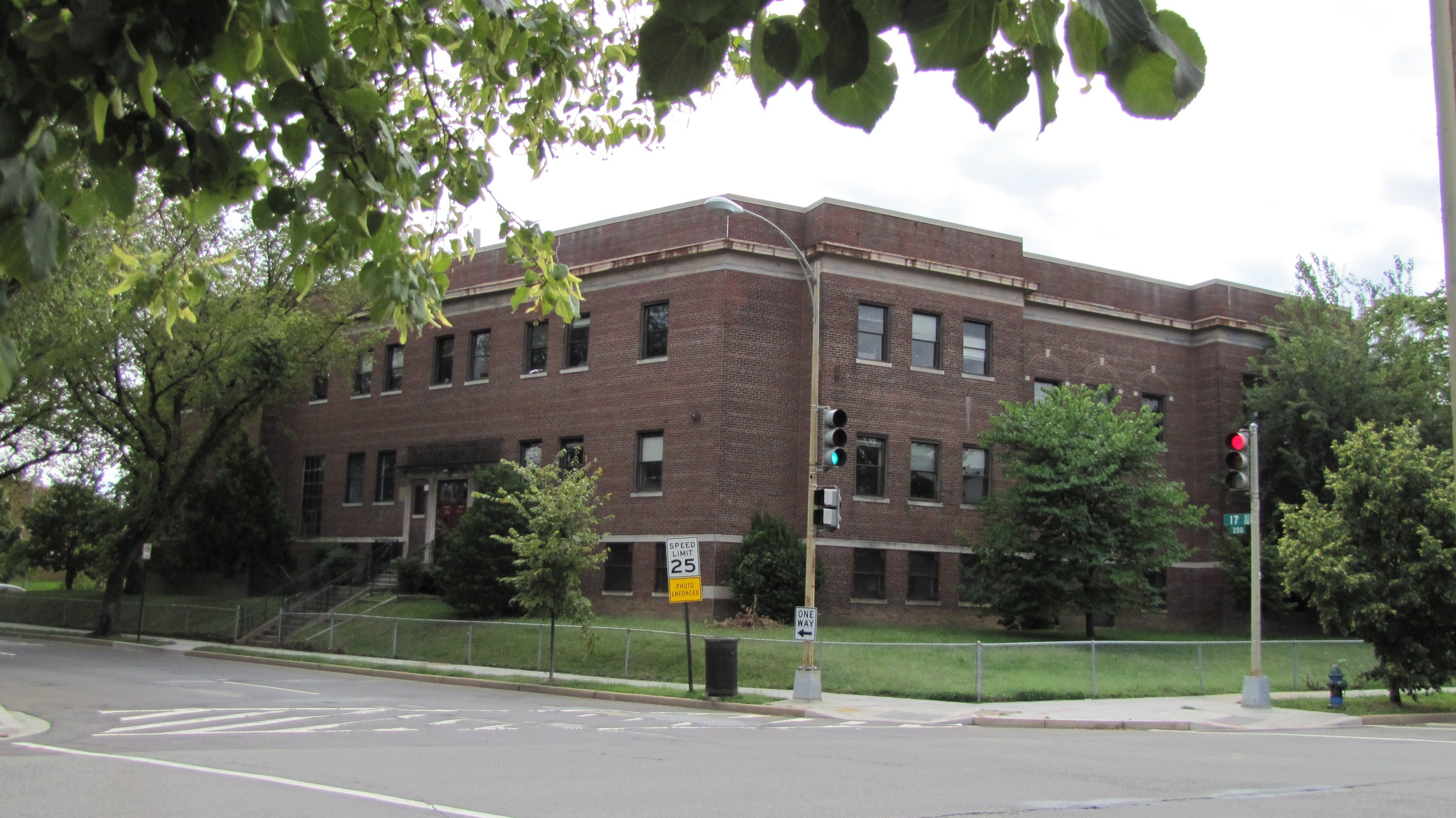
City Sees Three Year Timeline (Maybe) for Redevelopment of Hill East Boys and Girls Club

Eastern Branch Building, 261 17th Street, SE

Eastern Branch Building, 261 17th Street, SE

City Sees Three Year Timeline (Maybe) for Redevelopment of Hill East Boys and Girls Club

Community Uses for Project Present Challenge for Developers

by Larry Janezich

According to Michelle Chin and Stephen Campbell of the DC Department of General Services (DGS) the city anticipates a three year timeline for redevelopment of the Eastern Branch Building, formerly the Boys and Girls Club, at 261 17th Street, SE.  That timeline would start running after the City Council signs off on a proposal for redevelopment and DGS closes on a lease with a developer.

Last Tuesday night (September 16) at a community meeting at Payne School, Chin and Campbell said that the process for declaring the city-owned building surplus and the redevelopment process would proceed simultaneously as follows:

The DGS posted a Request for Offers (RFOs) on September 3

Responses from developers are due November 20

DGS may ask for best and final offers

Community meeting for presentation of all proposals will follow

ANC6B will review proposals and make a recommendation

DSG will make a final selection in February, 2015

DSG will award the development contract after the City Council approves a development plan

Six months to one year after that, developer will break ground

Approximately three years later, the project will be completed

The timeline is contingent upon finding a developer who will step up to the challenge of the criteria specified in the RFO.  There is a strongly held belief in the community, ANC6b, and DGS that the public must benefit from the disposition and development of this public property.  The challenge will be to find a plan and a developer who will satisfy that requirement and still find a way to make the project financially attractive.

On May 13, ANC6B sent a letter to DGS listing community preferences and stating the ANC’s belief that the city should pursue RFO’s that include a community or neighborhood- serving use component in the building.  Those preferences show up in the RFO as follows:

Day care

Adult daycare/senior services

Recreational uses that can accommodate dance or fitness classes

Community meeting/event space

Regarding the non-community space, the letter expressed a preference for family or senior housing.

The RFO states that respondents should note that greater weight will be given to proposals incorporating housing, particularly family/senior housing as part of the plan.  Further, it states that responses must consider and incorporate stakeholder and community preferences to the extent feasible.

The building itself presents issues for potential developers.  DGS is focused on uses for the existing building; however, problems in renovation (including a unique floor plan, lack of parking, lack of ADA features) make demolition and a new structure a likely alternative.  The building is zoned R-4 – residential – which limits a residential structure to a maximum three story/40 foot height.  Any change would require that a developer seek that relief through the Zoning Commission’s Public Unit Development (PUD) process.  There are no historic preservation issues for the building and selling the building outright is not an option.

Chin stated that the city does not currently have funding to subsidize or support the project.  This means that any non-community use of the development plan will have to generate enough revenue to sustain and support any community uses of the building.  Chin said, “We will accept any proposal but to receive serious consideration it will need to address RFO criteria.”

Whether developer subsidization of the community to this degree within the current height limitation is possible is uncertain.  ANC6B Chair Brian Flahaven may have been hinting as much during the Q&A period, saying, “I think the process affords us the opportunity to see what the possibilities are.”  Chuck Burger, Chair of The Eastern Branch Task Force appointed in 2009 by CM Wells to frame a reuse for the building commented, “This is one way to test the market.  If nobody meets the mark, do we want to lower the bar?”

The DGS RFO’s can be found here:  http://1.usa.gov/1qrZvbz

5 Comments

Filed under Uncategorized

The Week Ahead…..Liquor License for Curbside Café?

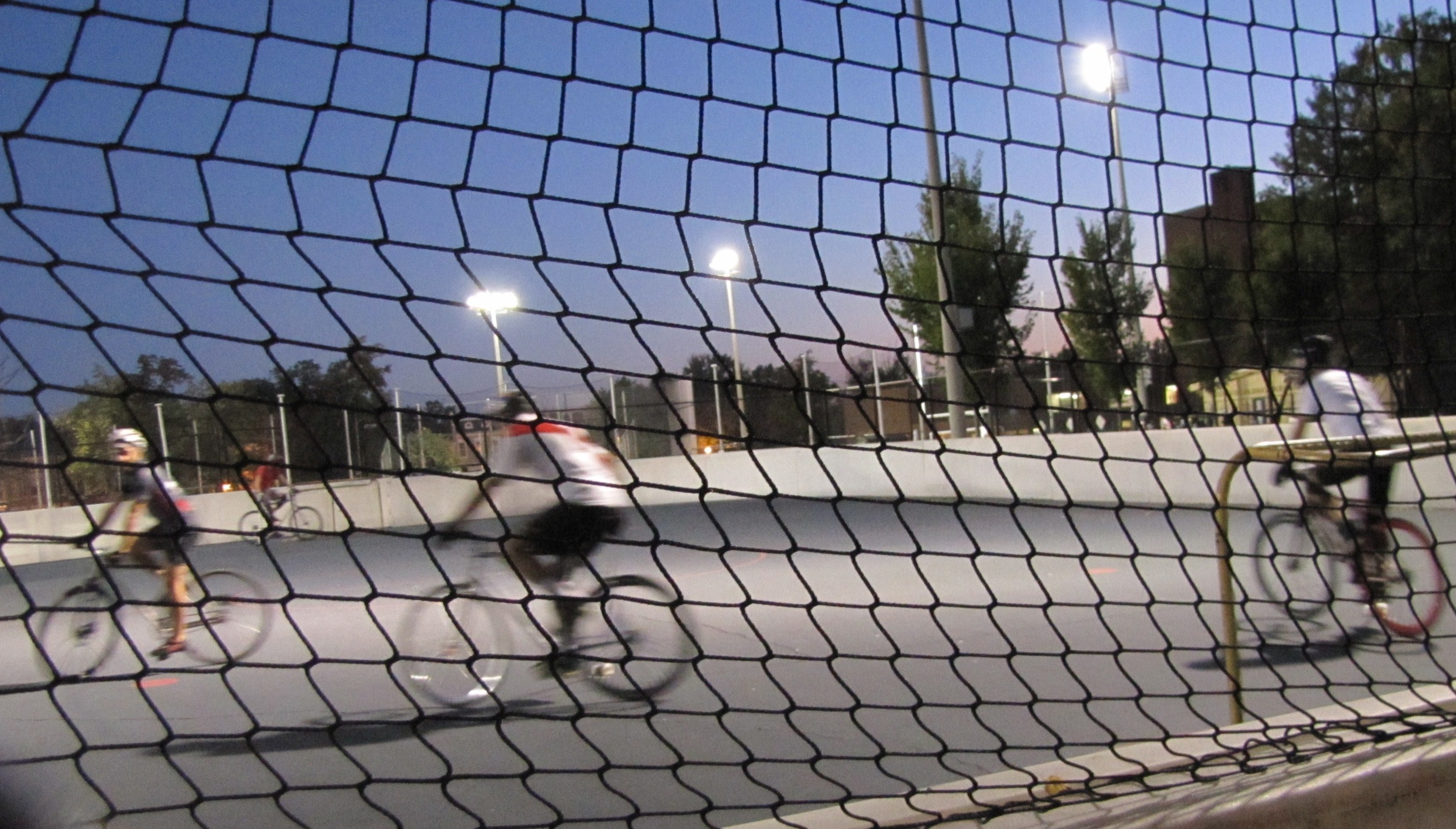
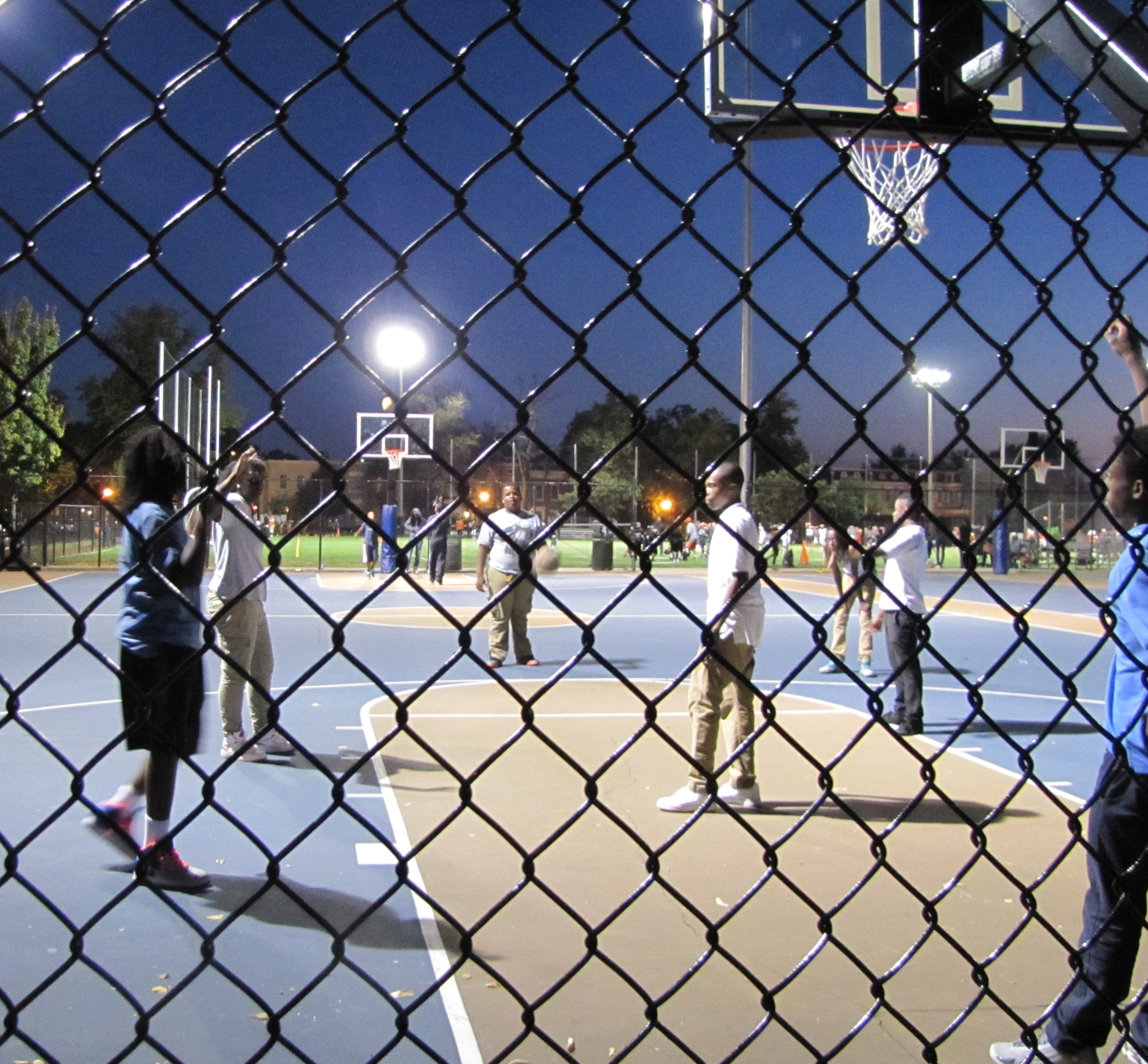
Last Tuesday night at Watkins’ Field:  Bike Polo, Pickup Basketball, Little League Football

The Week Ahead…..Liquor License for Curbside Café?

by Larry Janezich

Monday, September 22

Community meeting to discuss Curbside Café’s plans to apply for a liquor license.  7:00pm 6:00pm at

Curbside Cafe, 257 15th Street, SE.

Tuesday, September 23

The National Capital Memorial Advisory Commission will meet to hear the case for siting the Swamp Fox memorial by Palmetto Conservation Foundation (a sponsor of the memorial, and based in Columbia, South Carolina) in a public meeting on September 23 at 2:00 pm, in Room 311, the Boardroom of the Commission of Fine Arts, at the National Building Museum, 401 S Street, N.W., Washington, DC

Wednesday, September 24

ANC6a’s Economic Development and Zoning Committee meets at 7 pm at Sherwood Recreation Center, Corner of 10th and G Streets, NE    Next Meeting will be in October.

Thursday, September 25

CHRS hosts a community meeting to hear Mark Buscaino, Executive Director of Casey Trees, explain how the District’s tree cover is maintained and what residents can do to help their trees and the local ecosystem – 7:00pm, at Hill Center.

1 Comment

Filed under Uncategorized

Piece of the Story – Featuring the Work of NE Urban Artist Brett Busang

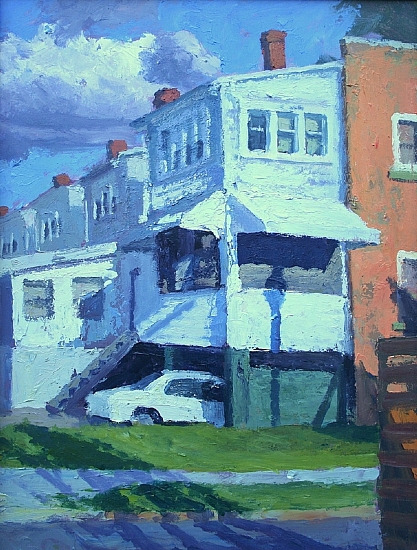
Carport and Clouds, Northeast DC.  Acrylic on masonite. 24"X18" - $3,000

Carport and Clouds, Northeast DC. Acrylic on masonite. 24″X18″ – $3,000 (Read the “narrative for this piece below.)
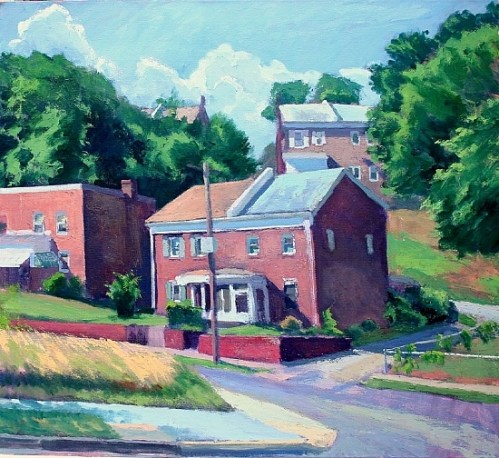
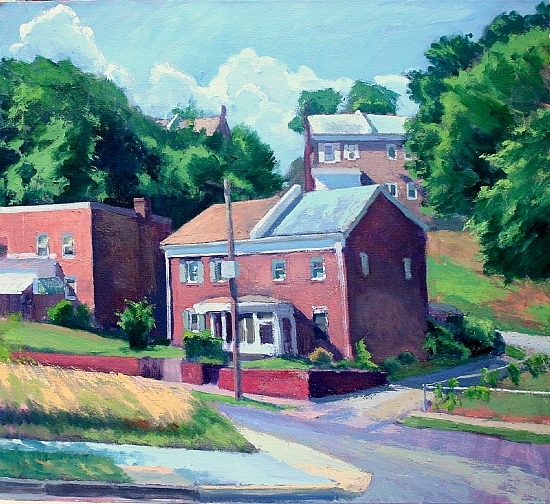
Apartment Block, Anacostia.  Arrylic on Canvas.  38"X42" - $6,000

Apartment Block, Anacostia. Arrylic on Canvas. 38″X42″ – $6,000 (Read excepts from the “narrative” for this piece below.)
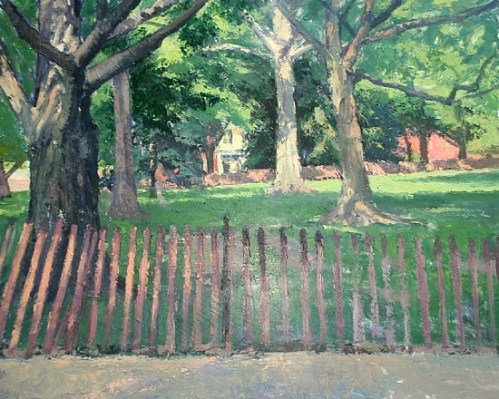
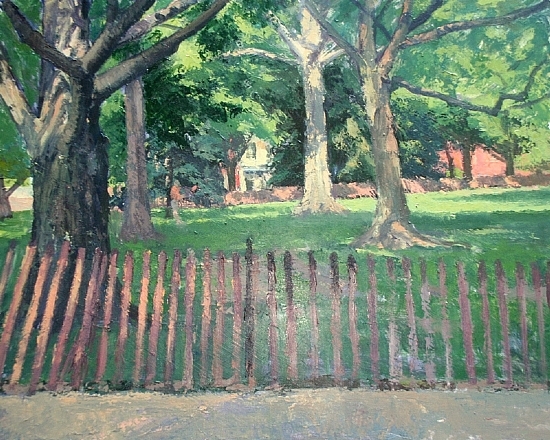
Lincoln Park.  Acrylic on Masonite.  24"X30" - $4,000

Lincoln Park. Acrylic on Masonite. 24″X30″ – $4,000
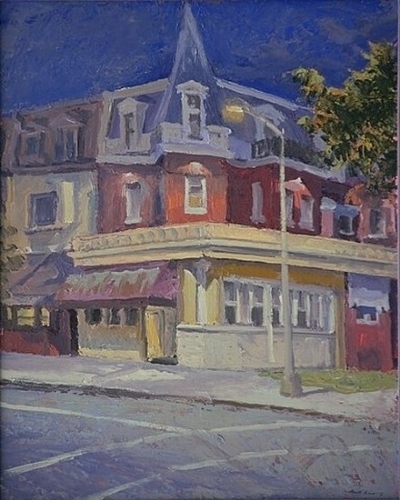
Corner of 5th.  Acrylic on masontie.  30"X24" - $4,000

Corner of 5th. Acrylic on masontie. 30″X24″ – $4,000
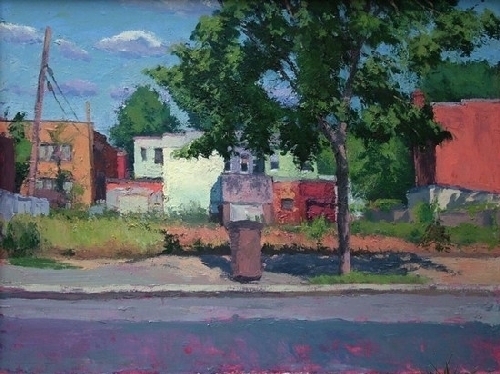
Shade Tree on H.  Acrylic on canvas.  30"X40" - $5,000

Shade Tree on H.  Acrylic on canvas. 30″X40″ – $5,000

Piece of the Story – Featuring the Work of NE Urban Artist Brett Busang

by Larry Janezich

Brett Busang is a DC based American realist painter who currently lives near H Street, Northeast.  He paints the realities of the urban environment and has a fondness for the grittiness of alleys and garages but his work also features, empty lots, facades of storefronts and row houses, bridges, and industrial and construction sites – and no people.  Most are exteriors – studies in sunlight and shadow – with an interior scene being the rare exception.  The themes of the pieces concern change, a sense of anticipation, and the loneliness and anonymity of urban life.  His work recalls that of Edward Hopper, and Busang acknowledges his debt to that painter.

Many of Busang’s pieces featured on his website (Here:  http://bit.ly/XH7QB2) are accompanied by a “narrative” – an anecdotal-rich essay which often chronicles change and places the work in context.

He has exhibited at the Museum of the City of New York City; the Everson Museum, in Syracuse, NY; the Greenville Museum of Art, in Greenville, NC.  Busang is also a writer and commentator; his writing has appeared in American Artist, The Artist’s Magazine, American Art Review, the New York Press and New York Newsday.  He was born in 1954.

Busang’s narrative for “Carports and Clouds, Northeast DC” is reproduced below:

“Northeast Washington reminds me a little of Queens, which sprawls somewhat more evenly between the East River and, I think, Duchess County.  Queens is considered subpar compared to Brooklyn; safer than the Bronx; and as unremarkable as a hamburger patty.  It is the home of immigrants too numerous and incomprehensible to name.  Its history is an amalgam of lousy breaks and easy living.  And its people are such chips off the old block that, when they have a chance to leave, they keep a little place handy so they can always come back.

I am not aware of such affection emanating from Northeast DC.  It sprawls, but it can also contract.  Its population is not nearly so diversified, being mostly black, but it is sprinkled with recent immigrants as well as hopeful newbies, who take a chance on the place because it is very likely the only place – in Washington, DC – they can afford to live.  I don’t know how big it is and don’t care.  Yet I have spent so much time in it that I am always wondering about its parameters.  How was it, or all places, given such license to grow?  Or is its growth organic – a sort of happy virus that leaps over boundaries and keeps going because nobody cares to stop it?  Because of its sprawling character, Northeast is not easily quantified.  Northeast is Capitol Hill, but it is also Trinidad.  Northeast is a single lane that runs parallel to H, but peters out when it reaches a cross-street and is never found again.  Northeast eats at home more than other places – though it drinks out of paper bags and likes to break its bottles against a curbstone because they might, in this second life they’ve been given, puncture a brand-new tire. Northeast is as restless as a cat, but climbs fences it already knows and sticks to them.  Northeast sits on a hill at Mt. Olivet Cemetery, where hardship has been mastered and there are no rent disputes anymore.  It gazes in wonder from the Arboretum, from which the human world seems as chaotic as a three-alarm fire.

Northeast is dirty-ochre and salmon-pink.  Its middle-greys will get darker while its concrete repairs turn yellow overnight.  Northeast is a cache of plastic bottles and discarded billfolds.  It reeks of the stuff for which “nicer” neighborhoods have no name.  Yet it lives prosperously “on the hill” where prams are pushed and neighborly disagreements are arbitrated by law.  Across H, things aren’t so nice, though people are sandblasting old brick, re-painting woodwork, and making stacks of cobblestones so that they might, at some point, be returned to where they came from.

Italians used to be here, and Jewish people too.  And a great many nuns, who die more mysteriously than other people.

Wardman blocks mean something in Northeast, as do storm drains and Harlequin novels.  If asked, some people will say they miss the Senators, which were of a Northeastern mentality because they never won anything and didn’t expect to.  The Senators were about keeping the faith and holding steady.

In Brookland, its lawns are tidy, its streets are in good repair, and its inner life is crowned with rosaries, and tabernacles.  And over in Eckington – which may not be in Northeast at all – it roller-coasters up and down so much, nobody wants to go outside.

Its townhouses are needy-looking, its trees are ragged, and its lavender-mint is flavored with acid rain.  Its stray cats run rampant and are never trapped and neutered.  And its old men remember their childhoods as being more quiet, but not as complicated as the ones they see.

History has happened here and looks it – which is why it doesn’t “scan”.  (Most people prefer history on a plaque or seminar.)  Here people work for a living   Or can’t.

A Postscript

People rarely guess exactly where I have painted my pictures – which is precisely the way I want it.  In this painting, as with so many others, I want a single thing to represent the many; the ordinary moment to resonate with all time; a back-porch, a stranded automobile, and some roaming clouds to define and obfuscate what it means to be alive.”

Below is an excerpt from the narrative for  “Apartment Block, Anacostia”

“Anacostia affords views of Washington for which Washingtonians pay more money than they can afford.  Its hills and valleys retain the pastoral quality for which places like Mt. Vernon are more conveniently famous.  And its history is as complicated as the Mother Ship, which seems, to an outsider, so far away.

It’s always been affordable, though Washington-style property values have been creeping past the river’s edge.  Yet once the crossing is made, square footage lacks the gamma ray quality it has in the District.  If you drive around, you’ll find a patch of land that suits your budget.  You’ll see a house that has roaring potential.  And you’ll look past the remediable decay toward a future that is – as it may not be in Mt. Vernon Square – as tangible as a rusted-out garage.  Like that garage, it’s more than all right if you care to put a roof on it and make it your own.

Washington’s working-class is that negative quantity whose history is put on hold as Big Events march pre-emptively past it.  In DC, its two-story cottages are being snapped up like nobody’s business.  Its public spaces are being widened to accommodate bigger dreams.  And its brick schoolhouses are becoming multi-family communities complete with a village green, “safer” swing-sets, and a barbecue grill.  One could argue that, in DC, the working-class might appear during the daytime, but it joins the daily exodus after its tool-kits are stowed away.

Anacostia doesn’t mind working-people and has, over the years, provided American Dream conditions for those dreamers who need to scrape the barrel now and then.  Its economy-minded architecture is not only its saving grace, it is its lifeblood.

In the picture I made, the “kick” doesn’t come so much from the architecture as its placement among those rolling hills and easement-sharing parkland.  In DC, developers sacrifice breathing-space for market-share; human amenities for monetary values.  In Anacostia, one may breathe easily enough – though it is advisable to look both ways.  And keep an eye out for trouble.

It is regrettable that racial tensions can so often define a city’s potential.

Anacostia’s potential resides in the very tensions that could tear it asunder.  Now that it is up for grabs, it’ll be interesting to see whether those tensions will gather, be diffused, or dissipate under the influence of a new order that has not materialized there or anyplace else.  In theory, the same hand that strikes someone can be offered in friendship.  Friendship, however, depends on whether the new people are willing to respect the old; what is shabby, not only about places, but human relations can be systemically eliminated and not taken away one body-part at a time.  Anacostia needs a shot in the arm, but its crowd-attracting virtues must, in the face of those very crowds, be somehow protected.”

Ed. Note:  Capitol Hill Corner features the works of local artists in an occasional feature entitled “Piece of the Story.”  Artists interested in participating should email ljjanezich@hotmail.org.
2 Comments

Filed under Uncategorized