Tandoor Grill Wants to Move to a New Second Story and Lease First Floor to Potbelly
Pot Belly Sandwich Shop Seeks Barracks Row Location
by Larry Janezich
A plan for opening a Pot Belly Sandwich Shop on Barracks Row was revealed at last night’s ANC6B Planning and Zoning Committee meeting.
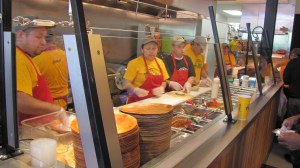
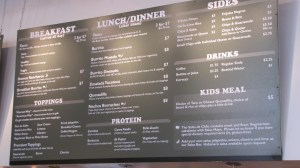
Consideration of two cases by the Committee, chaired by Commissioner Francis Campbell, revealed Pot Belly’s interest in expanding onto Barracks Row. The chain restaurant serves sandwiches, salads, soups, chili, shakes, malts, smoothies and baked goods, and has several outlets in Northwest and one near the Navy Yard in SE. Since its founding in 1997, the chain has spread to more than 280 locations.
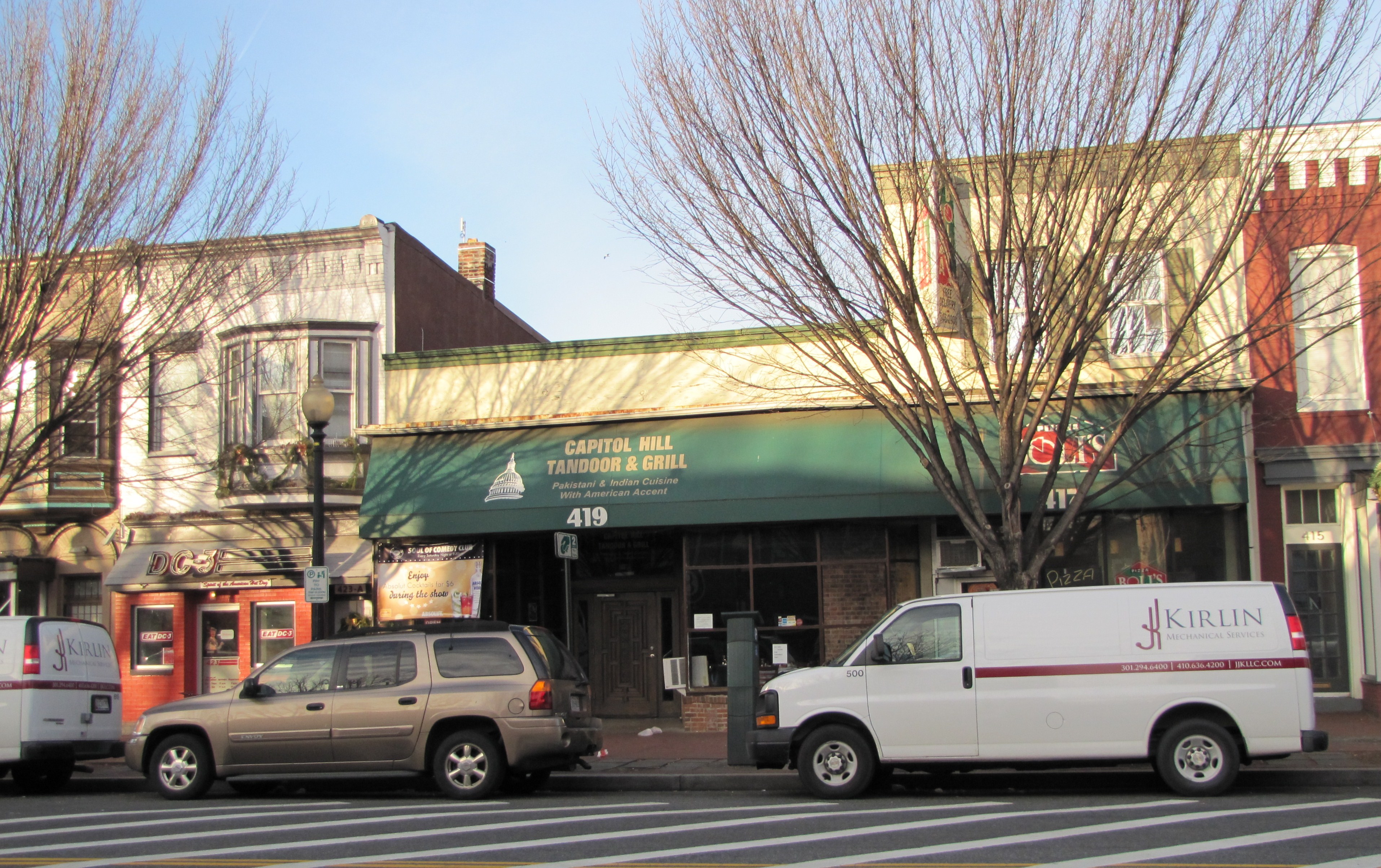
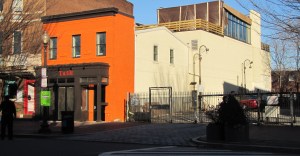
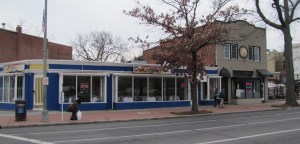
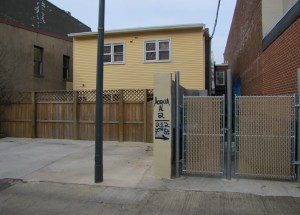
One of the cases which touched upon Pot Belly’s interest was that of the Capitol Hill Tandoor and Grill at 419 8th Street, which is seeking ANC6B’s approval for a Historic Preservation (HP) application to permit a second story addition to the restaurant. Tariq Hussein, owner of both the building and the restaurant, presented the plan in terms of expansion of the Indian-Pakistani restaurant. Commissioner Ivan Frishberg – who admitted to being a frequent patron of the restaurant – expressed reservations, saying he suspected that the addition anticipated another purpose and expressed concern that it might be for a fast food restaurant.
Barracks Row currently has a ban on fast food venues – any additional establishment would require an exemption. Hussein said that although he had had discussions with Pot Belly as a potential first floor tenant, no agreement had been reached. Given the city’s tendency to give the benefit of the doubt to revenue-producing developments at the expense of the nearby community, ANC6B seems justified in its concern that the city will turn a deaf ear to their concerns.
As of now, the only issue before the ANC is whether or not the proposed design for the addition is compatible with the adjacent buildings and the architectural environment. Commissioner Kirsten Oldenburg read notes from the CHRS Historic Preservation (HP) Committee which met on Monday night to consider Hussein’s Historic Preservation Application. The HP Committee – which under CHRS bylaws speaks for the CHRS on historic preservation matters – found that the original structure is too new to be a contributing structure to the Capitol Hill Historic District and expressed the wish that the architect refine the design and be more adventurous and creative in planning the addition. This finding actually gives the architect considerable flexibility in designing the second story – it also means that there are few historic preservation roadblocks which can be raised to prevent it. The ANC’s Planning and Zoning Committee voted to take no position on the HP application, pending receipt of more detailed drawings from Hussein before next Tuesday’s full ANC6B meeting.
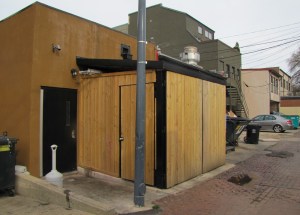
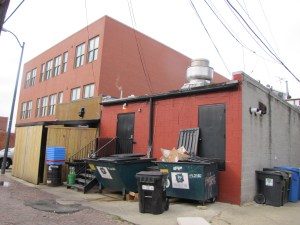
Pot Belly’s interest in Barracks Row came to light as well in an earlier case heard by the ANC last night. Maurice Kreindler – who owns several buildings in the 400 block of 8th Street – is seeking to build an enclosure at the rear of OXXO Dry Cleaners – ostensibly for storage. Since OXXO’s lease is up in two years, building out the rear of the building could be a way to make it more interesting to potential tenants. When neighbors expressed concerns that a new tenant might be yet another restaurant, Alan Kinney, representing Kreindler, said a new tenant would likely be retail and noted that Pot Belly Sandwich Shop had looked at the location for a possible establishment, but found it lacked the necessary space. The ANC Committee told Kinney that they could not support the request for a variance to allow the construction because the property lacked the unique circumstances under which a variance can be granted.
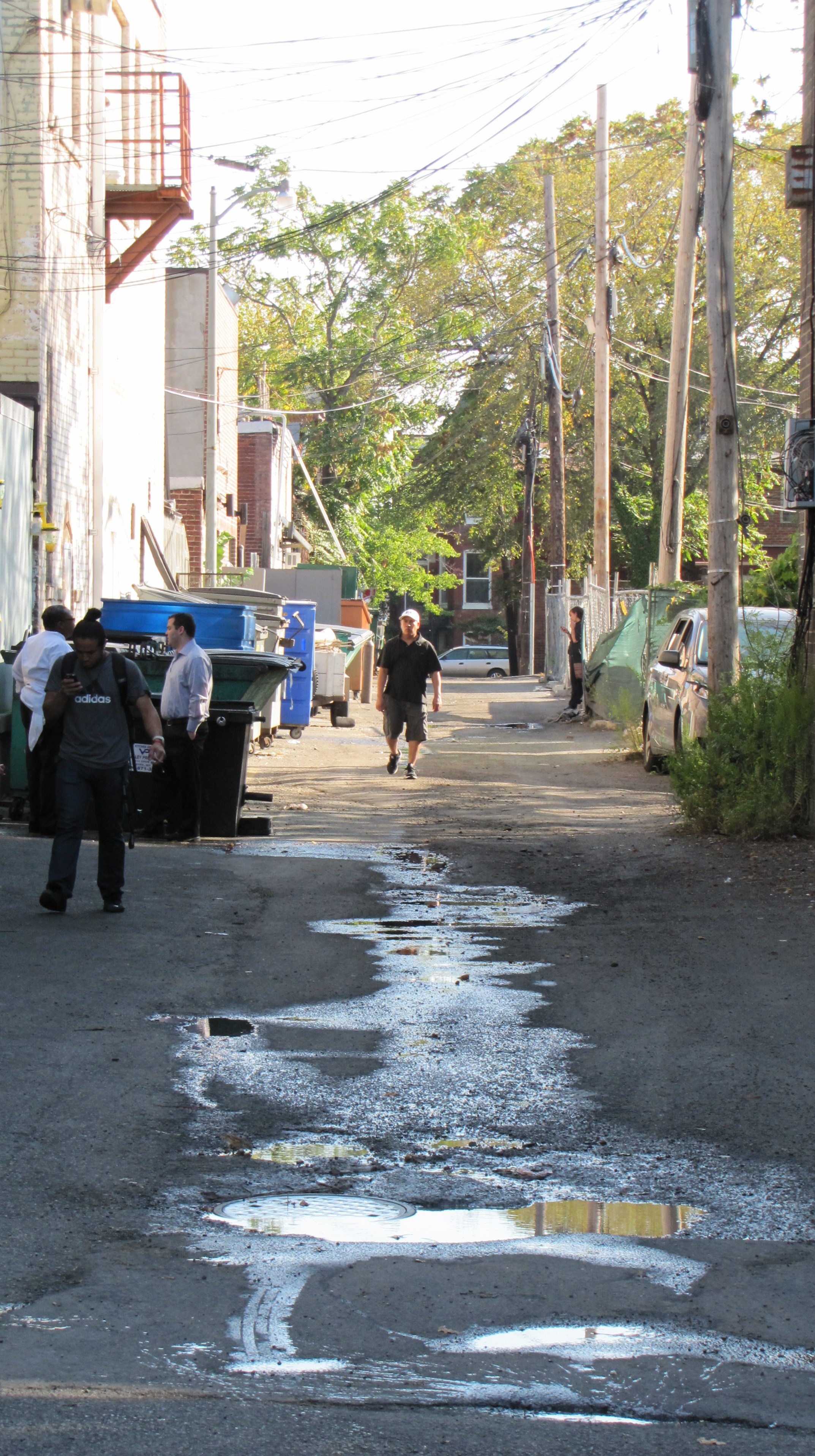
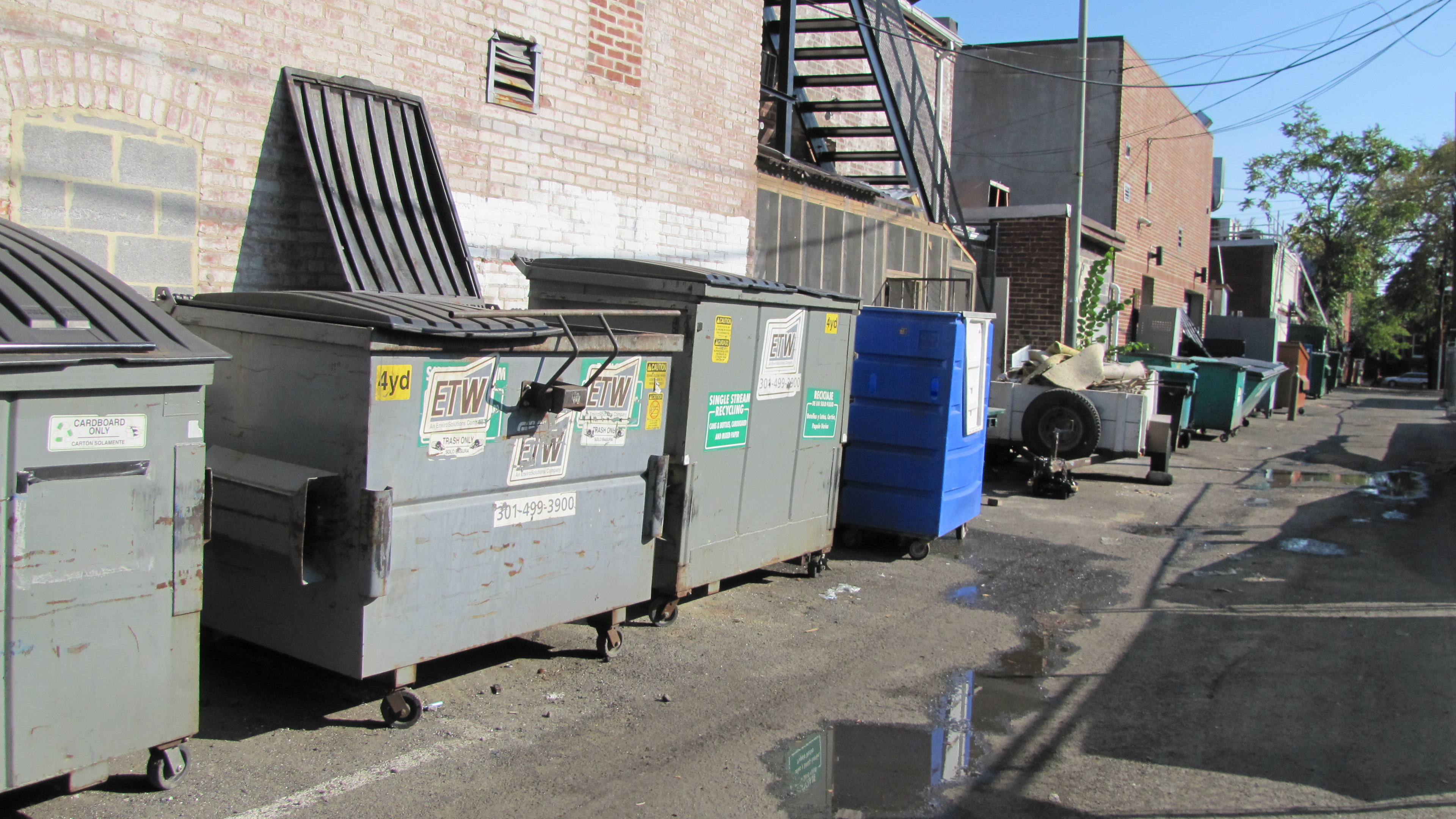
Also last night, several residential and business neighbors were in attendance to cite trash and cleanliness problems associated with the area where Kreindler seeks the expansion, voicing fears that new construction would push the rat problems associated with the area onto their properties. Commissioners pointed out that these were two separate issues, and while the rat problem was ubiquitous and needed to be addressed, it had to be considered separately from the question of granting a variance. To the extent that the two issues are related, some commissioners told Kinney that they might try to find a way to support the variance if a proposed structure could be used to solve the neighbor’s concerns regarding the rodent problem.




 CAPITOL HILL CORNER