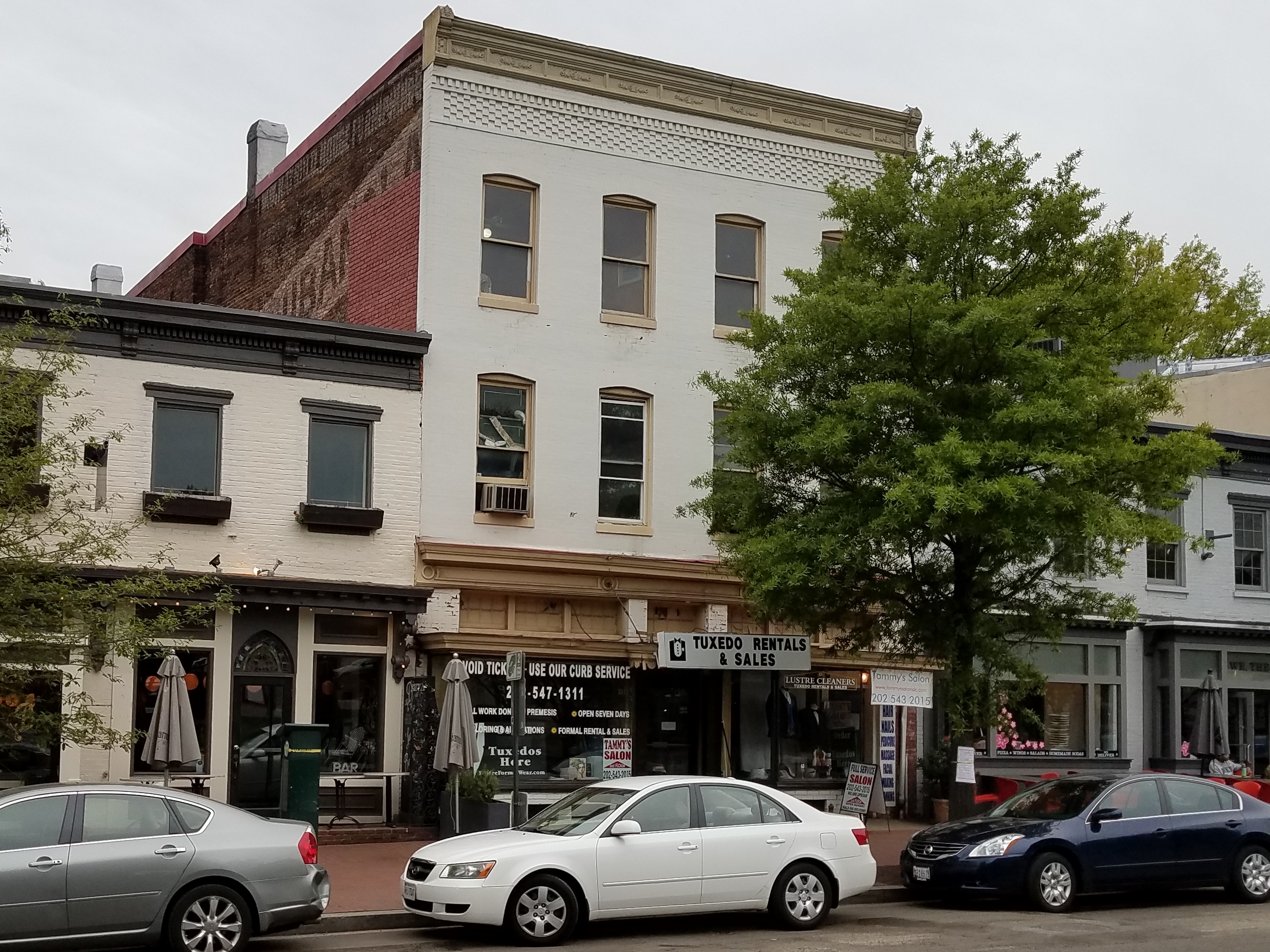
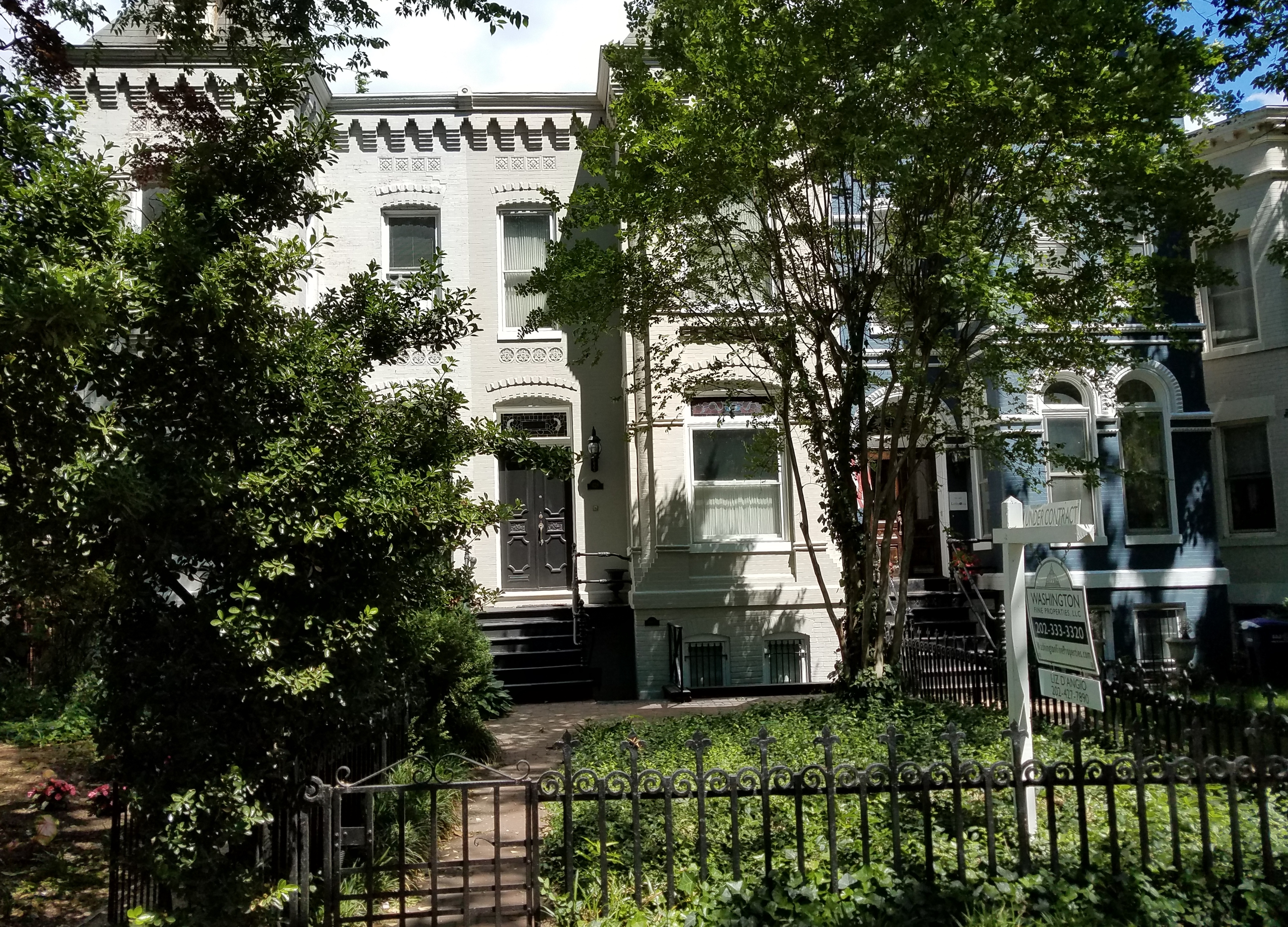
Here’s what $2 million will get you on the 400 block of New Jersey if you buy it for non-residential use. CHC Bold PAC wants it for their PAC Headquarters.
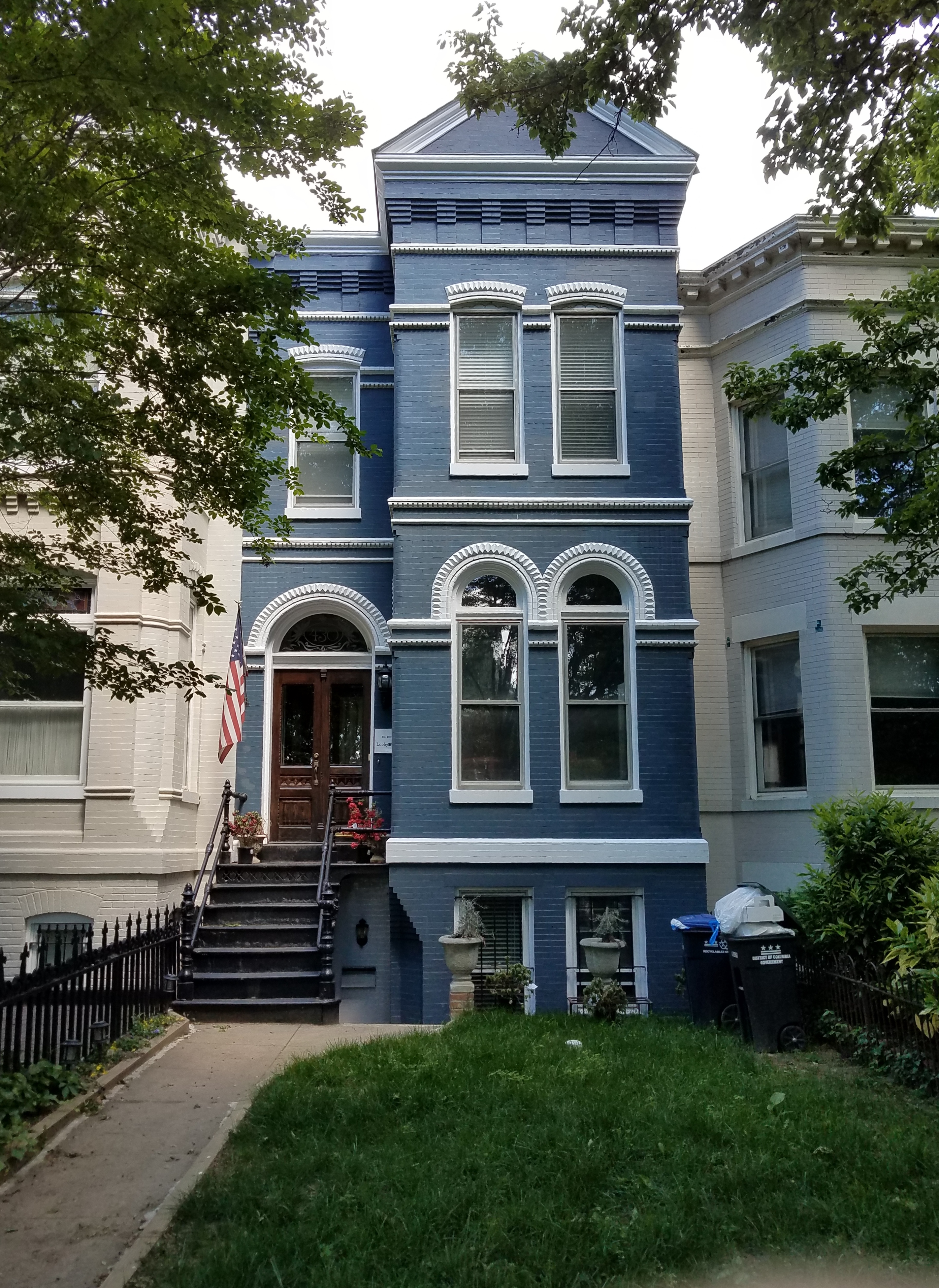
Lobbyit.com operates out of the former townhouse next door to 428 New Jersey and neighbors say the residential character of the street is being destroyed.

Last night, residents turned out to voice their opposition to non-residential use of townhouses in their neighborhood.
Residents Protest PAC/Lobbyist Takeover of Neighborhood Near Capitol
By Larry Janezich
Neighbors living near the Capitol Building have grown increasingly unhappy as more and more lobbyists and non-profit organizations have begun operating out of townhouses in their residential neighborhood. Last night, at ANC6B’s Planning and Zoning Committee they went public with their unhappiness. The occasion was an application of the Congressional Hispanic Caucus (CHC) BOLD PAC for a zoning adjustment to permit use of the townhouse at 428 New Jersey Avenue, S.E., for administrative purposes which include a once-a-week breakfasts and “one or two fundraising events a quarter.”
More than a dozen neighbors turned out to complain about the traffic, parking, and trash issues such organizations bring, as well as the rude behavior of some of those attending events. During discussion of the application – which became heated at times – a resident voiced the feelings of the group, saying “We’ve had enough,” citing the “trucks, cars, Suburbans and trash”. “It’s an absolute nightmare for us. We’re tired of it. People park on the block and trash the front and the alley. I can’t express our frustration…at this point, we’re done.” Another said residents of nearby North Carolina Avenue felt threatened by what’s happening on New Jersey. “It no longer feels residential. There are four lobby houses on our block.”
Enforcement of city regulations prohibiting such use has proven to be almost impossible, as city agencies turn a blind eye or give the benefit of the doubt to organizations using the properties.
The legal case for the CHC was presented by zoning and land use attorney Meridith Moldenhauer, partner at Griffin, Murphy, Moldenhauer & Wiggins. She explained why an exception to the zoning regulations was justified and noted that the CHC was following procedures as opposed to “other people” who were operating similar operations illegally.
Commissioners were divided. Commissioner Jennifer Samolyk, in whose single member district the building resides, was adamant in her opposition to the application, imploring her fellow commissioners to listen to the residents. Committee Chair Nick Burger said there was a real benefit to preserving the residential character of the neighborhood, but he preferred the committee take no position on the application and forward it to the full ANC to be resolved. He said there was a substantial risk that the Board of Zoning Adjustment would overrule an objection by the ANC, and a better course would be negotiation between the PAC representatives and the neighbors to reach agreement on how the PAC would operate out of the property including a possible full time resident in the basement unit.
A motion to oppose the application was offered by Samolyk, and was agreed to by a vote of 5 – 4, with 2 abstentions. The recommendation now goes to the full ANC meeting next Tuesday where it will again be debated and voted on by the 10 elected commissioners as opposed to the committee which is made up of elected officials and appointed resident members.
Samolyk told Capitol Hill Corner after the vote, “I am truly saddened to see that some of my fellow ANC commissioners are choosing to support a PAC, that raised close to 2 million dollars so far this year in fundraising, over a room full of concerned residents”
The house at 428 New Jersey has a footprint of 1,072 square feet on each of its two floors and a basement. It was on the market for 75 days at a price tag of $2 million, before coming under contract by CHC BOLD PAC. The section of New Jersey Avenue is about a block from both the Democratic and Republican National Committee HQs and appears to have more than half a dozen buildings being used for non-residential purposes. Areas close in to the Capitol in Northeast are experiencing the same problem.
During the first quarter of the current year, the PAC – which is the campaign arm of the CHC, raised more than $2 million – mostly in small contributions. http://bit.ly/2qsKi61
CHC Institute’s “Building Our Future, Together” campaign, which provides scholarships and supports education, received nearly $11 million last year from major corporations, including PepsiCo Foundation, Toyota, State Farm, Bank of America, Anheuser-Busch, Dell, Time Warner Cable, Hyundai Motor America, and Entravision.